Understanding Vector Databases Through Play
Vector databases have become indispensable tools for modern AI applications, powering everything from semantic search and recommendation engines to natural language processing and computer vision. Services like Pinecone, Milvus, Qdrant, and the pgvector extension for PostgreSQL allow developers to store and query massive datasets of high-dimensional vectors, which represent complex semantic concepts. The speed at which these databases can sift through billions of documents in milliseconds is often a point of wonder. Under the hood, this efficiency relies on sophisticated techniques: mapping semantic ideas into dense numerical vectors, calculating multidimensional cosine similarity to gauge relatedness, and traversing proximity graphs to pinpoint nearest neighbors without resorting to exhaustive database scans.
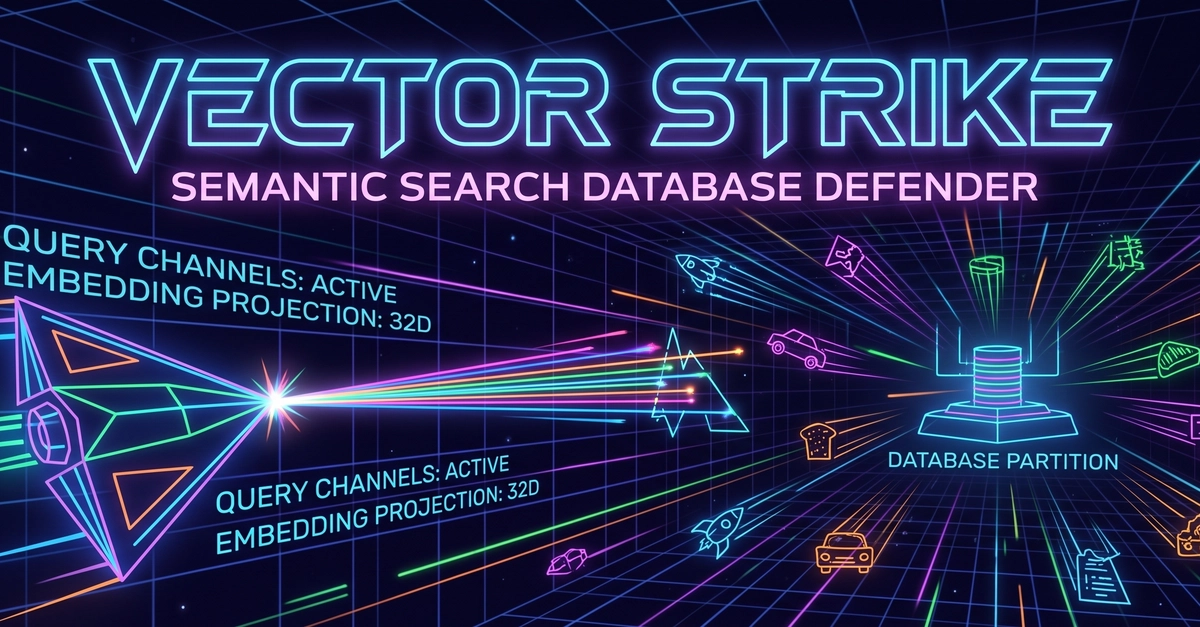
To demystify these complex operations, a developer has created 'Vector Strike: Database Defender,' a retro-inspired arcade game. This interactive experience aims to provide a tangible, visual understanding of how vector databases and their associated embeddings function. By engaging with the game, users can gain an intuitive grasp of the underlying principles that enable lightning-fast semantic search.
The game allows players to step into the role of a Vector Database (VDB) administrator. The core mission is to configure query settings and index structures to defend the database against incoming threats. These threats are analogous to complex queries or data corruption attempts, and the player's success hinges on optimizing the VDB's parameters.
Configuring Your Database Defenses
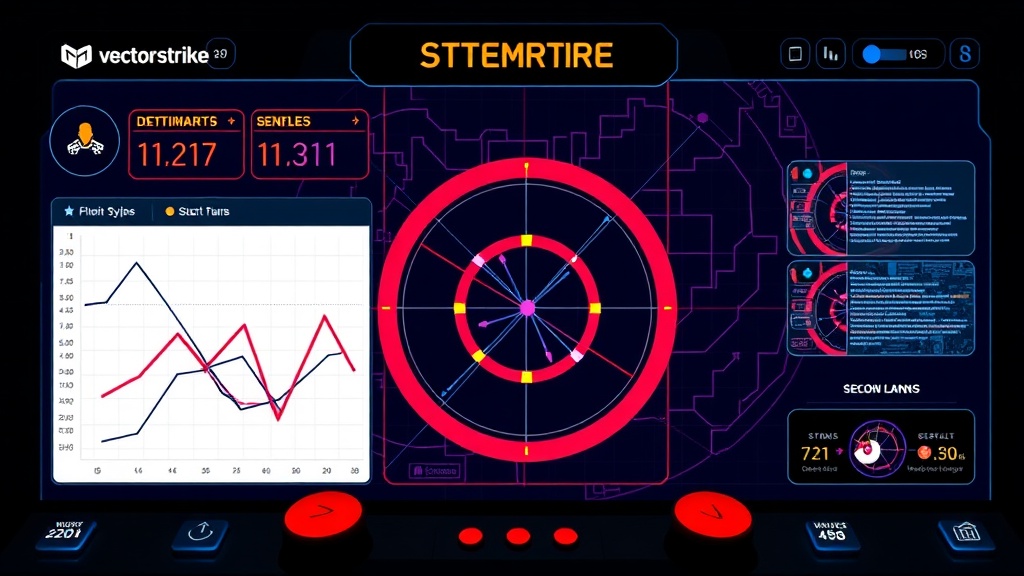
Vector Strike presents players with a series of strategic choices for optimizing their database's performance and resilience. The game simulates key aspects of vector database management, focusing on the trade-offs involved in configuration. Players must select parameters that balance search speed, accuracy, and resource utilization.
The game prompts players to make critical decisions regarding their index structures. For instance, choosing between different indexing algorithms, such as Hierarchical Navigable Small Worlds (HNSW) or Inverted File Index (IVF), directly impacts how the database organizes and traverses proximity graphs. Each index type has its own strengths and weaknesses, affecting query latency and recall rates. HNSW, for example, often provides excellent performance for high-dimensional data but can require significant memory. IVF, on the other hand, might be more memory-efficient but can suffer performance degradation with extremely high dimensions.
Beyond indexing, players also configure query settings. This includes determining the number of probes for graph traversal algorithms or setting thresholds for similarity scores. These settings directly influence the trade-off between precision and recall. A higher number of probes might increase the chances of finding the absolute nearest neighbors (higher recall) but will also increase query latency. Conversely, fewer probes speed up queries but might miss some of the closest matches.
The Mechanics of Semantic Search Explained
The game mechanics are designed to abstract the mathematical and algorithmic complexities of vector search into an engaging gameplay loop. In essence, players are tasked with defending a central 'data core' from incoming 'query vectors.' The player's defensive capabilities are directly tied to the VDB configuration choices they make. A well-configured database, represented by smart in-game choices, will effectively neutralize incoming threats quickly and accurately.
When a query vector arrives, the game simulates the VDB's process of finding the nearest neighbors. This involves calculating the distance or similarity between the query vector and the vectors stored in the database. The game visualizes this by showing how the player's configured index structure guides the search. Players can observe how different index types and query parameters affect the 'path' the search takes through the vector space. For instance, a poorly configured index might lead to a slow, meandering search, allowing threats to penetrate the defenses. A well-optimized configuration, however, will result in a swift, direct path to identifying and neutralizing the query.
The game also touches upon the concept of embeddings. While not explicitly simulated as a player choice, the game operates on the premise that the data is already represented as high-dimensional vectors. The player's role is to manage the efficient retrieval of information based on these pre-existing embeddings, highlighting that the quality of the embeddings themselves is a prerequisite for effective semantic search.
Why Visualize Vector Search?
The abstract nature of high-dimensional vector spaces and similarity calculations can be a significant barrier to understanding for many developers and data scientists. While documentation and theoretical explanations are valuable, they often fail to provide the intuitive grasp that practical experience can offer. Vector databases, despite their growing importance, remain complex systems.
'Vector Strike: Database Defender' addresses this by transforming abstract concepts into an interactive, gamified experience. This approach allows users to experiment with different configurations and immediately see the consequences of their choices. It's less about mastering the game itself and more about using the game as a learning tool. The retro arcade aesthetic is a deliberate choice, often associated with foundational computing concepts and a sense of playful exploration. It makes the complex topic of vector search more approachable and less intimidating.
By abstracting the core mechanics into a playable format, the game helps build intuition. Developers can start to think about index tuning not just as a set of parameters in a configuration file, but as a dynamic system with observable performance characteristics. This hands-on approach can accelerate learning and foster a deeper appreciation for the engineering challenges involved in building and maintaining performant vector databases.
Broader Implications for AI Infrastructure
As AI models become more sophisticated and data volumes explode, the demand for efficient vector search capabilities will only intensify. The underlying infrastructure supporting these capabilities is becoming increasingly critical. Games like Vector Strike, while perhaps niche, represent an important trend in developer education: making complex, cutting-edge technology more accessible and understandable.
The success of AI applications often hinges on the performance of their data retrieval layers. Developers and system architects must make informed decisions about which vector databases to use, how to configure them, and how to integrate them into their systems. Understanding the trade-offs between different indexing strategies, query optimization techniques, and the impact of vector dimensionality is crucial for building scalable and responsive AI products. Tools that simplify this learning process, even through unconventional means like gamification, can have a significant positive impact on the broader AI development community.
The effort behind Vector Strike highlights the ongoing innovation in developer tooling and education. It serves as a reminder that even the most technical subjects can benefit from creative approaches to learning, fostering a more engaged and knowledgeable community of AI practitioners. The ability to quickly search and retrieve information from vast, unstructured datasets is fundamental to the current AI wave, and understanding the mechanics behind it is becoming a core competency.