
Varonis Launches 'Breach at the Beach' Entra ID CTF
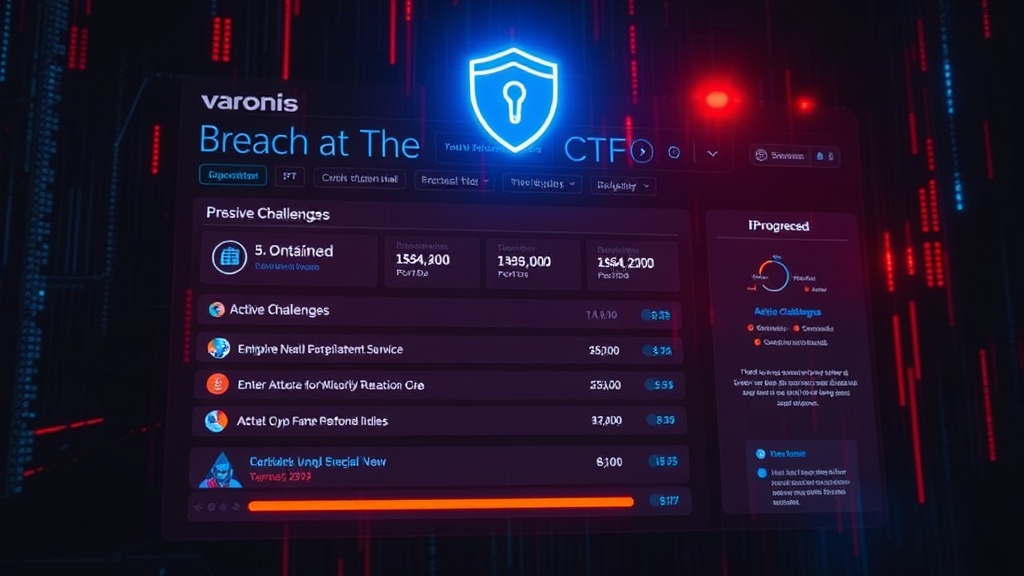
Security firm Varonis has launched a new, free Capture the Flag (CTF) event dubbed 'Breach at the Beach'. The initiative aims to equip security professionals with hands-on experience in identifying and investigating sophisticated attack techniques specifically targeting Microsoft Entra ID (formerly Azure Active Directory). In an era where cloud identity is a primary battleground, this CTF offers a practical, simulated environment for defenders to hone their skills against realistic threat scenarios.
The motivation behind Breach at the Beach is clear: many organizations struggle with the complexities of securing their cloud identity infrastructure. Attackers are increasingly leveraging Entra ID's features and configurations to gain initial access, escalate privileges, and move laterally within cloud environments. Traditional security training often falls short of providing the immersive, practical experience needed to effectively counter these evolving threats. Varonis's CTF aims to bridge this gap by providing a safe, yet challenging, playground for security teams.
Participants in the Breach at the Beach CTF will be tasked with uncovering and analyzing a series of simulated attacks that mimic real-world adversary tactics within an Entra ID environment. This includes common methods like credential stuffing, phishing-resistant MFA bypass, abuse of service principals, and unauthorized application consent. The scenarios are designed to be realistic, forcing players to think like an attacker to understand the full attack chain and then apply defensive investigation techniques.
Investigating Entra ID Attack Vectors
The core of the CTF lies in its focus on investigation. Players will need to dive into logs, analyze audit trails, and understand the relationships between different Entra ID objects such as users, groups, applications, and service principals. The goal is not just to find the 'flag' but to understand the 'how' and 'why' of each compromise. This deep dive into forensic analysis within a cloud identity context is crucial for developing effective incident response capabilities.
For instance, one common attack vector that participants might encounter involves the abuse of conditional access policies. Attackers can attempt to manipulate these policies to gain access from untrusted locations or bypass multi-factor authentication requirements. Another scenario could involve exploiting misconfigured application registrations or service principals, which often have overly broad permissions and can serve as a pivot point into sensitive resources. The CTF challenges players to identify these misconfigurations and the subsequent malicious activity they enable.
Varonis has structured the CTF to cover a range of attack stages, from initial compromise to lateral movement and data exfiltration. This end-to-end simulation provides a holistic view of how an Entra ID-centric attack unfolds. By engaging with these scenarios, defenders can learn to recognize the subtle indicators of compromise that might otherwise be missed in a busy security operations center.
Why Entra ID is a Prime Target
Entra ID is the central identity and access management service for Microsoft 365 and Azure. As organizations increasingly migrate their workloads and data to the cloud, Entra ID becomes the gatekeeper for virtually all cloud resources. This makes it an exceptionally attractive target for adversaries. A successful compromise of Entra ID can grant attackers access to a vast array of sensitive information, applications, and infrastructure.
The complexity of Entra ID, with its extensive features and configuration options, also presents challenges for defenders. Misconfigurations, weak authentication policies, and excessive permissions are common vulnerabilities that attackers actively seek out. The CTF's design directly addresses these challenges by simulating attacks that exploit these very weaknesses. It's a hands-on way to learn how to harden Entra ID deployments and detect when they've been compromised.
The 'Breach at the Beach' name itself evokes a sense of relaxed yet dangerous environment, perhaps hinting at the ease with which attackers can infiltrate seemingly secure cloud perimeters if defenses are not robust. The event encourages a proactive stance, moving beyond theoretical knowledge to practical application. By playing through these scenarios, security professionals can develop a more intuitive understanding of Entra ID security best practices and incident response procedures.
Learning Through Simulation
The value of a CTF like Breach at the Beach lies in its experiential learning model. Unlike reading documentation or attending lectures, participants actively engage with simulated threats. This active participation fosters deeper learning and retention. It allows individuals and teams to test their existing tools and processes against realistic attack patterns, identifying areas for improvement.
For security operations teams, participating in this CTF can be an excellent way to benchmark their current detection and response capabilities for cloud identity threats. It provides a tangible way to assess team readiness and identify training needs. Furthermore, the shared experience of a CTF can foster collaboration and knowledge sharing within a security team.
Varonis offers this resource as a public service, underscoring the critical need for better-trained defenders in the cloud security space. As Entra ID continues to be the backbone of identity for millions of organizations, mastering its security landscape is no longer optional. Breach at the Beach provides a compelling, accessible entry point for that mastery.
The CTF is available online and is free to participate, making it an accessible training tool for individuals and organizations of all sizes. It represents a significant step forward in providing practical, engaging cybersecurity education focused on the critical domain of cloud identity.