
Introduction to ValidX
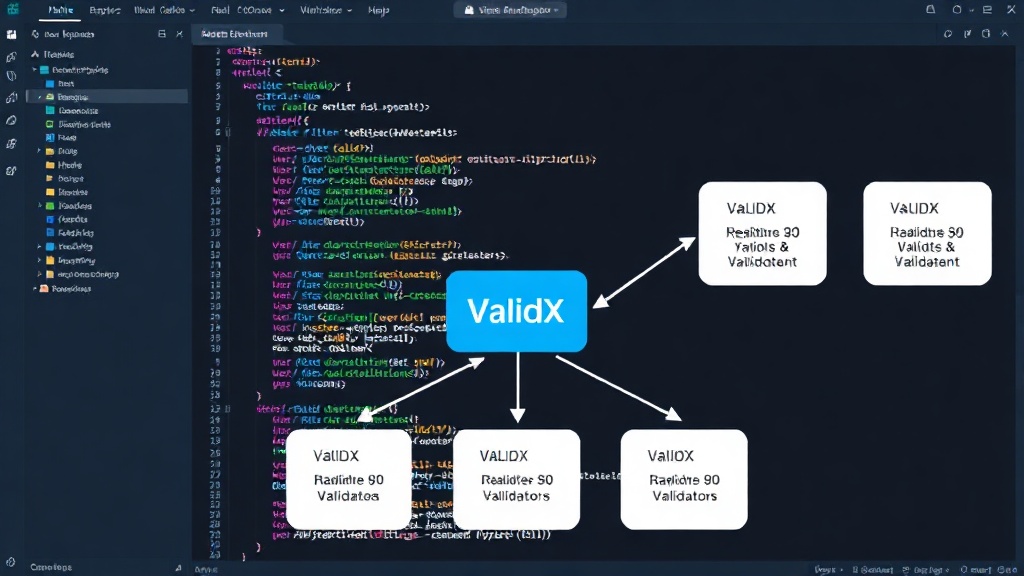
ValidX emerges as a focused, open-source Java validation library designed to simplify and enhance data integrity for applications operating within Chinese business contexts. Built upon the established JSR-380 (Bean Validation) standards, ValidX offers a robust suite of over 90 specialized annotations. These are meticulously crafted to address the unique data formats and requirements prevalent in China, ranging from national identification numbers and mobile phone formats to financial instruments and specific industry data.
The library aims to provide a simple, elegant, and reliable solution for developers who frequently encounter data validation challenges related to Chinese business scenarios. Traditional validation libraries often lack the specific nuances required for accurate validation of Chinese data types. ValidX bridges this gap by offering pre-built, context-aware validators that reduce boilerplate code and minimize the risk of runtime errors due to improperly formatted or invalid data.
The core philosophy behind ValidX is to make complex validation tasks straightforward. Developers can integrate these specialized validators with minimal effort, accelerating development cycles and improving the overall quality and reliability of their applications. This is particularly crucial for applications dealing with sensitive data or requiring strict adherence to local data standards, such as e-commerce platforms, financial services, and government-related systems operating in China.
Why ValidX Was Created
The creation of ValidX stems from a recognized need for specialized validation tools tailored to the complexities of the Chinese market. While general-purpose validation frameworks exist, they often fall short when handling the specific formats and regulations common in China. For instance, validating a Chinese national ID card (身份证) or a Chinese bank card number (银行卡) requires adherence to specific checksum algorithms, length requirements, and structural patterns that are not universally covered by standard validators.
Developers working on cross-border applications or those targeting the Chinese market frequently found themselves writing custom validation logic for these specific data types. This process is not only time-consuming but also prone to errors and inconsistencies. ValidX was developed to abstract away this complexity, providing developers with ready-to-use annotations that encapsulate these specific validation rules. This allows teams to focus on core business logic rather than reinventing the wheel for common validation tasks.
Furthermore, the library's adherence to JSR-380 standards ensures compatibility with existing Java Bean Validation implementations, such as Hibernate Validator. This means developers can seamlessly integrate ValidX into their existing projects without significant architectural changes. The goal is to offer a practical, developer-friendly solution that enhances productivity and data accuracy for applications interacting with Chinese business data.
Key Features and Benefits of ValidX
ValidX distinguishes itself through several key features designed for robustness and ease of use:
- Extensive Annotation Set: With over 90 specialized annotations, ValidX covers a broad spectrum of Chinese business data requirements. This includes, but is not limited to, identity validation (ID cards, passports), financial validation (bank cards, credit cards), network validation (IP addresses, domain names), and China-specific data like social credit codes.
- JSR-380 Compliance: Built on the Java Specification Request 380 (Bean Validation 2.0), ValidX annotations can be used alongside standard JSR-380 annotations, ensuring interoperability with other validation frameworks and tools.
- Null/Empty String Handling: The library provides explicit and configurable options for handling null or empty string values, preventing unexpected validation failures and allowing developers to define how these edge cases should be treated.
- Thread Safety: ValidX is designed to be thread-safe, making it suitable for use in concurrent environments such as multi-threaded web applications and microservices without introducing concurrency issues.
- Multilingual Support: While the annotations are in English, the library is designed to be integrated into applications supporting multiple languages, facilitating international development efforts.
- Quick Start Guide: A concise 5-minute quick start guide is provided, enabling developers to quickly integrate and begin using ValidX in their projects with minimal setup.
The elegance of ValidX lies in its simplicity. Developers can annotate their Java objects with the appropriate ValidX annotations, and the library handles the underlying validation logic. This declarative approach reduces the amount of imperative code needed for validation, leading to cleaner and more maintainable codebases.
Supported Validation Categories
ValidX offers a comprehensive set of validators categorized to help developers quickly find the annotations they need:
- Basic Validation: Standard checks for email, URL, regular expressions, and common string/numeric constraints.
- Identity Validation: Specific validators for Chinese National ID cards, Hong Kong and Macau resident permits, and other identity documents.
- Financial Validation: Support for validating Chinese bank card numbers (UnionPay, etc.), credit card numbers, and other financial identifiers.
- Education/Professional Qualification: Validators for academic degrees, professional certifications, and related educational credentials.
- Network Validation: Tools for validating IP addresses (IPv4, IPv6), domain names, MAC addresses, and other network-related data.
- China-Specific Validation: A broad category including Social Credit Codes, postal codes, phone numbers (mobile and landline), and more.
- Automotive Validation: Validation for vehicle identification numbers (VIN) and other automotive-related data.
- Book-Related Validation: Support for ISBN (International Standard Book Number) validation.
- Mobile Device Validation: Validators for mobile device identifiers and related data.
This extensive coverage ensures that most common validation needs for Chinese business data are met out-of-the-box. The quick reference table and detailed documentation provided with the library further aid developers in leveraging its full potential.
Contribution and Future Development
As an open-source project, ValidX welcomes contributions from the developer community. Developers can contribute by adding new validators, improving existing ones, enhancing documentation, or reporting issues. The project's GitHub repository serves as the central hub for collaboration, bug tracking, and feature requests.
The future development of ValidX will likely focus on expanding its annotation set to cover even more niche Chinese business scenarios, refining existing validators based on community feedback, and potentially exploring integration with other popular Java frameworks. The commitment to JSR-380 compliance ensures that the library remains relevant and compatible with the evolving Java ecosystem.
For developers building applications that interact with data specific to China, ValidX presents a compelling solution. Its combination of specialized annotations, adherence to standards, and focus on simplicity and reliability makes it an invaluable addition to the Java developer's toolkit.