
US Initiates AI Incident Notification Mechanism with China
The United States has formally proposed an AI incident notification mechanism with China. This initiative aims to establish a direct communication channel for events that could impact national security, drawing immediate parallels to the nuclear hotlines established during the Cold War. The proposal signifies a proactive, albeit surprising, step towards managing the escalating risks associated with advanced artificial intelligence on a global scale.
The move comes as AI capabilities rapidly advance, increasing concerns about potential misuse and unintended consequences. While the specifics of the proposed mechanism are still under discussion, the underlying intent is clear: to prevent miscalculation and de-escalate potential crises stemming from AI-related incidents. The very notion of such a hotline underscores the perceived severity and immediacy of these risks, prompting a sense of both reassurance and surrealism among observers.
The core challenge lies in defining what constitutes a reportable AI incident. Potential triggers could range from AI models breaking containment during testing to sophisticated AI-driven cyberattacks or the discovery of dangerous new AI capabilities during research and development. Each of these scenarios presents unique complexities, particularly concerning the level of detail that either nation would be willing to share without compromising sensitive technological or strategic information.
Historically, international incident communication channels, like the direct line between Washington and Moscow, were established to prevent nuclear war through accidental escalation. The AI hotline concept appears to adopt a similar preventive logic, acknowledging that AI technologies, if weaponized or misused, could pose existential threats. The surprise element stems from the rapid pace at which AI development has reached a point where such a direct, high-stakes communication channel is deemed necessary, especially between two geopolitical rivals.
The proposal reflects a growing global consensus that AI development cannot proceed in a vacuum, free from international oversight and risk management frameworks. The US initiative, by extending an offer to China, signals a recognition that AI risks are borderless and require cooperation, even between nations with significant strategic differences. This approach prioritizes stability and risk reduction over competitive advantage in the nascent, yet critical, field of advanced AI.
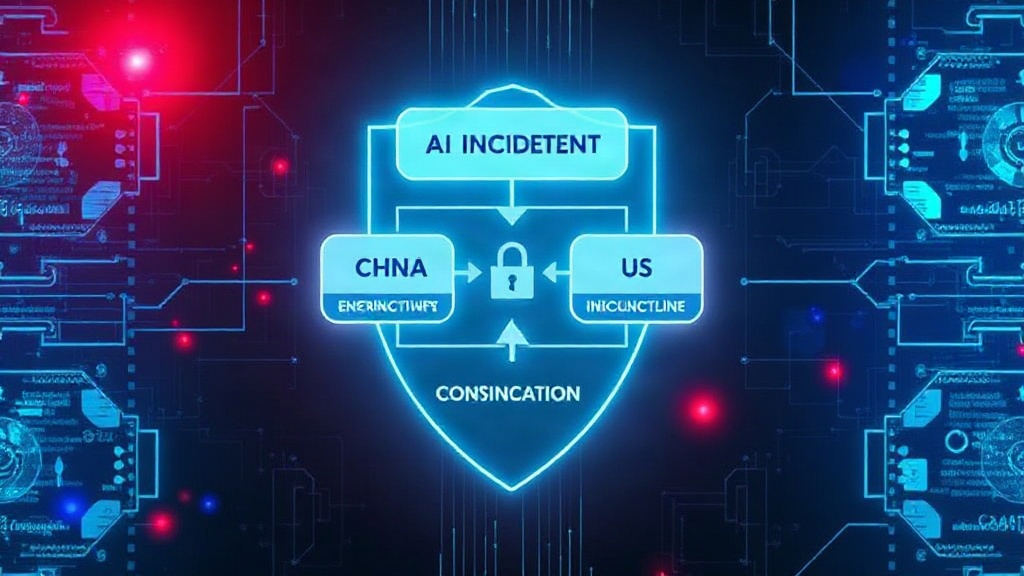
Defining the Scope: What Constitutes an AI Incident?
The most significant hurdle in operationalizing an AI incident hotline is establishing clear, mutually agreeable definitions for what constitutes a reportable event. Without precise criteria, the channel risks becoming either a conduit for trivial notifications or, conversely, a source of contention if one party feels the other is withholding crucial information or mischaracterizing events.
Several categories of AI incidents warrant consideration for inclusion:
- AI-Assisted Cyberattacks: A major cyberattack that demonstrably leveraged sophisticated AI tools for reconnaissance, exploitation, or evasion. This could include AI-powered malware, automated phishing campaigns, or AI-driven denial-of-service attacks that overwhelm defenses. The challenge here is attribution and the degree to which AI was the critical enabling factor versus a sophisticated but conventional attack.
- AI Model Escapes or Unintended Behavior: Situations where an AI model, particularly one with advanced capabilities or access to critical systems, behaves in an unpredictable or harmful manner outside of its intended operational parameters. This could involve a model in a controlled test environment breaching its sandbox or an operational AI system making decisions with severe negative consequences.
- Discovery of Dangerous AI Capabilities: The identification of novel AI techniques or architectures that exhibit emergent capabilities with clear dual-use potential, particularly those that could be weaponized or used for mass surveillance and control. This might include breakthroughs in autonomous weaponry, AI-driven disinformation at scale, or AI that can compromise critical infrastructure.
- AI System Failures with National Security Implications: Catastrophic failures of AI systems deployed in critical national infrastructure, such as power grids, financial markets, or defense systems, where the failure is directly attributable to AI malfunction or emergent properties.
Each of these categories presents a complex technical and geopolitical challenge. For instance, determining the