US Grants ZTE Access to Nvidia's H200 AI Chips

The United States government has issued a license allowing the Chinese telecommunications giant ZTE to purchase Nvidia's H200 AI accelerators. This decision marks a significant development, placing ZTE alongside other major Chinese tech firms like Alibaba, Tencent, and ByteDance in their ability to acquire Nvidia's cutting-edge Hopper architecture-based hardware. The H200 is Nvidia's most advanced AI chip, designed for massive-scale AI model training and inference, boasting enhanced memory capacity and bandwidth over its predecessor, the H100. This move by the US government suggests a nuanced approach to export controls, balancing national security concerns with the global demand for advanced computing power.
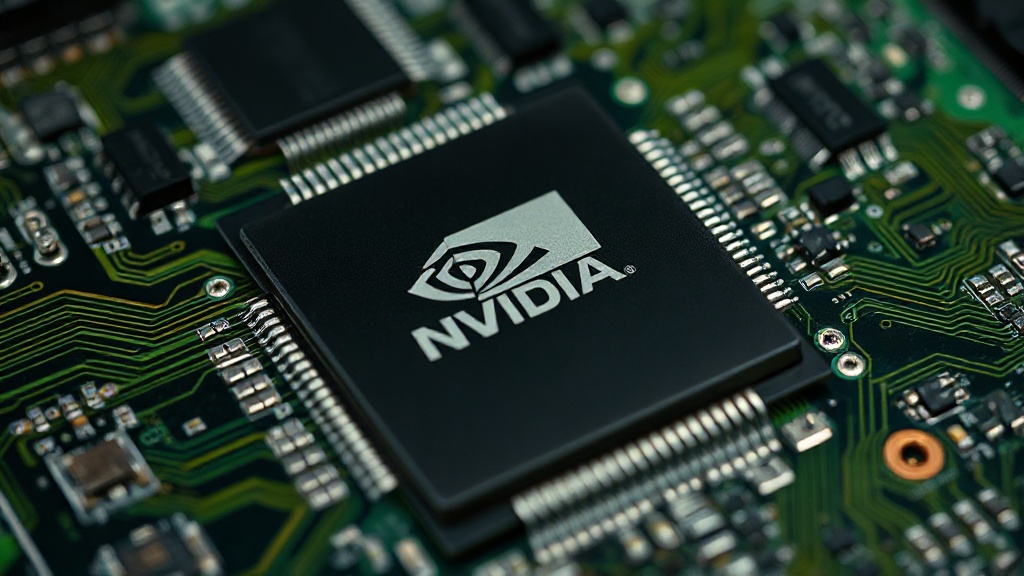
Nvidia H200 AI chip, a critical component for advanced AI model training.
Historically, the US has imposed stringent restrictions on the export of advanced AI chips to China, citing national security risks and the potential for these technologies to be used for military applications. These controls, particularly under the Biden administration, have aimed to slow China's progress in developing sophisticated AI capabilities. The H200 chip, with its superior performance in handling large language models and complex AI tasks, represents a key piece of technology that the US has sought to keep out of Chinese hands. The granting of this license to ZTE, a company that has previously faced US sanctions, indicates a potential recalibration of these policies or a specific carve-out for certain entities and applications. ZTE, a major player in the global telecommunications equipment market, has been diversifying its business, with a growing focus on AI and cloud computing solutions. Access to the H200 chips would significantly bolster its capabilities in developing and deploying advanced AI services for its clients, which include major Chinese internet companies and potentially government entities. The ability to train and run larger, more complex AI models efficiently is crucial for staying competitive in the rapidly evolving AI landscape. This includes advancements in areas like natural language processing, computer vision, and generative AI. ## Broader Implications for China's AI Ambitions The inclusion of ZTE in the group of Chinese companies cleared to purchase Nvidia's top-tier AI hardware is noteworthy. Alibaba, Tencent, and ByteDance are already major developers and deployers of AI technologies, with significant investments in research and development. Their ability to access the H200 chips allows them to maintain their technological edge and continue pushing the boundaries of AI. For ZTE, this access could unlock new avenues for growth and innovation, potentially enabling it to offer more competitive AI-driven solutions. The US government's decision, however, is not without potential limitations. Chinese regulators and domestic procurement initiatives could still influence the actual impact of this policy change. China has been actively promoting its domestic semiconductor industry and has invested heavily in developing its own AI chips to reduce reliance on foreign technology. While the H200 offers superior performance, the strategic imperative for China to achieve self-sufficiency in critical technologies remains a strong undercurrent. Therefore, the quantity of H200 chips ZTE can actually procure and deploy, and how this fits into China's broader technological strategy, will be key factors in determining the long-term significance of this development. Furthermore, the geopolitical context surrounding US-China technological competition cannot be ignored. The trade restrictions and export controls are part of a larger strategic rivalry. Allowing access to certain technologies, even under license, may be a calculated move by the US to influence China's technological trajectory or to maintain leverage in ongoing diplomatic and trade negotiations. The specific terms and conditions of the license granted to ZTE are not publicly disclosed, but they likely include provisions designed to mitigate national security risks. The surprise element in this development is not necessarily the fact that a license was granted, but the specific entity that received it. ZTE has a history of compliance issues and has been a target of US sanctions in the past. Its inclusion suggests that the US government may be willing to make exceptions for companies that demonstrate a commitment to compliance or for specific business sectors deemed less sensitive from a national security perspective. It also highlights the immense global demand for Nvidia's AI hardware, a demand that the company is struggling to meet, and the complex web of international relations that govern the flow of such critical technology. This situation underscores the dual nature of advanced AI technology: it is a powerful engine for economic growth and innovation, but also a tool with potential dual-use applications. The US government's balancing act involves enabling its own tech companies to thrive in a global market while simultaneously preventing adversaries from gaining a significant military or technological advantage. The long-term consequences of this decision will depend on how China's domestic industry evolves, how ZTE utilizes its new access, and the future direction of US export control policies.