
Escalating Concerns Over Chinese Semiconductor Dependence
A bipartisan coalition of U.S. lawmakers is urging the Commerce Department to implement a sweeping ban on memory chips manufactured in China. The demand, spearheaded by Representative Michael McCaul (R-Texas) and Senator Mark Warner (D-Virginia), extends beyond direct imports into the U.S. to encompass components that might enter allied supply chains. This aggressive stance signals a significant escalation in U.S. efforts to decouple from Chinese technology, driven by deeply entrenched concerns over national security, economic stability, and supply chain integrity.
The lawmakers have formally requested Commerce Secretary Howard Lutnick to take decisive action, framing the reliance on Chinese memory chips as an "unacceptable risk." This risk, they argue, spans multiple dimensions: national security, where dependence could create vulnerabilities; economic security, by potentially undermining U.S. technological leadership and competitiveness; and supply chain security, by exposing critical infrastructure to potential disruption or manipulation. The core of their argument rests on the assertion that continued reliance on Chinese-made memory components, even indirectly, poses a threat that cannot be ignored.
This push is not merely about blocking Chinese goods from American shelves. It represents a strategic attempt to influence the global technological landscape. By asking allies to adopt similar measures, U.S. lawmakers aim to create a unified front against what they perceive as a systemic threat. The implication is that if allied nations continue to integrate Chinese memory chips into their own manufacturing processes, those finished goods could still pose a risk when they eventually enter U.S. markets or critical infrastructure, even if the final assembly occurs elsewhere. This comprehensive approach highlights the interconnected nature of modern global supply chains and the difficulty of achieving true technological sovereignty through isolated actions.
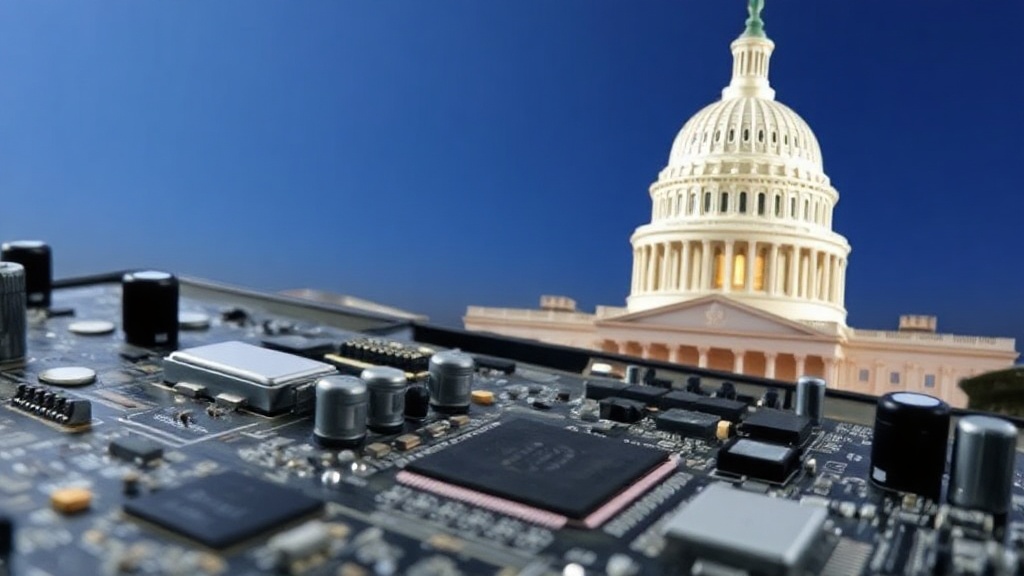
Defining the 'Unacceptable Risk'
The rationale behind this stringent demand is multifaceted. Lawmakers point to the potential for intellectual property theft, espionage, and the possibility of supply chain disruptions orchestrated by Beijing. In an era where semiconductors are foundational to nearly every aspect of modern life – from consumer electronics and automobiles to advanced military systems and critical infrastructure – the origin of these components is deemed paramount. The fear is that Chinese manufacturers, potentially under government directive, could embed backdoors, introduce vulnerabilities, or simply cease production during geopolitical tensions, leaving the U.S. and its allies critically exposed.
Memory chips, specifically DRAM and NAND flash, are fundamental building blocks. DRAM is essential for active data processing in computers and servers, while NAND flash provides non-volatile storage for everything from smartphones to data centers. Their ubiquity makes them a particularly sensitive area. Unlike some specialized chips, memory components are produced in high volumes and are integrated into a vast array of products. This broad integration means that a vulnerability or disruption at the memory chip level could have cascading effects across numerous industries.
The lawmakers' focus on allied supply chains underscores a recognition that a purely domestic ban would be insufficient. If components manufactured in China are used by companies in South Korea, Japan, or Europe to produce goods that are then imported into the U.S., the perceived risk remains. This approach mirrors broader U.S. strategies to build alliances in technology competition, aiming to create a cohesive global standard that prioritizes security and reliability over cost or accessibility derived from potentially adversarial nations.
The Broader Geopolitical and Economic Context
This call for a ban occurs against a backdrop of intensifying U.S.-China technological competition. The U.S. has progressively tightened restrictions on China's access to advanced semiconductor technology, including export controls on chipmaking equipment and sanctions against Chinese tech firms. The CHIPS and Science Act, for instance, aims to bolster domestic semiconductor manufacturing and research, signaling a clear intent to reduce reliance on foreign production, particularly from China.
However, achieving complete decoupling is a formidable challenge. China is a massive consumer of semiconductors and has been investing heavily in its domestic chip industry. While its capabilities in advanced logic chips lag behind leaders like TSMC and Intel, China has made significant strides in memory chip production. Companies like YMTC (Yangtze Memory Technologies Corp.) have emerged as major players in NAND flash, and CXMT (Changxin Memory Technologies) is a growing force in DRAM. These Chinese manufacturers offer competitive products, making them attractive to global customers seeking to diversify their supply sources or reduce costs.
The lawmakers' demand to extend the ban to allied supply chains raises complex diplomatic and economic questions. Allies may be reluctant to implement such stringent measures, especially if it significantly disrupts their own industries or economic ties with China. The global semiconductor supply chain is deeply intertwined, and any attempt to re-engineer it faces considerable resistance and logistical hurdles. Furthermore, enforcing such a ban would require robust tracking and verification mechanisms, which are notoriously difficult to implement across international borders and complex manufacturing ecosystems.
Implications and Future Trajectory
If enacted, a ban on Chinese memory chips, particularly one that extends to allied supply chains, would have profound implications. It would accelerate the bifurcation of the global technology market, forcing companies to choose between U.S.-aligned or China-aligned supply chains. This could lead to increased costs for consumers and businesses as production is re-routed to more expensive, albeit potentially more secure, manufacturing hubs.
For U.S. domestic manufacturers like Micron Technology, this could present an opportunity to capture market share previously held by Chinese competitors. However, it would also necessitate significant investment to scale up production and meet the increased demand. The success of such a policy hinges on the willingness of allies to cooperate and the ability of the U.S. to develop and sustain its own advanced manufacturing capabilities.
The demand from lawmakers highlights a growing consensus in Washington that technological security is national security. The path forward involves not only restrictive measures but also strategic investments in domestic R&D and manufacturing, alongside robust diplomatic engagement with allies to forge a common approach to semiconductor supply chain resilience. The challenge lies in balancing these security imperatives with the economic realities of a globalized industry.