%22%20%2F%3E%0A%20%20%3C%2Fsvg%3E)
A Rare Accord on Open-Source AI
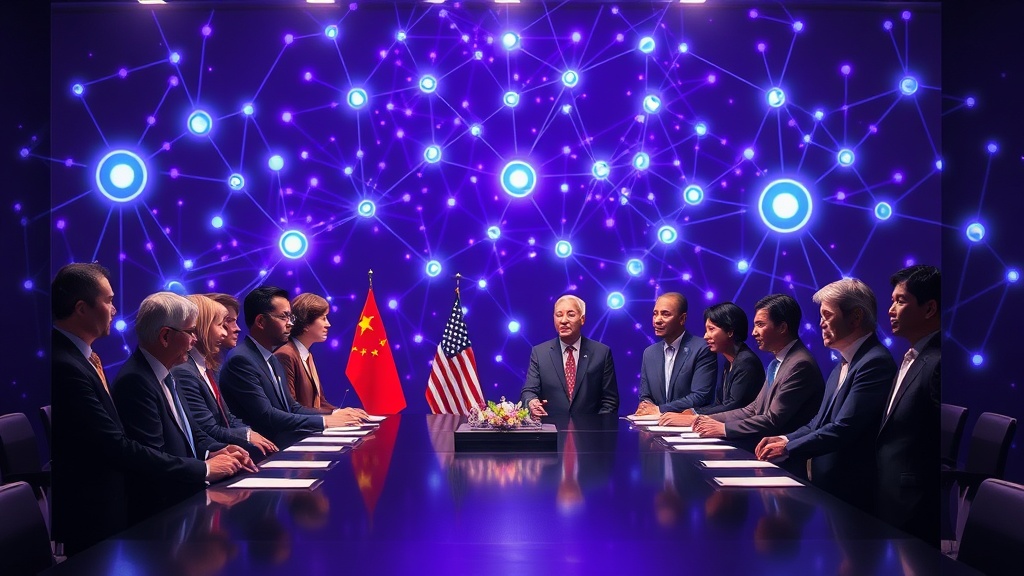
In a significant development that underscores a growing global recognition of artificial intelligence's potential, 21 Asia-Pacific Economic Cooperation (APEC) member economies, including both the United States and China, have signed a joint statement pledging to back open-source AI development. This agreement, reached in Chengdu, is particularly noteworthy as it marks the first time an APEC AI statement has explicitly included open-source cooperation at such a high level. The collaborative spirit is further emphasized by the commitment to provide "strong security assurances" for these open-source initiatives, a crucial element given the dual-use nature of advanced AI technologies.
The move is notable because it represents a rare public consensus between two geopolitical rivals, the US and China, on a critical emerging technology. While both nations are at the forefront of AI development, their approaches and strategic interests have often diverged, leading to increased competition and scrutiny. This joint statement suggests a shared understanding that fostering open-source AI, with appropriate safeguards, can be mutually beneficial for innovation, economic growth, and potentially global stability. The APEC forum, typically focused on trade and economic cooperation, has become a venue for addressing the increasingly complex technological landscape.
What Open-Source AI Entails
Open-source AI refers to artificial intelligence models, tools, and datasets that are made publicly available, allowing anyone to use, modify, and distribute them. This contrasts with proprietary AI systems, which are developed and controlled by specific companies or organizations. The open-source movement in AI has been a powerful engine for innovation, enabling researchers and developers worldwide to build upon existing work, accelerate discovery, and democratize access to advanced AI capabilities.
Projects like Meta's Llama models, Google's TensorFlow, and Hugging Face's extensive model hub are prime examples of how open-source contributions have spurred rapid advancements. Developers can leverage these resources to create new applications, fine-tune models for specific tasks without starting from scratch, and foster a collaborative ecosystem. This shared development model can lead to faster bug fixes, improved transparency, and a broader range of applications tailored to diverse needs.
However, the proliferation of powerful open-source AI also raises significant concerns, particularly regarding security and misuse. The very accessibility that drives innovation can also make these powerful tools available to malicious actors for purposes such as generating disinformation, creating sophisticated cyberattacks, or developing autonomous weapons. This is precisely why the inclusion of "strong security assurances" in the APEC statement is critical. It signals an intent to balance the benefits of openness with the imperative to mitigate risks.
Balancing Openness with Security
The commitment to "strong security assurances" is not a trivial addition; it is the linchpin of this international agreement. For open-source AI to be truly beneficial, its development and deployment must be managed in a way that minimizes potential harms. This could involve several strategies, such as:
- Secure Development Practices: Encouraging or mandating secure coding standards and vulnerability testing for open-source AI projects.
- Responsible Release Frameworks: Establishing guidelines for releasing AI models, perhaps with phased rollouts or specific gating mechanisms for the most powerful capabilities.
- Threat Intelligence Sharing: Creating channels for governments and organizations to share information about emerging threats and vulnerabilities related to open-source AI.
- Standardization Efforts: Developing common standards for AI safety, security, and ethical deployment that can be applied across different open-source projects.
- Capacity Building: Supporting developing nations within APEC to build the technical expertise and regulatory frameworks necessary to engage with and secure open-source AI.
This multi-pronged approach aims to create an environment where open-source AI can flourish without becoming a vector for widespread insecurity. The challenge lies in defining what constitutes "strong security assurances" in a rapidly evolving field and ensuring these assurances are uniformly applied and enforced across diverse national contexts and technological implementations.
Geopolitical Implications and Future Directions
The agreement at APEC is a potent signal of shifting dynamics in the global AI landscape. It suggests that while competition between the US and China will undoubtedly continue, there are areas where collaboration is deemed essential. AI, with its immense economic and strategic implications, is one such area. By publicly aligning on the importance of secure open-source AI, these nations are attempting to set a precedent for international cooperation on AI governance.
This development could influence how other international bodies and individual nations approach AI regulation and development. It might encourage a more nuanced perspective that moves beyond a simple dichotomy of open versus closed systems, recognizing the hybrid models and the critical role of security. For developers and researchers, this could mean greater access to foundational models and tools, potentially leading to a more vibrant and diverse AI ecosystem across the Asia-Pacific region and beyond.
However, the true impact will depend on the concrete actions that follow this joint statement. Translating a diplomatic accord into effective, collaborative security measures for open-source AI will require sustained effort, technical expertise, and a willingness to navigate complex geopolitical sensitivities. The question remains: can this rare moment of consensus translate into lasting, secure progress in the open-source AI domain?