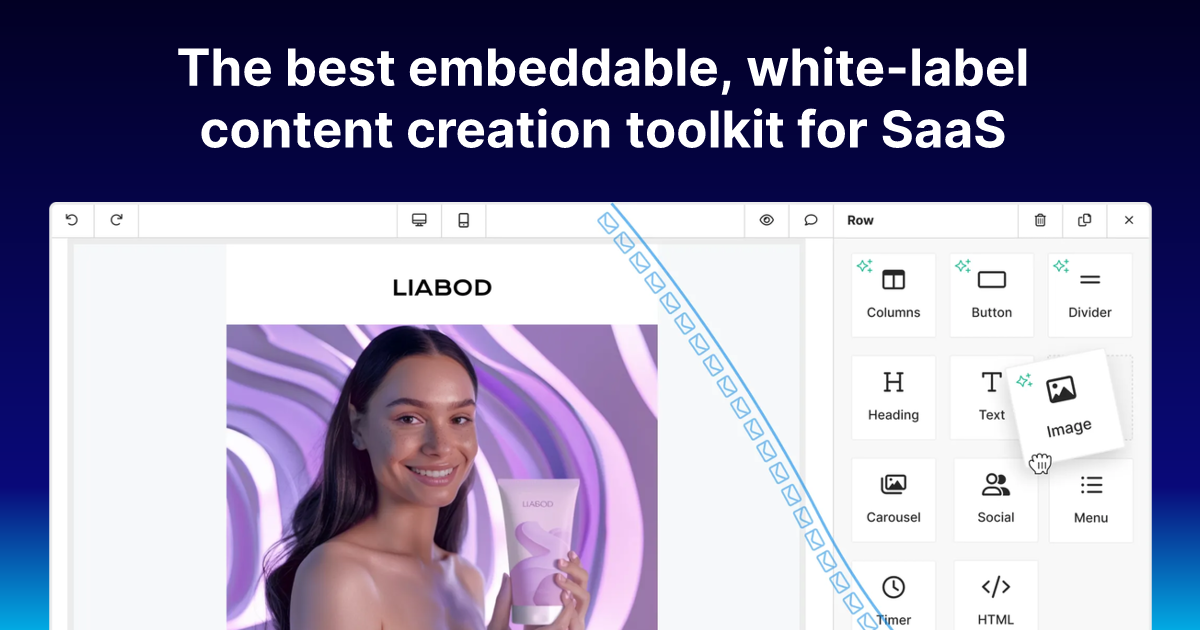
Unlayer Empowers Developers with Embeddable Design Tools
Unlayer, a company backed by Y Combinator's Winter 2022 batch, today announced the launch of its new Software Development Kit (SDK). This release allows developers to seamlessly integrate sophisticated drag-and-drop email and document builders directly into their own applications. The move signals a significant step in democratizing design capabilities, putting powerful content creation tools into the hands of a broader developer audience without requiring them to build such complex features from scratch.
For years, businesses have relied on Unlayer's standalone platform for creating visually appealing marketing emails and landing pages. However, the new SDK shifts the paradigm. Instead of directing users to a separate Unlayer portal, businesses can now embed these robust builders as a native feature within their existing SaaS products. This offers a more integrated and streamlined user experience, keeping users within their familiar application environment.
The core value proposition of the Unlayer SDK lies in its extensibility and ease of integration. Developers can leverage the kit to add custom templates, components, and branding elements that align with their application's specific needs and aesthetic. This means a CRM could offer an integrated email composer for sales outreach, an e-commerce platform could allow merchants to design product announcement emails, or a project management tool could enable the creation of detailed report documents.
Key Features and Developer Benefits
The Unlayer SDK is designed with developer flexibility in mind. It provides a robust set of tools for embedding a fully functional visual editor. Key features include:
- Drag-and-Drop Interface: Users can build complex layouts and designs by simply dragging and dropping pre-built or custom elements.
- Template Management: Developers can define and manage a library of templates that are accessible within the embedded editor, ensuring brand consistency.
- Custom Component Development: The SDK allows for the creation of unique, reusable components that extend the builder's functionality beyond standard text and image blocks.
- Real-time Collaboration: For document building, the SDK supports real-time co-editing, akin to Google Docs, enhancing team productivity.
- Export Options: Content created within the builder can be exported in various formats, including HTML, PDF, and JSON, for easy integration with backend systems.
- White-labeling: The entire builder experience can be white-labeled to perfectly match the host application's branding.
The implications for developers are substantial. Building a reliable and user-friendly drag-and-drop editor from scratch is a significant undertaking, often requiring months of development time and ongoing maintenance. By integrating Unlayer's SDK, development teams can bypass this complex process, saving considerable resources and accelerating their product roadmap. This allows them to focus on their core product differentiation rather than reinventing the wheel for content creation tools.
The technical implementation involves embedding Unlayer's JavaScript library into the host application. The SDK provides clear APIs for initialization, event handling, and data management, making it accessible even for developers new to front-end design tools. Unlayer offers comprehensive documentation and support to assist developers throughout the integration process.
Market Context and Future Implications
The demand for embedded content creation tools is rapidly growing. As more businesses operate digitally and rely on personalized communication, the ability to generate rich, dynamic content within core workflows becomes paramount. Unlayer's move into the SDK space positions them as a key enabler for this trend.
Consider a company offering a customer support platform. Previously, agents might have to copy-paste responses from a separate email client, losing formatting and brand consistency. With the Unlayer SDK, that platform could embed an email builder directly, allowing agents to craft polished, on-brand replies within the support ticket itself. This is akin to giving a carpenter a pre-fabricated, high-quality toolset instead of making them forge their own hammers and saws.
This release also intensifies competition in the broader visual content creation space. While companies like Canva and Adobe have their own powerful design tools, Unlayer's focus on embedding these capabilities as a service for other applications carves out a distinct niche. Their competitors will likely need to consider similar embeddable solutions to remain competitive in the SaaS ecosystem. For businesses looking to enhance user engagement and streamline content workflows, the Unlayer SDK presents a compelling option to add significant value to their existing product offerings without a massive development overhead.
The success of Unlayer's SDK will hinge on its ease of integration, the robustness of its features, and its ability to scale with the diverse needs of various applications. The potential to embed such sophisticated design capabilities into virtually any software product opens up a vast new market, and Unlayer appears well-positioned to capture a significant share.