
The AGI Hype Cycle Overshadows Real Progress
The artificial intelligence landscape is currently dominated by the pursuit of Artificial General Intelligence (AGI). Discussions frequently orbit around speculative timelines for achieving human-level cognitive abilities and the ever-escalating benchmark scores that signal progress. However, this intense focus on a distant, theoretical future risks overshadowing the significant, tangible advancements happening today in more specialized AI capabilities. These are not theoretical stepping stones to AGI, but powerful tools with immediate practical applications that are already reshaping industries and workflows within the next 3-5 years.
The sheer volume of attention directed towards AGI means that critical, rapidly evolving areas like sophisticated reasoning, persistent memory integration, and nuanced multimodal understanding are often relegated to the background. This is akin to fixating on the theoretical possibility of warp drive while ignoring the immediate, transformative impact of the jet engine. The capabilities that are improving at an exponential pace are those that allow AI systems to understand context, learn from experience, and interact with the world in increasingly complex ways, moving far beyond simple pattern recognition.
Enhanced Reasoning: AI That Thinks, Not Just Calculates
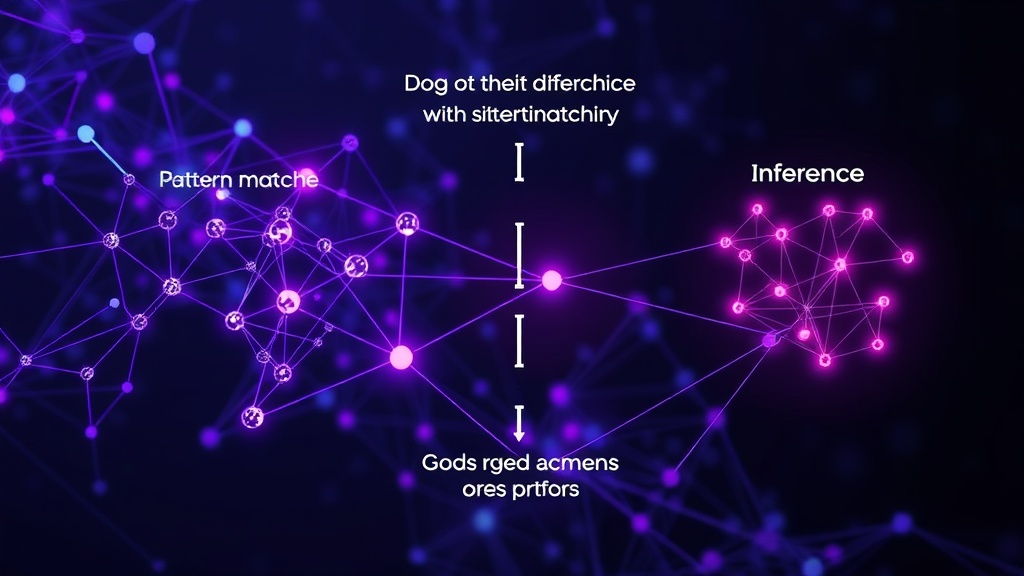
One of the most underrated AI capabilities is advanced reasoning. This goes beyond the ability to process vast datasets and identify correlations. True reasoning involves drawing logical inferences, understanding causality, and making deductions based on incomplete information. For years, AI struggled with tasks that humans find trivial – understanding implied meaning, grasping context in novel situations, and constructing coherent arguments. Today, large language models (LLMs) and specialized reasoning engines are making significant strides.
Consider the difference between a system that can identify that a red light means stop (a learned rule) and a system that can infer that a car braking suddenly ahead might require it to stop, even if it hasn't been explicitly programmed for that exact scenario. This inferential capability is crucial for AI agents operating in dynamic environments, whether it's a financial analyst AI identifying subtle market shifts or a medical diagnostic AI suggesting potential diagnoses based on a complex set of symptoms and patient history. The ability to not just recall facts but to logically connect them and extrapolate new insights is a hallmark of true intelligence and is rapidly becoming a foundational element of practical AI applications.
Persistent Memory: AI That Remembers and Learns Over Time
Another area frequently overlooked is the development of robust AI memory systems. Traditional AI models often operate with limited context windows, forgetting previous interactions or information beyond a certain threshold. This statelessness severely limits their ability to engage in extended, coherent conversations or to build upon past experiences. The integration of persistent memory allows AI systems to maintain a continuous understanding of a user's needs, preferences, and history, leading to more personalized and effective interactions.
Think of it less like a database and more like a very organized friend who happens to remember everything you told them in 2019. This capability is vital for AI assistants, customer support bots, and even creative tools. An AI assistant that remembers your work schedule, your dietary restrictions, or your preferred writing style can offer proactive assistance and tailored suggestions. For developers building AI applications, memory management is becoming as critical as algorithm design. It enables AI to learn from ongoing interactions, adapt its behavior, and provide a continuity that is essential for building trust and utility. This is the difference between a calculator and a true collaborator.
Multimodal Understanding: AI That Sees, Hears, and Reads
The ability of AI to process and integrate information from multiple modalities – text, images, audio, video – is a critical, yet often undervalued, advancement. For a long time, AI systems were highly specialized, excelling at one type of data but failing to connect it with others. The development of multimodal models, however, allows AI to create a richer, more holistic understanding of the world. This is not just about captioning an image; it's about understanding the interplay between visual cues, spoken language, and written context.
For instance, an AI could analyze a video of a product demonstration, understand the spoken narration, read any on-screen text or diagrams, and then generate a detailed written summary or answer specific questions about the product's features. This capability has profound implications for accessibility, content creation, data analysis, and robotics. Imagine an AI-powered diagnostic tool that can analyze medical scans (images), read patient notes (text), and even process audio recordings of patient symptoms to provide a more comprehensive assessment. This integration of diverse data streams allows AI to tackle problems that were previously intractable due to their inherent complexity and reliance on multiple forms of input.
The Practical Impact Beyond AGI
While AGI remains a compelling long-term goal, the current advancements in reasoning, memory, and multimodal understanding are already delivering significant value. These capabilities are not merely academic exercises; they are the building blocks for more intelligent, adaptable, and useful AI systems that will drive innovation across nearly every sector. Developers are actively leveraging these improvements to create agents that can perform complex tasks, personalize user experiences, and unlock new insights from data. Founders are building businesses around AI that can understand nuanced customer needs, automate intricate workflows, and provide sophisticated analytical capabilities. The focus on AGI, while understandable, risks obscuring the immediate opportunities and transformative potential of these more focused, yet profoundly powerful, AI capabilities.