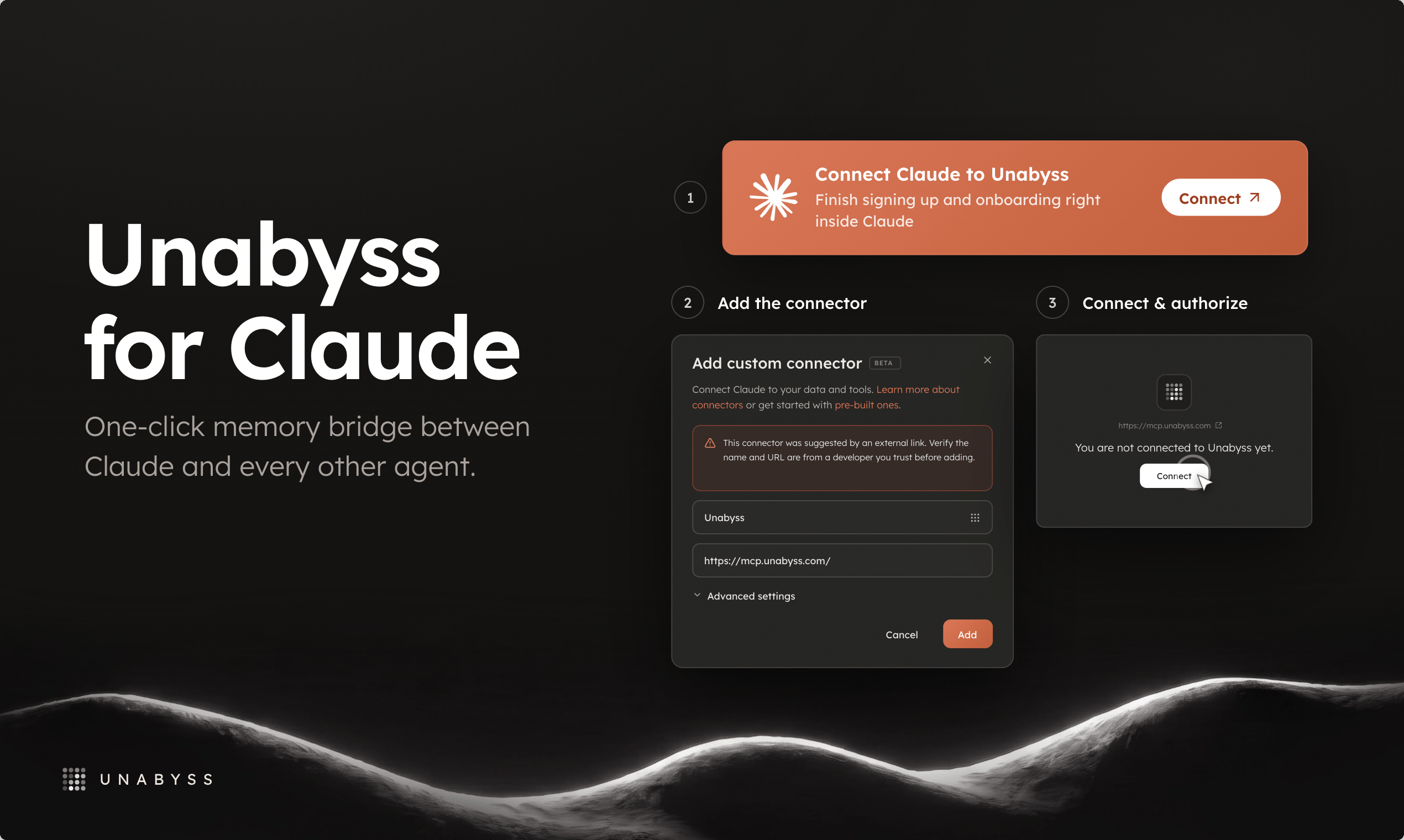
Unified Memory for Claude Interactions
Unabyss has introduced a novel solution designed to address a core limitation in current Large Language Model (LLM) applications: the ephemeral nature of user interactions. The new product, simply titled "Unabyss for Claude," enables users to maintain a shared memory across all their applications and LLM instances within the Claude ecosystem. This means that context, preferences, and information provided in one interaction can persist and be recalled in subsequent, entirely separate conversations or application uses.
Historically, LLMs operate on a turn-by-turn basis, with each new prompt or conversation often starting from a blank slate unless explicitly re-contextualized. This forces users to constantly re-enter information, reiterate preferences, or re-explain the background of a task. Unabyss aims to break down these silos. Think of it less like a stateless API call and more like a persistent digital assistant who remembers your previous requests, your name, and your ongoing projects without you having to remind them every single time.
How Unabyss for Claude Works
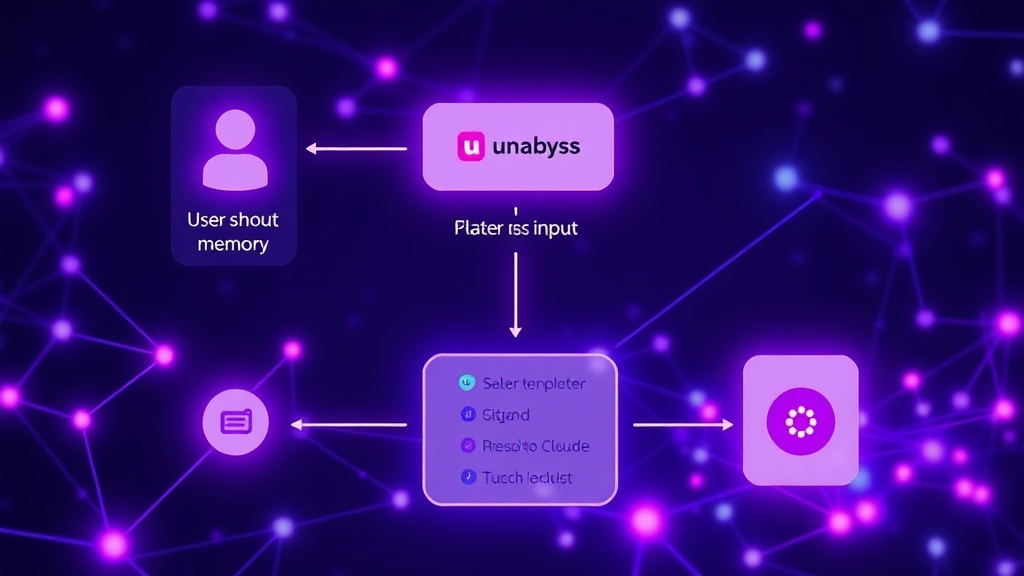
While the technical specifics of Unabyss's implementation are not fully detailed in the initial announcement, the core promise is shared memory. This implies a backend system that stores user data and interaction history, making it accessible to Claude instances. When a user interacts with Claude through an application integrated with Unabyss, that application can query the shared memory to inform Claude's responses. Conversely, information generated or confirmed within a Claude session can be written back to this shared memory, enriching the persistent context for future use.
This capability is particularly powerful for complex workflows. For example, a user might be drafting an email in one application, then switch to a document summarization task using Claude, and then pivot to coding assistance. With Unabyss, Claude could retain the recipient's name, the email's subject, or the document's key points across these transitions. The system effectively creates a continuous thread of knowledge, allowing for more fluid and efficient AI-assisted work.
Implications for LLM Application Development
The introduction of persistent, shared memory for LLMs like Claude has significant implications for developers building on top of these models. It moves beyond simple prompt engineering and API calls towards creating truly integrated AI experiences. Developers can now design applications that leverage a long-term user profile, project history, and learned preferences, leading to:
- Personalized Experiences: LLMs can offer more tailored responses and suggestions based on a deep understanding of the user's past interactions and stated goals.
- Reduced Redundancy: Users spend less time re-explaining context, leading to faster task completion and reduced frustration.
- Complex Workflow Support: Applications can orchestrate multi-step AI tasks where memory persistence is critical for maintaining coherence and accuracy.
- New Application Categories: This opens the door for entirely new types of AI applications that rely on continuous learning and memory, such as long-term personal knowledge management systems or AI-powered research assistants.
The challenge for developers will be to effectively manage and query this shared memory. Designing intuitive interfaces for users to review, edit, or purge their persistent memory will be crucial for trust and control. Furthermore, ensuring the privacy and security of this stored data is paramount. Unabyss's success will hinge not only on its technical implementation but also on how well it empowers developers to build responsible and user-centric AI applications.
The Future of LLM Context
Unabyss for Claude is a significant step towards making LLMs feel less like tools and more like integrated cognitive partners. By tackling the memory problem head-on, it addresses a fundamental friction point for power users and casual users alike. As LLMs become more deeply embedded in our daily workflows, the ability to maintain a consistent, evolving understanding of our needs and projects will be a key differentiator. The question remains how this shared memory model will scale and integrate with other LLM platforms and custom fine-tuned models, but for now, it represents a compelling advancement for Claude users.