The GPU Memory Bottleneck in AI Development
The current paradigm for running AI inference, particularly large language models (LLMs), often forces developers into a costly arms race for high-end GPUs. The common approach involves loading an entire model into a GPU's VRAM. This method quickly hits its limit, as evidenced by the ubiquitous "CUDA Out of Memory" error faced by many experimenting with open-source LLMs. Sumeet, the developer behind the UGR project, encountered this exact problem on a Dell Precision 5520 equipped with a NVIDIA Quadro M1200 (4 GB VRAM) and 32 GB of system RAM.
This limitation isn't just an inconvenience; it's a significant barrier to entry for individual developers, researchers, and smaller organizations who cannot afford the multi-thousand-dollar price tags of GPUs with sufficient memory. While solutions like llama.cpp, Ollama, and TensorRT-LLM offer optimizations, they often still rely on maximizing GPU utilization or employ complex memory management techniques that can be difficult to integrate seamlessly into a broader operating system context.
The core question UGR seeks to answer is: why must AI inference be confined to this memory-bound GPU-centric approach? The project proposes a fundamental shift by building an AI runtime operating system designed specifically for commodity hardware, effectively decoupling AI workloads from the need for massive, dedicated GPU VRAM.
Introducing UGR: An OS for AI on Standard Hardware
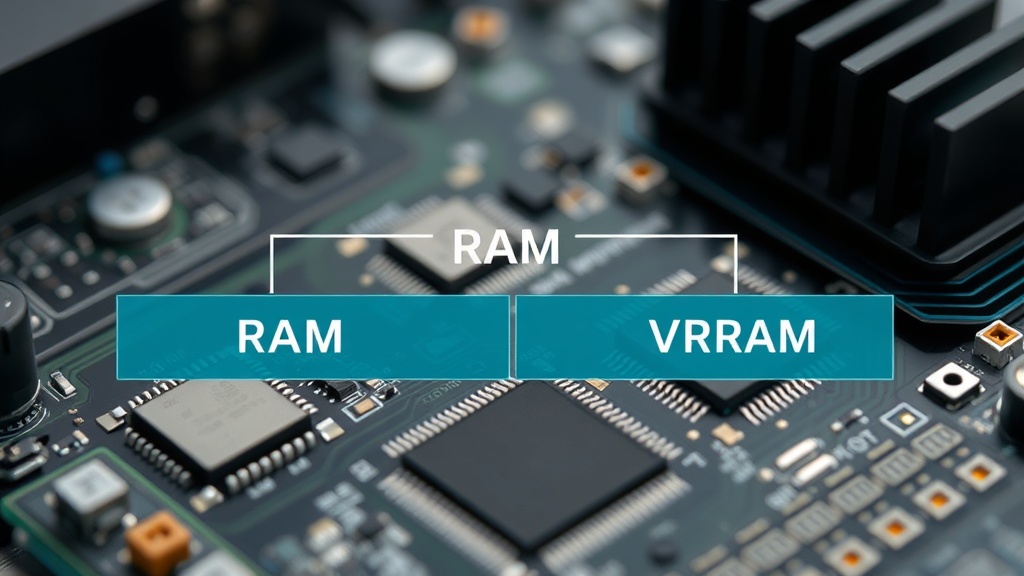
UGR (which stands for Universal GPU Runtime, though the project's documentation suggests it's more about abstracting hardware than strictly GPU) is an operating system built from the ground up to manage AI inference efficiently on standard hardware. Instead of treating AI models as monolithic entities that must fit entirely into GPU memory, UGR introduces a more flexible and granular approach to model execution. This involves breaking down models into smaller, manageable components that can be dynamically loaded, processed, and unloaded as needed, leveraging both system RAM and available VRAM in a coordinated manner.
The fundamental principle behind UGR is to treat AI inference not as a fixed-size problem but as a dynamic workflow. This allows for the execution of models that are significantly larger than the available dedicated GPU memory. Think of it less like trying to cram an entire library into a small backpack and more like having a smart assistant who fetches individual books from a larger, more accessible storage unit (your system RAM) only when you need them for a specific task.
This approach has profound implications for developer workflows. It means that the same machine used for coding, browsing, and general development can also be used for running complex AI models without requiring specialized, expensive hardware upgrades. This democratizes access to powerful AI capabilities, enabling a wider range of users to experiment, develop, and deploy AI applications.
Key Architectural Concepts and Technical Challenges
Building an OS like UGR involves tackling several complex technical challenges. One of the primary hurdles is efficient memory management. UGR must intelligently orchestrate the movement of model parameters and intermediate computations between system RAM and GPU VRAM. This requires sophisticated memory mapping, paging, and caching mechanisms that are optimized for the specific access patterns of AI inference workloads.
Another critical component is the runtime scheduler. Unlike traditional operating systems that schedule general-purpose tasks, UGR's scheduler must be aware of the computational graph of AI models. It needs to predict memory requirements, optimize data transfer, and ensure that computations are performed in the correct order with minimal latency. This likely involves custom kernel-level modifications and specialized libraries for handling tensor operations.
Furthermore, UGR aims to provide a consistent runtime environment across diverse commodity hardware. This means abstracting away the specifics of different CPUs, GPUs (including integrated graphics and older discrete cards), and memory configurations. Achieving this level of hardware abstraction while maintaining high performance is a significant engineering feat.
Implications for AI Development and Deployment
The success of UGR could fundamentally alter the landscape of AI development. By lowering the hardware barrier to entry, it enables a broader community of developers to engage with cutting-edge AI models. This could accelerate innovation, foster new applications, and lead to a more diverse ecosystem of AI tools and services.
For individual developers, it means that personal workstations become viable platforms for running and fine-tuning large models, reducing reliance on cloud services or expensive server hardware. This fosters a more iterative and experimental development cycle.
For startups and smaller research labs, UGR offers a path to leverage powerful AI capabilities without the prohibitive upfront hardware costs. This can significantly impact their runway and ability to compete with larger, better-funded organizations. The ability to run models locally also enhances data privacy and security, as sensitive data does not need to be transferred to external servers.
The project also raises questions about the future of specialized AI hardware. If efficient runtimes can unlock the potential of commodity hardware, the demand for extremely high-end, VRAM-rich GPUs might shift. While specialized hardware will likely always offer peak performance, UGR suggests a viable and more accessible alternative for a vast range of use cases.
The Path Forward for UGR
UGR is still in its early stages, but its ambition to democratize AI inference is clear. The project is navigating the complex territory of OS development and AI runtime engineering. Its ultimate success will depend on its ability to deliver robust performance, broad hardware compatibility, and a developer-friendly interface.
The concept of an AI runtime operating system for commodity hardware addresses a critical pain point in the current AI landscape. If UGR can effectively abstract away the complexities of hardware limitations, it could usher in a new era of accessible and widespread AI development and deployment.