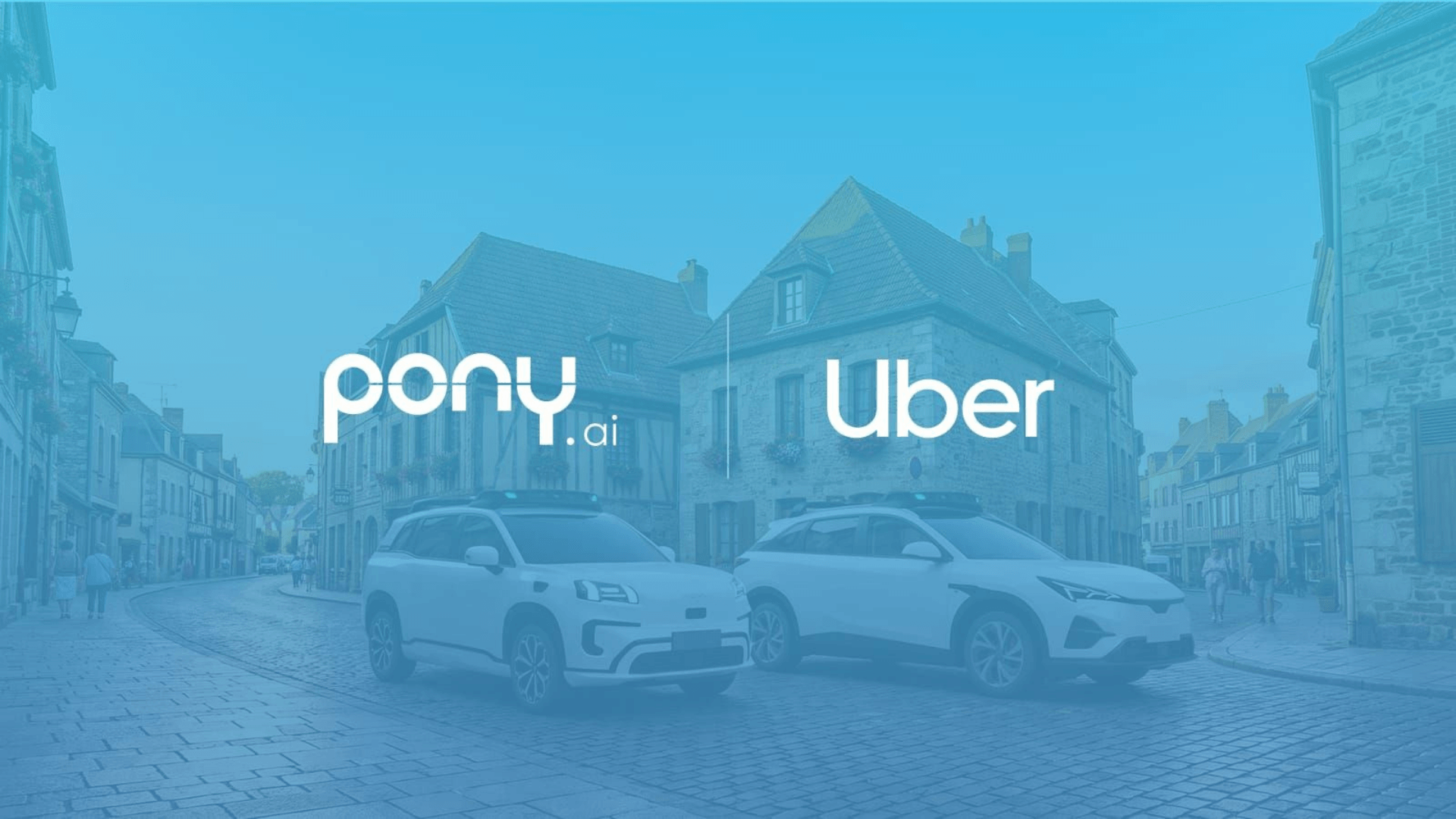
Uber Accelerates European Robotaxi Ambitions
Uber is significantly escalating its robotaxi offensive across Europe, announcing an expanded strategic partnership with Chinese autonomous driving technology leader Pony.ai. This collaboration is set to deploy more than 2,000 autonomous vehicles in select European cities, marking a substantial commitment to the region's burgeoning self-driving taxi market. The move signals Uber's intent to not only compete but to lead in a space that is rapidly evolving, with significant regulatory hurdles and technological advancements shaping its trajectory.
The partnership builds on existing collaborations and aims to leverage Pony.ai's advanced autonomous driving systems with Uber's extensive ride-hailing network and operational expertise. While the specific cities for this large-scale deployment are yet to be fully detailed, the focus is expected to be on metropolitan areas with favorable regulatory environments and high demand for ride-sharing services. This strategic expansion positions Uber to capture a significant share of the future mobility market in Europe, a continent increasingly receptive to sustainable and efficient transportation solutions.
Pony.ai, a prominent player in the autonomous driving landscape, brings a wealth of experience in developing and testing self-driving technology. Their systems are designed to handle complex urban driving scenarios, a critical requirement for successful robotaxi operations. By integrating Pony.ai's technology into Uber's platform, the companies aim to offer a safe, reliable, and scalable autonomous ride-hailing service that can meet the demands of a diverse European user base.
Technological Integration and Operational Strategy
The core of this expanded partnership lies in the seamless integration of Pony.ai's sophisticated autonomous driving software and hardware with Uber's existing ride-hailing infrastructure. This includes not only the vehicles themselves but also the sophisticated fleet management, dispatch, and customer service systems that Uber has honed over years of operation. The goal is to create an end-to-end autonomous mobility solution that is both technologically robust and operationally efficient.
Deploying over 2,000 vehicles is not merely an increase in fleet size; it represents a concerted effort to gather extensive real-world data across varied European urban environments. This data is crucial for refining the autonomous driving algorithms, improving safety metrics, and optimizing operational performance. The sheer scale of the deployment is intended to accelerate the learning curve for both companies, enabling them to address unique challenges presented by European road infrastructure, traffic patterns, and diverse weather conditions.
The operational strategy will likely involve phased rollouts, starting with geofenced areas within selected cities. This approach allows for rigorous testing and validation before wider expansion. Furthermore, the partnership will focus on developing robust safety protocols and ensuring compliance with evolving European regulations for autonomous vehicles. This includes close collaboration with local authorities and regulatory bodies to build trust and facilitate the safe integration of robotaxis into public transportation networks.
Market Implications and Competitive Landscape
Uber's aggressive move into the European robotaxi market with such a substantial commitment signals a clear intent to dominate this emerging sector. The company's established brand recognition and vast user base provide a significant advantage over potential competitors. By partnering with a leading autonomous technology provider like Pony.ai, Uber is not just deploying vehicles; it is building a formidable technological and operational moat.
This expansion also intensifies the competitive landscape. While other ride-hailing companies and automotive manufacturers are exploring autonomous vehicle technology, few have announced deployments of this magnitude in Europe. The success of this venture could set a new benchmark for autonomous mobility services on the continent, potentially forcing rivals to accelerate their own development and deployment plans. The European market, with its dense urban centers and growing environmental consciousness, represents a prime opportunity for the widespread adoption of robotaxis.
The long-term implications extend beyond ride-hailing. Successful robotaxi operations can pave the way for autonomous delivery services, logistics, and other forms of autonomous transportation, further transforming urban mobility. Uber and Pony.ai appear poised to be at the forefront of this transformation, leveraging their combined strengths to navigate the complexities of autonomous technology and market adoption.
Navigating Regulatory and Public Acceptance Hurdles
One of the most significant challenges for any large-scale robotaxi deployment is navigating the complex and often fragmented regulatory landscape across European nations. Each country, and sometimes even individual cities, has its own set of rules and approval processes for testing and operating autonomous vehicles. Uber and Pony.ai will need to engage in extensive dialogue with policymakers and demonstrate the safety and reliability of their technology to gain the necessary permits.
Public perception and acceptance are equally critical. While the promise of safer, more efficient transportation is appealing, concerns about job displacement for human drivers, data privacy, and the safety of autonomous systems remain. Educating the public, ensuring transparency in operations, and fostering trust will be paramount. The companies will likely invest heavily in public awareness campaigns and community engagement initiatives to address these concerns proactively. The success of this European robotaxi offensive will hinge not only on technological prowess but also on the ability to build societal consensus and regulatory alignment.