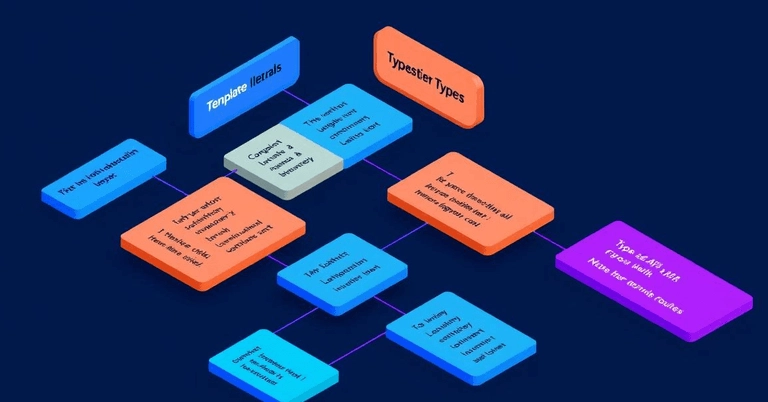
The Problem: Strings as Opaque Primitives
Many common TypeScript issues arise from treating strings as opaque primitives. Developers often accept string types for route handlers, event emitters, or configuration values. This lack of specificity means that invalid string formats are only discovered at runtime, leading to unexpected exceptions and a brittle codebase. The cost of this runtime validation is significant, both in development time and production stability.
Consider a typical API endpoint for fetching user data: /users/:id. If a developer passes /users/abc instead of /users/123, the application might crash or return incorrect data. The same applies to event names, configuration keys, or any API that relies on specific string formats. The current approach treats strings as a necessary evil, rather than a structured data type.
The Solution: Template Literal Types for Type Safety
TypeScript's template literal types offer a powerful mechanism to transform strings from a liability into a type-safe foundation. This feature allows developers to define specific string patterns directly within the type system. By encoding these patterns, TypeScript can catch typos, incorrect formats, and invalid values before the code is even executed. This shifts error detection from runtime to compile time, a critical improvement for API design and reliability.
Template literal types work by inferring and constructing string types based on template literal syntax. Instead of a generic string, you can define types that match precise formats. For example, a route parameter type could be defined as type UserId =
`users/${number}`;
. This type will only accept strings that follow the pattern users/ followed by a number. Any deviation will result in a compile-time error.
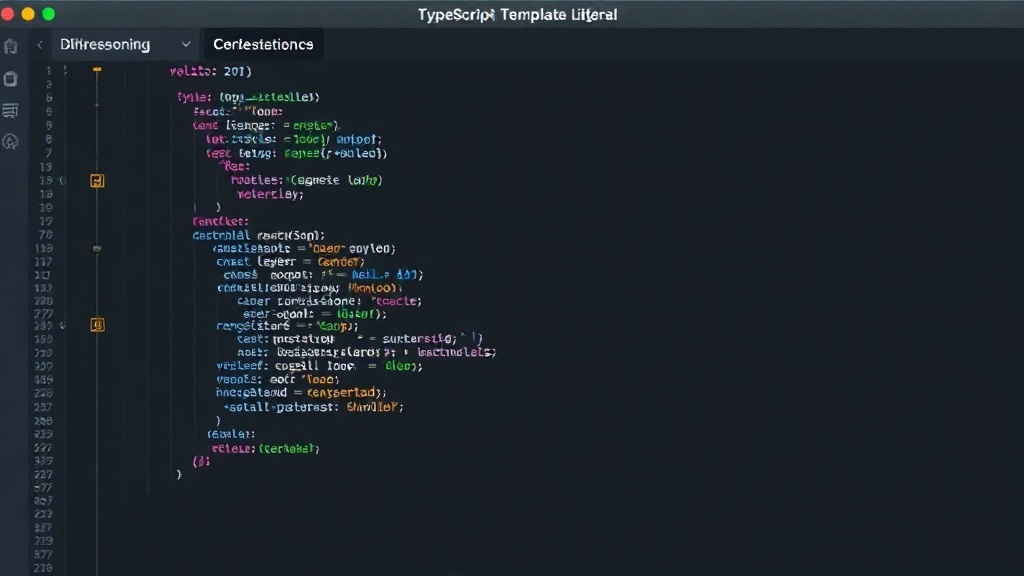
Advanced Patterns: Recursive Types and Nested Structures
The power of template literal types extends beyond simple patterns. They can be used recursively to validate complex, nested string structures. This is particularly useful for defining types for nested routes, hierarchical configurations, or complex state machine transitions.
For instance, a nested route like users/:id/posts/:postId can be typed precisely. A recursive type definition can ensure that the structure is maintained, and that the placeholders :id and :postId are correctly identified and potentially even typed themselves (e.g., if IDs are always numeric). This recursive validation prevents errors where a route handler expects a specific path structure but receives something slightly different, such as /users/123/posts/abc when postId should be numeric.
Consider a type for event names in an event emitter. Instead of emit(eventName: string), you could have emit<E extends EventName>(eventName: E, payload: PayloadMap[E]), where EventName is a union of precisely defined event strings (e.g., 'user:created' | 'user:deleted' | 'order:placed'). This ensures that only valid event names can be emitted, and that the correct payload type is associated with each event.
Practical Applications and Benefits
The implications of using template literal types are far-reaching:
- API Design: APIs become more robust and self-documenting. The type definitions clearly articulate expected string formats, reducing ambiguity for API consumers.
- Reduced Runtime Errors: By catching invalid strings at compile time, the number of runtime exceptions related to string manipulation is drastically reduced. This leads to more stable applications.
- Improved Developer Experience: Developers receive immediate feedback on incorrect string usage, rather than debugging cryptic runtime errors later. Autocompletion and IntelliSense are also enhanced, as the IDE understands the precise string patterns.
- CSS-in-JS and Styling: Systems that rely on specific string formats for class names, CSS properties, or theme keys can leverage template literal types to ensure validity.
- Internationalization (i18n): Key strings for localization can be typed to match specific formats, preventing errors in translation lookups.
The surprising detail here is not just that TypeScript can validate strings, but the *expressiveness* it brings to API contracts. It transforms strings from simple text into structured, type-checked components of an application's interface.
Implementing Template Literal Types
Implementing template literal types involves defining custom types that leverage string interpolation syntax. You can use conditional types and mapped types to construct complex unions and intersections of string patterns.
For example, to create a type for CSS property names that must start with a prefix:
type Prefix = 'data-'

type CssPropertyName =
  `${Prefix}${string}`;

// Valid:
let prop1: CssPropertyName = 'data-testid';

// Invalid:
// let prop2: CssPropertyName = 'testid'; // Error
This simple example demonstrates how a prefix can be enforced. More complex patterns can be built by combining multiple template literals, conditional types to check for specific substrings, and recursive type aliases to handle arbitrary depths of nested structures.
The Road Ahead: String Safety as a First-Class Citizen
Template literal types are a significant step towards treating strings as first-class, type-safe citizens in TypeScript. They empower developers to build more resilient APIs and applications by shifting validation from runtime to compile time. As developers increasingly adopt these patterns, we can expect to see a new generation of libraries and frameworks that leverage this powerful feature for enhanced safety and developer productivity. The question remains: how will this influence the design of future JavaScript APIs, pushing for more compile-time guarantees across the ecosystem?