
The Problem: Incomplete Third-Party Types
Most substantial TypeScript codebases eventually confront a frustrating reality: third-party libraries often ship with incomplete or outdated type definitions. This forces developers into an unwelcome choice: abandon type safety entirely, or fork the entire dependency and maintain it yourself. Neither option scales. Imagine Express.Request missing your custom authentication properties, or Redux.Store omitting your application's specific state shape. The typical workaround involves casting everything to any, a practice that rapidly compounds technical debt and effectively negates the compiler's core value proposition – static type checking.
This isn't a new problem. For years, developers have grappled with the friction between their evolving application needs and the static type definitions provided by external packages. The result is a constant battle against `Property 'x' does not exist on type 'Y'` errors, often leading to brittle code that only passes runtime checks, not compile-time guarantees.
Declaration Merging: The Core Solution
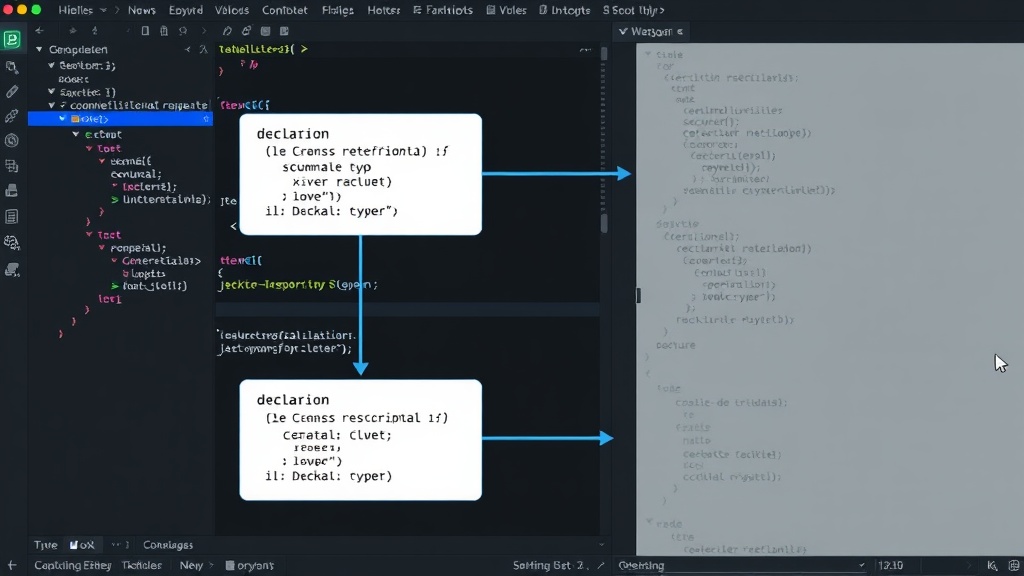
TypeScript's declaration merging feature is the primary mechanism for addressing this. It allows developers to augment existing types without modifying the original source code or its type definitions. When the TypeScript compiler encounters multiple declarations for the same identifier in the same scope, it merges them into a single, unified type. This capability is crucial for extending built-in types or adding properties to third-party library interfaces that were not originally defined.
Consider a scenario where a library provides a base User interface. Your application might require additional properties like lastLogin: Date or permissions: string[]. Instead of modifying the library's .d.ts file, you can create your own declaration file (e.g., custom.d.ts) and declare the additional properties within an interface of the same name. TypeScript automatically merges these declarations.
How It Works: Types of Merging
Declaration merging in TypeScript primarily applies to three kinds of declarations:
- Interfaces: When multiple interfaces with the same name are declared, their members are merged. If an interface declares a property that already exists, TypeScript ensures the type is compatible. For example, if one interface declares
name: stringand another declaresname: string, they merge fine. If one declaresname: stringand another declaresname: number, TypeScript will flag it as an error, as the types are incompatible. - Classes: Declarations for classes merge in two ways: static side and instance side. The static side merges static properties and methods, while the instance side merges instance properties and methods. This is useful for extending classes with new static methods or instance properties.
- Namespaces (and Modules): Namespaces can be merged with other namespaces or with classes, functions, or enums of the same name. This allows for organizing code into logical units that can be extended over time. For modules, if you have a module declaration (e.g.,
import * as foo from 'foo';) and then later declare a namespacefoo, TypeScript will merge the namespace's members into the module's exports.
Augmenting Third-Party Modules
The most common use case for declaration merging in modern development involves augmenting third-party modules. Libraries often provide a core set of types, but your application might need to add custom properties or methods to these types. For example, you might want to add a tenantId property to the Request object in an Express.js application, or enrich a third-party component's props interface.
To achieve this, you typically create a declaration file (often named something like types/index.d.ts or global.d.ts) within your project. Inside this file, you re-declare the module and add your augmentations. For instance, to add a custom property to Express's Request type:
// custom.d.ts
import 'express';

declare module 'express' {
  interface Request {
    customAuthId?: string;
  }
}
By importing the module you wish to augment (even if you don't use the import directly), you signal to TypeScript that you are extending its types. The compiler then merges your new declaration with the existing types for the express module. This allows you to access req.customAuthId safely throughout your application without altering the original @types/express package.
Potential Pitfalls and Best Practices
While powerful, declaration merging is not without its potential pitfalls. Overuse or incorrect implementation can lead to confusion and make code harder to reason about. Here are some best practices:
- Keep Merges Local: Prefer augmenting specific modules within your project's type declaration files rather than creating global augmentations unless absolutely necessary. This improves code locality and reduces the chance of naming collisions.
- Be Specific: Only add the properties or methods that your application actually needs. Avoid bloating third-party types with unnecessary additions.
- Document Aggressively: Clearly document why and where you are augmenting types. This is especially important for team members who may not be familiar with the augmentation strategy.
- Test Thoroughly: While TypeScript provides compile-time safety, always ensure that your runtime logic correctly handles the augmented properties. Runtime behavior can still diverge from compile-time expectations.
- Consider Alternatives: For complex scenarios, evaluate if composition or wrapper functions might offer a cleaner solution than type augmentation. Sometimes, extending a type can mask underlying design issues.
The Future: Stability and Tooling
As of 2026, TypeScript's declaration merging has matured significantly. The core feature remains stable, offering a reliable way to bridge the gap between evolving application requirements and third-party library definitions. Tooling around type definition management, such as npm's scoped packages for types (e.g., @types/package-name) and automated type inference, has also improved, reducing the burden of maintaining type definitions.
However, the fundamental challenge persists: keeping type definitions synchronized with library updates. While declaration merging provides a robust solution for augmenting, it doesn't eliminate the need for developers to stay informed about the types their dependencies provide. The practice encourages a more pragmatic approach to type safety, acknowledging that perfect, upstream type definitions are not always feasible.
What remains an open question is how effectively AI-assisted code generation tools will integrate with declaration merging. Will future AI assistants automatically suggest or even implement necessary type augmentations based on code context, further reducing manual effort and potential errors?
Ultimately, declaration merging is an indispensable tool in the modern TypeScript developer's arsenal. It empowers teams to maintain strong type safety even when working with libraries that lack comprehensive type definitions, enabling more robust and maintainable applications.