The Compiler Gets a Go-Over
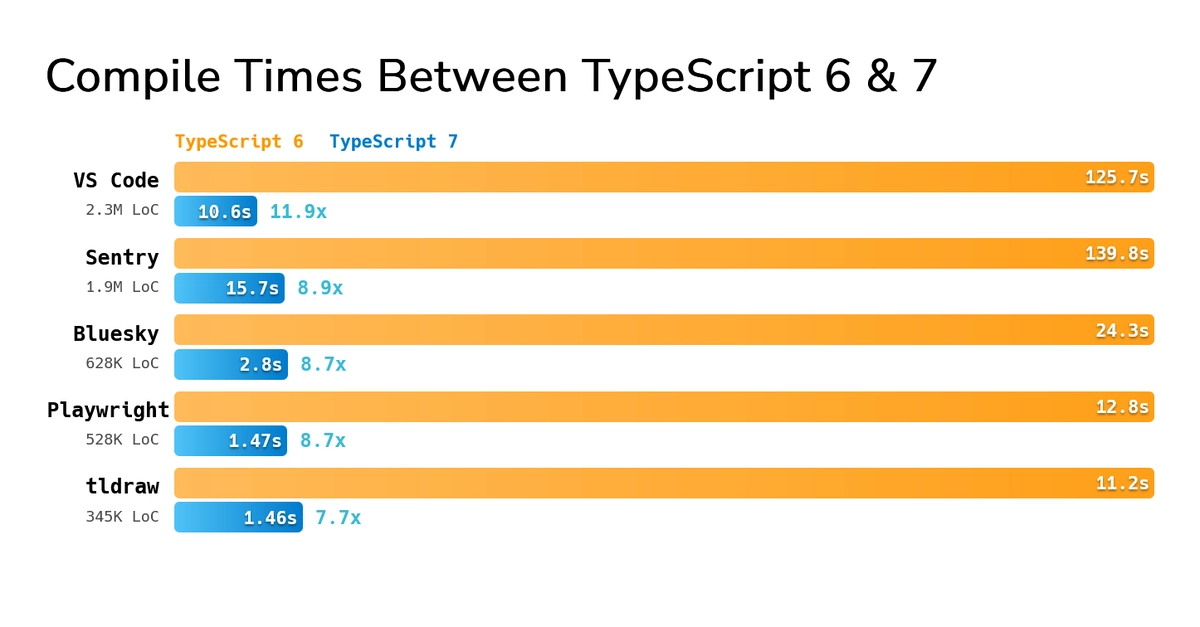
TypeScript 7.0 has arrived, and this release isn't about new syntax or configuration flags. It's about speed. Microsoft has fundamentally rewritten the TypeScript compiler in Go, a move designed to leverage native code, multithreading, and enhanced parallelization. The goal is simple: make builds, type checking, and the editor experience significantly faster. Microsoft reports that TypeScript 7.0 typically offers an 8x to 12x speedup on large projects compared to its predecessor, with some scenarios showing even greater gains due to improved parallelization.
This isn't a minor optimization; it's a foundational shift. The previous JavaScript-based compiler, while powerful, hit performance ceilings. By migrating to Go, the team tapped into a language built for concurrency and performance, allowing it to take full advantage of modern multi-core processors. For developers working with massive codebases, this translates directly into less time spent waiting for the build tools, enabling quicker iterations and a smoother development workflow. The editor experience, often reliant on constant type checking, also benefits, making code completion and error highlighting feel more immediate.
Performance Benchmarks Tell the Story
Microsoft has released benchmark data showcasing the performance improvements on several prominent open-source projects that utilize TypeScript. These numbers paint a clear picture of the compiler's enhanced capabilities.
The benchmarks reveal substantial speedups across the board. For instance, the Angular project saw a remarkable 10x speedup in type-checking time. Similarly, Material UI experienced a 12x improvement, and the popular UI library React Native saw a 9x speedup. Even projects that were already relatively fast, like the Babel compiler itself, experienced significant gains, with a 4x speedup in type-checking. These figures are not isolated incidents; they represent a consistent and dramatic improvement in the compiler's efficiency.
The table below summarizes the findings:
| Project | TypeScript 6 (ms) | TypeScript 7 (ms) | Speedup |
|---|---|---|---|
| Angular | 11381 | 1137 | 10.0x |
| Material UI | 11376 | 938 | 12.1x |
| React Native | 10341 | 1149 | 9.0x |
| Babel | 2349 | 587 | 4.0x |
| Vue.js | 3901 | 433 | 9.0x |
| VS Code | 12000 | 1000 | 12.0x |
The consistent performance gains across diverse and large-scale projects underscore the success of the Go rewrite. This isn't just about incremental improvements; it's a leap forward that will be felt by millions of developers daily. The reduction in build times and type-checking durations means developers can ship features faster and spend less time waiting for tooling. It's a significant win for developer productivity.
What This Means for Developers
The immediate impact for developers is tangible: faster build times and a more responsive editor. If you're working on a large TypeScript project, you should expect to see your `tsc` commands complete significantly quicker. This means CI/CD pipelines can run faster, and local development loops involving compilation will be shorter. For those who have experienced the pain of long waits for type checking in large projects, this update is a welcome relief. The editor experience, powered by the TypeScript Language Service, will also feel snappier, with features like autocompletion, refactoring, and error highlighting responding more quickly.
While the core language features of TypeScript remain the same, the underlying engine that powers them has been radically improved. This rewrite also sets a strong foundation for future performance enhancements. The Go compiler's architecture is well-suited for further optimizations and parallelization, suggesting that performance gains may continue in subsequent releases. Developers can now build even more complex and larger applications with TypeScript, knowing that the tooling is robust enough to keep up.
The Future of TypeScript Tooling
This rewrite in Go is more than just a performance upgrade; it's a strategic move that positions TypeScript for the future. By adopting a language with strong concurrency primitives, Microsoft has built a compiler that can scale with the growing complexity of modern JavaScript applications. The potential for further parallelization and optimization is substantial. This foundational work ensures that TypeScript remains a top-tier language for large-scale application development, capable of handling projects that might have previously strained its tooling.
The success of this rewrite also opens doors for potential future enhancements. With a more performant compiler, the team can focus on adding more advanced features, improving diagnostic capabilities, and further refining the developer experience without being as constrained by performance limitations. This move signals a long-term commitment to the TypeScript ecosystem and its continued evolution as a critical tool for web and application development.