The Declaration Emit Bottleneck
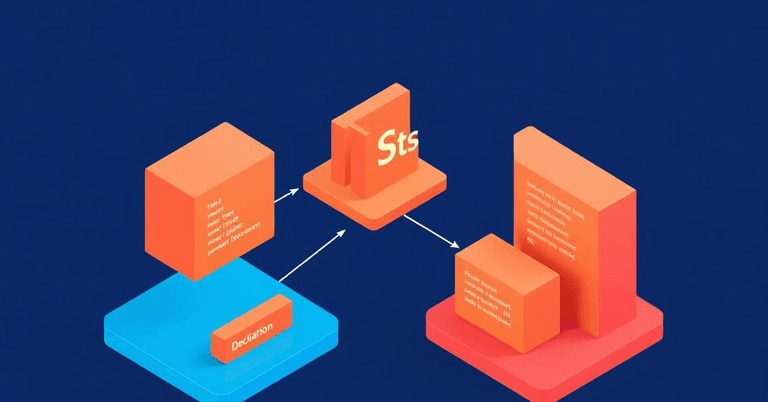
For years, TypeScript developers have grappled with slow build times, particularly in large monorepos. The primary culprit has been the sequential nature of declaration file (`.d.ts`) generation. Historically, TypeScript’s type checker had to analyze the entire dependency graph of a project before it could emit any declaration files. This meant that even a small change in one file could trigger a cascade of checks and analyses across many other files, creating a significant bottleneck. Imagine trying to build a complex LEGO set where you can only add the next brick after verifying every single piece in the entire box is correctly placed. This is essentially how the old declaration emit worked: a deeply intertwined, sequential process.
This dependency-driven analysis meant that parallelization, a common technique for speeding up build processes, was largely ineffective for declaration emit. The system was inherently serial, forcing developers to wait for minutes, sometimes even longer, for their type definitions to be generated. This wait time directly impacts developer productivity, slowing down the edit-compile-test cycle.
`isolatedDeclarations`: A Syntactic Shift
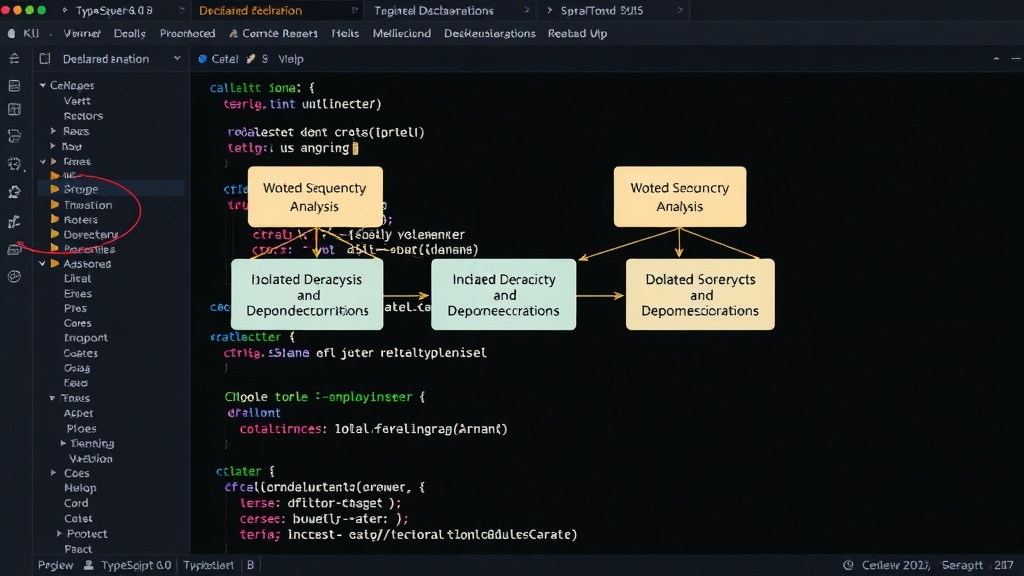
TypeScript 6.0 introduces isolatedDeclarations, a feature designed to fundamentally change how declaration files are generated. Instead of relying on the type checker to infer and emit type information, isolatedDeclarations employs a purely syntactic transform. This means that the process of generating `.d.ts` files now operates at the speed of the parser, independent of type checking. The core principle is to eliminate the cross-file analysis that plagued previous versions.
Each file essentially becomes an island. Declaration files are generated based solely on the information available within that single file. This isolation is what enables true parallelization. The TypeScript compiler can now process and emit declaration files for every file in the project simultaneously. Think of it less like a single builder meticulously checking every brick before placing the next, and more like an army of builders, each working on their own section of the LEGO set concurrently. This shift dramatically reduces the time required for declaration emit.
The performance gains are staggering. Early reports and benchmarks indicate that build times for large monorepos can drop from minutes to mere milliseconds. This is not an incremental improvement; it's a paradigm shift in build performance. For developers working on large-scale projects, this means near-instantaneous feedback loops, significantly boosting productivity and enabling faster iteration.
The Tradeoff: Explicit Type Annotations
This radical improvement comes with a tradeoff, and it’s an explicit one. Because isolatedDeclarations relies on syntactic information and eliminates cross-file type inference during declaration emit, every exported entity—functions, classes, variables, interfaces, types—must have its type annotations visible directly at the declaration site. This means you cannot rely on implicit type inference from other files to define the types of your exported members when generating declarations.
For example, if you export a function, its signature (parameters and return type) must be clearly defined in its own file. You can’t simply export a function that relies on a type defined in another file without that type being re-exported or defined locally. This requires developers to be more explicit with their type definitions, ensuring that all exported types are self-contained or that necessary types are properly re-exported. While this might seem like more work upfront, it often leads to clearer, more maintainable codebases. It forces a more disciplined approach to API design, where the public surface of a module is unambiguously defined.
Migration to projects using isolatedDeclarations will require developers to review their exported types. Tools will likely emerge to help identify and fix these explicit annotation requirements. The expectation is that most modern TypeScript codebases, which already favour explicit typing, will require minimal adjustments. However, projects that heavily rely on implicit type sharing across files for their exported members might face a more involved migration process. This explicit requirement ensures that the generated `.d.ts` files are accurate and complete, even when processed in isolation.
Why This Matters Beyond Build Times
The impact of isolatedDeclarations extends beyond mere build speed. By decoupling declaration generation from the type checker, it opens up new possibilities for tooling and compiler optimizations. It simplifies the compiler architecture by separating concerns more cleanly. Furthermore, it encourages better API design practices.
For developers, this means a more responsive development environment. Faster builds translate directly into less waiting time, allowing for more coding and less idle time. For teams managing large codebases, the cumulative time saved across developers and CI/CD pipelines will be substantial. It effectively removes a long-standing friction point in the TypeScript development experience. This feature is not just about making builds faster; it's about making the entire development workflow more fluid and efficient. It’s a significant step towards making TypeScript feel as nimble as dynamically typed languages for large-scale applications, without sacrificing type safety.