
Typed's Strategic Play: Integrating Claude with Cost Efficiency
Typed, a platform focused on enhancing developer productivity through AI, has officially launched. The company's core offering centers on providing seamless access to advanced AI models, with a particular emphasis on Anthropic's Claude. Typed's announcement highlights two key innovations designed to appeal directly to developers and their organizations: a drop-in code fallback mechanism for Claude and a more economical approach to overage charges.
The AI landscape is evolving at a breakneck pace, with new models and providers emerging regularly. For developers integrating AI into their workflows, this rapid change presents both opportunities and challenges. Keeping up with the latest capabilities while managing costs and ensuring reliable performance is a constant balancing act. Typed aims to simplify this by acting as an intelligent layer that sits between developers and the underlying AI models.
The Claude Code Fallback: A Smart Safety Net
One of Typed's most compelling features is its ability to provide a "drop-in code fallback" for Claude. This means that if there are issues with the primary Claude model—whether due to API unavailability, unexpected errors, or performance degradation—Typed can automatically switch to an alternative, often more cost-effective, code generation model. This ensures that development workflows remain uninterrupted, a critical consideration for any production environment.
Think of it less like a simple API proxy and more like an intelligent air traffic controller for your AI requests. When the preferred flight path (Claude) encounters unexpected turbulence or is temporarily closed, the controller seamlessly reroutes you to another runway that can still get the job done, perhaps with a slightly different approach but with the same end goal. This resilience is crucial for maintaining developer momentum and preventing costly downtime.
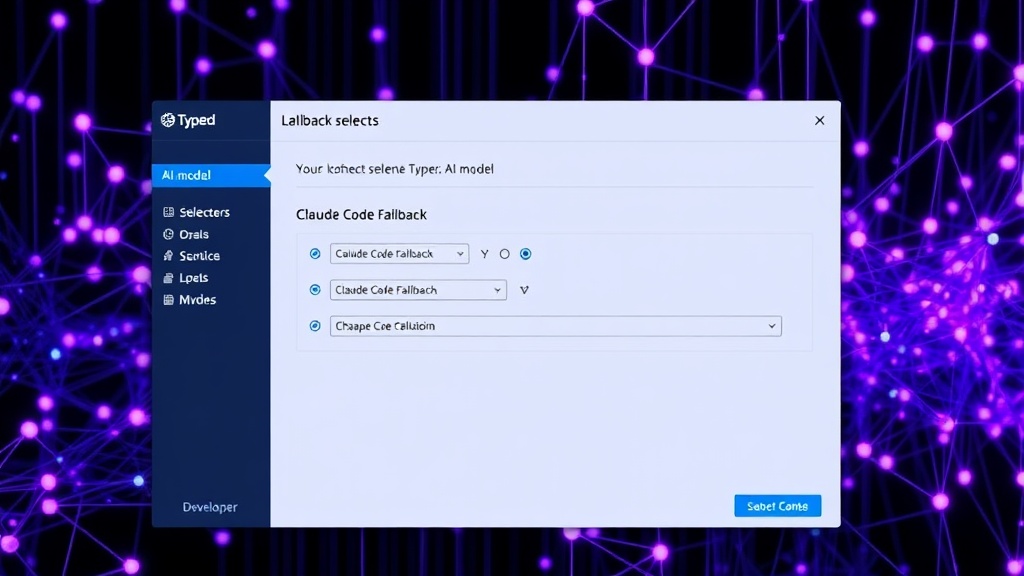
The choice of Claude as a primary model is significant. Claude, developed by Anthropic, is known for its strong performance in complex reasoning, creative writing, and code generation tasks. By integrating Claude, Typed positions itself as a platform capable of handling sophisticated AI-powered development activities. However, relying on a single, premium model can be expensive, especially for high-volume usage or during peak demand.
Addressing Overage Costs: Predictability and Savings
Beyond the fallback mechanism, Typed is tackling another common pain point for AI users: overage charges. Many AI service providers have tiered pricing structures, and exceeding usage limits can lead to unexpectedly high bills. Typed's approach promises "cheaper overage," suggesting a more transparent and affordable pricing model when usage extends beyond standard tiers.
This is particularly important for startups and smaller development teams who may have fluctuating AI needs. Unpredictable overage costs can be a major budget constraint, making it difficult to forecast expenses and scale operations. By offering more economical overage rates, Typed aims to provide greater cost predictability and make advanced AI more accessible to a broader range of users. The exact pricing structure for overage is not detailed in the announcement, but the emphasis on being "cheaper" signals a clear intent to undercut competitors on this specific aspect of AI service delivery.
The Typed Value Proposition for Developers
Typed's product is designed to appeal to several key user segments. For individual developers, it offers a streamlined way to access and manage powerful AI models without needing to directly integrate with multiple complex APIs. The fallback feature provides peace of mind, ensuring that their tools remain available even when underlying services face issues.
For engineering managers and CTOs, Typed presents an opportunity to control AI spending. By leveraging the fallback to potentially less expensive models during non-critical tasks or when Claude is unavailable, and by benefiting from cheaper overage rates, organizations can optimize their AI budgets. This strategic cost management can free up resources for other critical development areas.
The platform's ability to act as an intermediary also suggests potential for future enhancements. Typed could, in theory, integrate even more AI models, allowing users to switch between them based on task complexity, cost, or performance requirements. This flexibility is key in an AI market that is constantly innovating.
Market Context and Future Implications
The launch of Typed comes at a time when the demand for AI-powered development tools is soaring. Companies are increasingly looking for ways to accelerate software development cycles, automate repetitive tasks, and enhance code quality. Platforms that can abstract away the complexities of AI model management and pricing are well-positioned to capture significant market share.
Typed's differentiation lies in its dual focus on advanced model access (via Claude) and practical cost management. While many platforms offer access to AI models, few explicitly address the resilience and cost overage concerns with such direct solutions. The "drop-in code fallback" is a particularly clever feature, as it directly addresses the reliability concerns that can plague API-dependent systems.
What remains to be seen is how Typed will evolve its model selection and fallback logic. Will it offer a curated list of fallback options? Will it allow users to define custom fallback chains? The success of the platform will likely depend on its ability to remain agile and adapt to the ever-changing AI model ecosystem, ensuring its users always have access to the best combination of performance, reliability, and cost-effectiveness.
For now, Typed's launch signals a move towards more intelligent, resilient, and cost-aware AI integration platforms. Developers seeking to leverage models like Claude without the associated operational headaches and unpredictable costs may find Typed a compelling solution.