The Limits of Typed Errors
For years, developers have grappled with error handling. The shift from traditional exceptions to explicit Result types marked a significant improvement. Functions that once returned a value while silently throwing multiple exceptions could now declare their potential failures. This allowed callers to handle errors predictably, composing operations with libraries like better-result without losing the error channel. The promise was clear: typed errors meant more robust code.
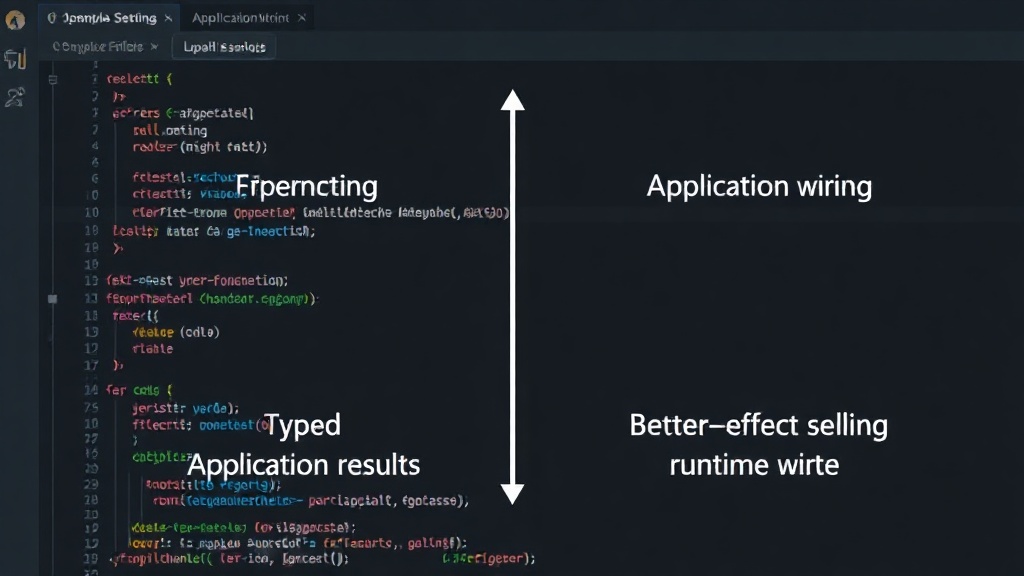
However, a critical gap remained. Even with meticulously typed return values, applications could still fail at startup due to forgotten dependencies or misconfigurations. The errors were typed, but the application's wiring—its assembly of components and their dependencies—was not. This disconnect became the impetus for building better-effect, a system designed to bring type-level safety to the entire application environment, not just individual function outputs.
Bridging the Gap: From Result to Environment
Consider a scenario where a function returns a Result<User, UserNotFoundError>. This is excellent for handling cases where a user might not exist. The caller knows to check for UserNotFoundError. But what if the process of fetching that user requires a database connection, an API client, and a caching layer? If any of these dependencies are missing or misconfigured, the application might crash before it even attempts to find the user. The Result type describes the potential failure of the operation itself, but it doesn't inherently describe the environment in which the operation must succeed.
better-effect tackles this by extending the concept of typed errors to the application's operational context. It introduces the idea of a typed environment, a collection of services and configurations that an operation requires. This environment is itself typed, meaning the compiler can verify that all necessary dependencies are provided before the application even runs. It's like having a meticulous stage manager for your code, ensuring all props, actors, and sets are in place before the curtain rises.
The Core of Better-Effect: Effect Systems and Environments
At its heart, better-effect leverages principles from effect systems. Effect systems allow developers to explicitly manage side effects, such as I/O, state changes, and asynchronous operations, as first-class citizens in their programs. By treating these effects as values, they can be composed, transformed, and reasoned about at compile time.
better-effect builds upon this by introducing a sophisticated way to define and manage the application's environment. Instead of passing dependencies implicitly through constructors or global singletons, better-effect requires them to be declared as part of an environment type. When you define an effectful computation, you also define its required environment. The better-effect runtime then ensures that a concrete environment, satisfying all declared requirements, is provided at the point of execution.
Dependency Injection at Compile Time
This approach effectively brings compile-time dependency injection to the forefront. If your application needs a database client, a logger, and a configuration reader, these are defined as types within your environment. Any function that requires these services will have them listed in its type signature as part of its environmental requirements. The better-effect runtime, when executing these functions, will look for these services in the provided environment. If a required service is missing, the compilation process (or a dedicated pre-runtime check) will fail, preventing the startup crash scenario.
This is analogous to how a complex piece of machinery has a blueprint specifying every single component and connection. If a bolt is missing from the blueprint, the assembly process halts long before the machine is powered on. better-effect provides that level of rigorous verification for software applications.
Beyond Basic Results: Handling Configuration and Lifecycle
The utility of better-effect extends beyond just dependency injection. It can also be used to manage application configuration, asynchronous operations, and even complex lifecycles of services. For instance, a configuration service might need to load settings from environment variables or a file. This loading process itself is an effectful operation that can be typed and managed by better-effect.
Furthermore, for applications with long-running services, managing their startup and shutdown gracefully is crucial. better-effect can model these lifecycle events, ensuring that resources are properly initialized and released. This provides a unified, type-safe way to handle everything from the simplest function call to the most complex application bootstrapping process.
Implications for Developers and Architects
The shift towards systems like better-effect signifies a maturing approach to software development. Developers are increasingly seeking ways to eliminate entire classes of runtime errors through static analysis and compile-time checks. This trend moves the responsibility of error detection further left in the development lifecycle, saving significant debugging time and reducing operational risk.
For architects, better-effect offers a powerful pattern for building highly reliable and maintainable systems. It encourages modularity and explicit dependency management, making applications easier to understand, test, and refactor. The explicit typing of environments means that architectural decisions about service dependencies are encoded directly into the codebase, visible to the compiler and other developers.
The Future of Typed Programming
While Result types were a crucial step, they only addressed a part of the error-handling puzzle. better-effect and similar approaches aim to provide a more holistic solution, bringing type safety to the entire application context. This move from typed return values to typed environments represents a natural evolution in how we build robust software. The goal is simple: ensure that if an application compiles, it has a much higher probability of running correctly, without the frustration of unexpected startup failures due to missing pieces.