
The Challenge of Efficient Key-Value Storage
Traditional hash tables excel at fast average-case lookups, but their performance can degrade with high collision rates or when memory locality is poor. The standard approach involves a single array of buckets, where collisions are handled by chaining (linked lists) or open addressing (probing for the next available slot). While effective, these methods can lead to cache misses when traversing linked lists or probing distant array indices, impacting real-world performance, especially on modern CPU architectures sensitive to memory access patterns.
The conventional wisdom dictates a trade-off: achieve faster lookups by increasing memory usage (e.g., larger tables, more sophisticated probing strategies) or accept slower lookups to conserve memory. This binary choice has defined hash table design for decades. However, a new proposal, dubbed "Two Indexed Hash Tables," suggests a path to break this dichotomy, offering a compelling blend of speed and efficiency.
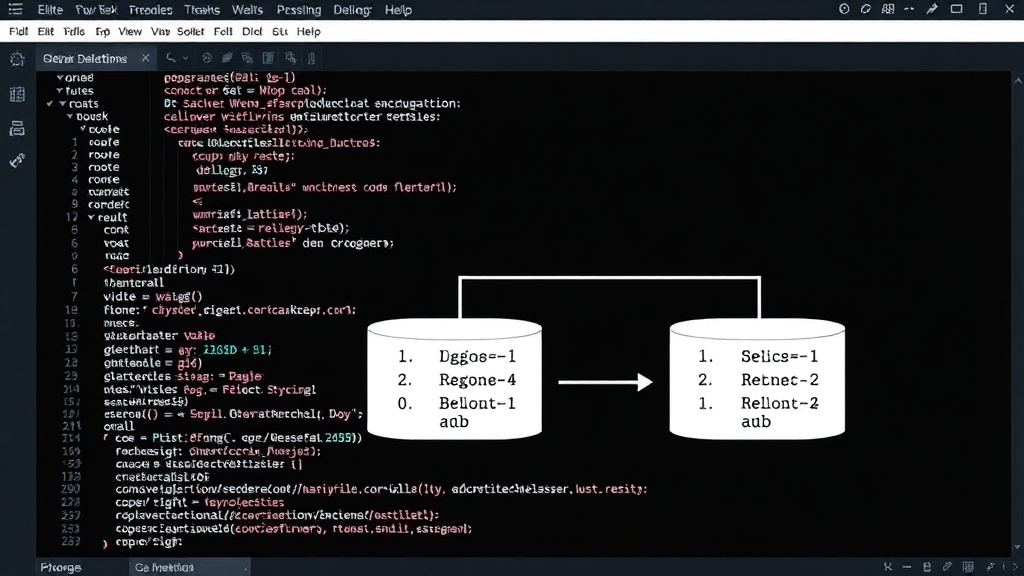
Introducing the Two Indexed Hash Table
The core innovation of the Two Indexed Hash Table lies in its dual-indexing mechanism. Instead of a single array, it employs two distinct arrays, each serving as an index into the data. Let's call these Index A and Index B. When an element is inserted, its key is hashed. One hash function determines its potential location in Index A, and a second, different hash function determines its potential location in Index B.
Crucially, each bucket in both Index A and Index B does not store the data itself, but rather a pointer or reference to the actual data element. The data elements are stored in a separate, contiguous memory region. This separation is key. When a lookup occurs, the system computes both hash values for the target key. It then checks the corresponding buckets in both Index A and Index B.
If the data element is found via the Index A lookup, the pointer is followed to retrieve the value. If it's not found there, the system attempts the lookup via Index B. The crucial insight is that with well-chosen hash functions and table sizes, the probability of a specific data element being pointed to by *both* an Index A bucket and an Index B bucket is significantly reduced compared to a single index pointing to that element. This allows for a more compact representation of the hash table's state while maintaining high lookup hit rates.
Consider the storage aspect. A traditional hash table might store pointers directly in its main array. If the table is 80% full, you have many pointers scattered across memory. With two indices, each pointing to the same data, you can potentially achieve a higher effective load factor before performance degrades significantly, or you can use smaller indices, thus reducing the overall memory footprint for the index structures themselves. The actual data is stored contiguously, which is excellent for CPU cache performance when the data is accessed.
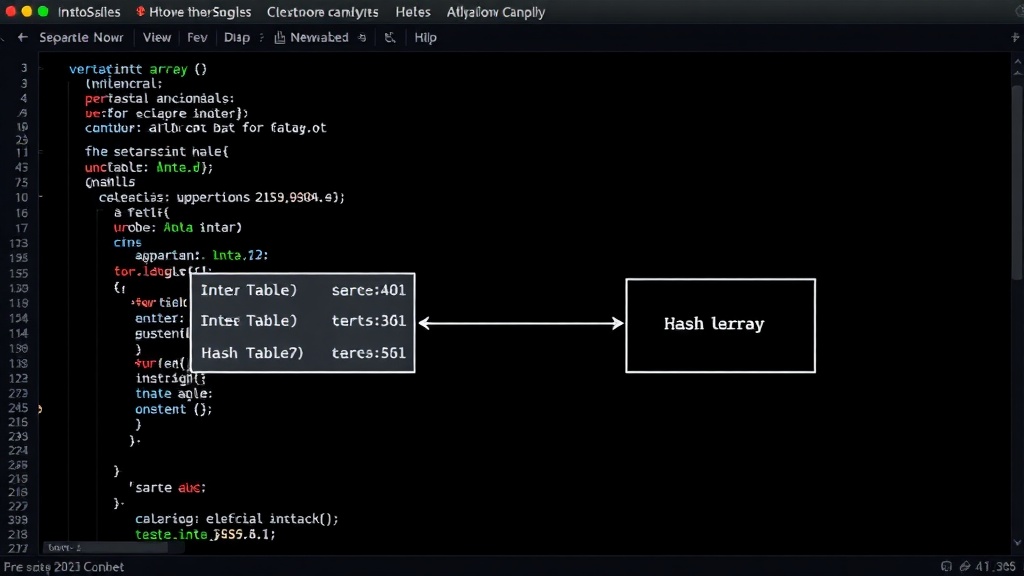
Performance Implications and Trade-offs
The theoretical benefits are substantial. For lookups, the ideal scenario is a single probe into one of the index arrays. If the element exists, it's found quickly. If it doesn't exist, the second index is checked. If it's not found in either, the element is definitively absent. This two-probe maximum for lookups, combined with the potential for better cache utilization due to the contiguous data store, suggests a significant performance uplift over traditional chaining or even some open-addressing schemes, particularly for read-heavy workloads.
Insertion is slightly more complex. An element must be added to the contiguous data store, and then pointers to it must be placed into the appropriate buckets in *both* Index A and Index B. This involves two hash calculations and two index updates per insertion. Deletion also requires removing the data element and then clearing the corresponding entries in both index arrays.
The primary trade-off is the increased complexity and the cost of two index updates during insertion and deletion. However, the potential memory savings from smaller index arrays, or the performance gains from better data locality, might outweigh this cost in many applications. The effective load factor is also a critical consideration. By using two indices, the system can tolerate a higher load factor before collisions become problematic, as the probability of a specific key mapping to *both* a used Index A slot and a used Index B slot that *don't* point to the same data is reduced.
The choice of hash functions is paramount. They must be independent enough to minimize the probability of collisions occurring in the same relative positions across both indices. For example, using different seeds or entirely different hashing algorithms for Index A and Index B would be advisable. The relative sizes of Index A and Index B can also be tuned. For instance, making them slightly smaller than a single index in a traditional table might still provide superior performance due to the dual-index advantage and contiguous data storage.
When to Consider Two Indexed Hash Tables
This data structure is particularly well-suited for scenarios where read performance is critical and memory overhead is a concern. Applications like caching systems, database indexing, or in-memory data grids could benefit significantly. If your application performs many more reads than writes, the cost of the extra index updates during writes is amortized over a large number of fast reads.
Developers building high-performance systems, especially those targeting embedded systems with limited memory or server-side applications demanding low latency, should evaluate this approach. It represents a novel departure from the established hash table paradigms, offering a tangible alternative for optimizing key-value storage.
The surprising detail here is not the theoretical speedup but the elegance with which memory efficiency and lookup speed can potentially be reconciled. Instead of accepting one at the expense of the other, this design seeks to improve both simultaneously.