
Automating 3D Asset Creation at Scale
For developers building production pipelines that require a high volume of 3D assets, manually generating each piece through a web UI is a significant bottleneck. The demand for rapid prototyping, background elements, and placeholder assets often prioritizes speed and efficiency over absolute photorealism. This has spurred interest in APIs that support batch processing, allowing for a more automated workflow where prompts or reference images can be submitted in bulk, progress tracked, and results processed without constant human oversight.
The core challenge lies in moving beyond single, interactive generations to a system that can handle a queue of tasks. Developers envision a workflow starting with a local store of prompts and reference images, feeding into a batch job submission system. This system would then track individual task IDs, poll for progress, manage retries for failed jobs, and process exports before integration into game engines like Unity and Unreal Engine or 3D modeling software such as Blender.
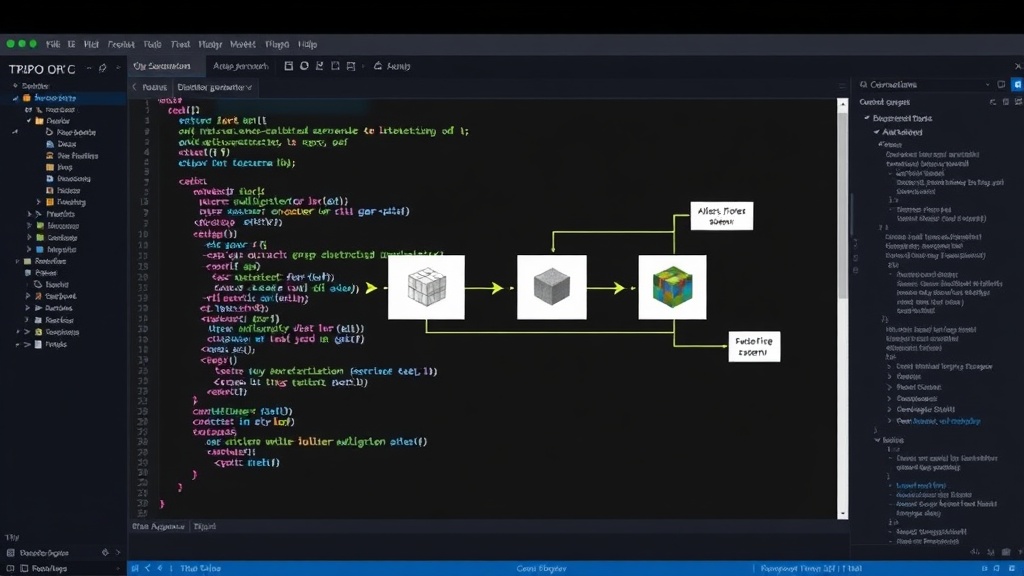
Tripo AI's API for Scalable 3D Generation
Tripo AI has emerged as a notable solution for developers aiming to implement such a batch generation pipeline. The company's API offers support for both text-to-3D and image-to-3D generation, making it a versatile tool for a queue-based workflow. This dual capability means that a single API endpoint can accommodate different input types, streamlining the integration process for diverse asset needs.
The API's design appears to be well-suited for programmatic access. Developers can submit requests programmatically, receive task identifiers, and then query the status of these tasks. This polling mechanism is crucial for managing a large number of concurrent or sequential generation jobs. The ability to handle failures and retries within the system further enhances its robustness for unattended batch operations. The output formats are typically designed for easy integration into standard 3D pipelines, facilitating the subsequent steps of refinement or direct use in development environments.
The Landscape of 3D Generation APIs
While Tripo AI offers a compelling solution, the broader landscape of 3D generation APIs is still evolving. Many existing platforms and tools, even those with advanced AI capabilities, are primarily designed for interactive, single-asset generation through a user interface. Their APIs, if available, may focus on single-request fulfillment rather than the robust, scalable batch processing required for high-throughput pipelines.
The distinction is critical: a UI-centric API might allow you to trigger a generation, but it often lacks the granular control over batch management, progress tracking, and error handling that a dedicated batch API provides. For instance, a developer might find an API that generates a single 3D model from a prompt, but attempting to loop through hundreds of prompts using such an API could become unwieldy without specific batching features. This often involves building custom middleware to manage the queue, handle rate limits, and process results, adding significant development overhead.
The ideal API for batch generation would offer features such as:
- Bulk Submission: Ability to send multiple generation requests in a single API call or a streamlined sequence.
- Asynchronous Processing: Jobs run in the background, allowing the client application to continue other tasks.
- Status Polling: Endpoints to check the progress and completion status of submitted jobs.
- Error Handling & Retries: Mechanisms to identify failed jobs and optionally retry them.
- Flexible Export Options: Support for common 3D file formats (e.g., OBJ, FBX, GLTF) suitable for integration.
Tripo AI's current offerings seem to address these needs directly. Other platforms are gradually introducing or improving their API capabilities, but the specific support for efficient, unattended batch generation remains a differentiating factor. Developers should carefully evaluate the API documentation of any service to confirm its suitability for their specific batch processing requirements, looking beyond just the core generation capability to the operational features that enable scalable pipelines.
Beyond Generation: Pipeline Integration
The goal of batch generation isn't just to create assets quickly, but to integrate them seamlessly into a larger development pipeline. This involves not only the API's ability to deliver usable 3D files but also how those files are handled post-generation. The envisioned workflow includes post-processing steps before assets are sent to engines like Unity or Unreal.
This post-processing might involve automated mesh optimization, UV unwrapping, texture application, or LOD (Level of Detail) generation. While the 3D generation API handles the initial creation, developers often need to chain other tools or scripts to prepare the assets for their target environment. The choice of API can influence this downstream process; for example, if an API consistently outputs assets in a specific, well-supported format with clean topology, subsequent automation steps become simpler.
What remains an open question is the standardization of these batch generation APIs. As the field matures, will we see common patterns emerge for task management, status reporting, and error handling? Such standardization would significantly lower the integration barrier for developers working with multiple 3D generation services.