The Dawn of the Transformer
In June 2017, a paper with the unassuming title "Attention Is All You Need" was published by a team at Google. This eight-author, fourteen-page document introduced a single architecture that would fundamentally alter the landscape of artificial intelligence. Its impact has been profound, powering models like GPT-4, Claude, Gemini, DALL-E, Stable Diffusion, and AlphaFold, and driving nearly every significant AI breakthrough since its inception. The Transformer architecture didn't merely offer incremental improvements; it represented a complete paradigm shift, rendering Recurrent Neural Networks (RNNs), Long Short-Term Memory (LSTM) networks, and other sequence-to-sequence models with attention largely obsolete almost overnight. This article, the first in a three-part series, delves into the core architecture of the Transformer, the underlying intuition behind its components, and the reasons for its remarkable scalability.
Before the Transformer, sequence modeling tasks, such as machine translation or text summarization, were predominantly handled by RNNs and their variants like LSTMs. These models process data sequentially, maintaining a hidden state that is updated at each step. This sequential nature, while intuitive for language, presents significant challenges. It inherently limits parallelization because the computation for the current step depends on the completion of the previous one. Furthermore, as sequences grow longer, RNNs struggle with vanishing or exploding gradients, making it difficult to capture long-range dependencies in the data. While attention mechanisms were introduced to alleviate some of these issues by allowing the model to selectively focus on relevant parts of the input sequence, they were typically used in conjunction with RNNs. The Transformer's radical departure was to eliminate recurrence entirely, relying solely on attention mechanisms to draw global dependencies between input and output.
Core Components: Self-Attention and Positional Encoding
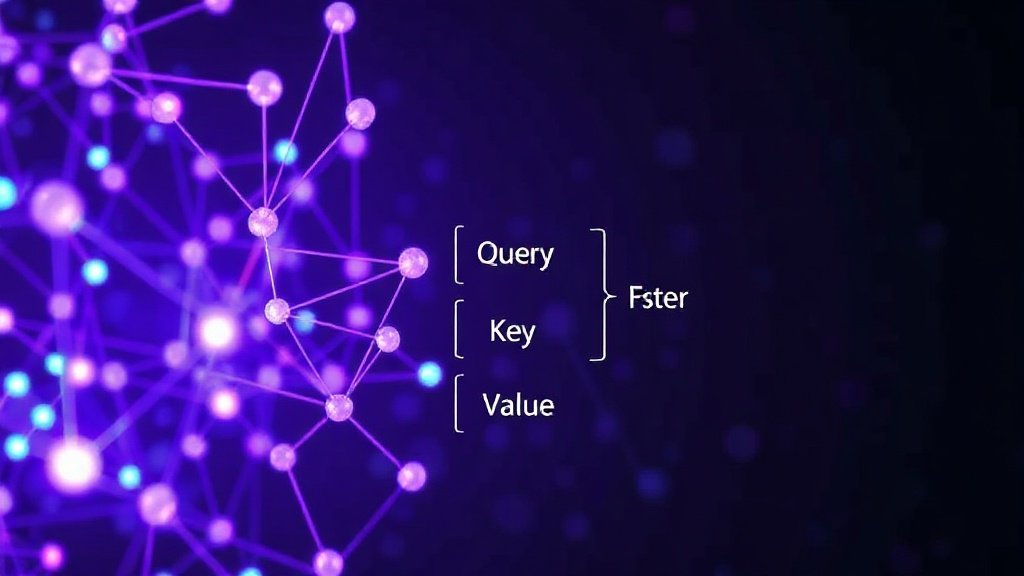
The Transformer architecture is built upon two primary innovations: self-attention and positional encoding. Self-attention allows the model to weigh the importance of different words in the input sequence relative to each other, regardless of their position. This is a critical departure from RNNs, which process words in order. For example, in the sentence "The animal didn't cross the street because it was too tired," self-attention can help the model understand that "it" refers to "the animal," even though they are separated by several words. This is achieved by calculating attention scores between every pair of words in the sequence. Each word is represented as a vector, and the model learns to compute three different vectors for each word: a Query (Q), a Key (K), and a Value (V). The attention score between two words is computed by taking the dot product of the Query vector of one word and the Key vector of another. These scores are then scaled and passed through a softmax function to obtain attention weights, which are used to create a weighted sum of the Value vectors. This process effectively allows each word to "attend" to all other words in the sequence, capturing contextual relationships.
However, removing recurrence also means losing the inherent positional information that sequential models provide. To address this, the Transformer introduces positional encoding. Since the model doesn't process words in order, it needs an explicit way to understand the relative or absolute position of words. Positional encodings are vectors added to the input embeddings at the bottom of the encoder and decoder stacks. These encodings are designed such that the model can learn to attend based on position. The original paper used sine and cosine functions of different frequencies to generate these positional encodings, allowing the model to easily learn to attend by relative positions, as `PE(pos+k)` can be represented as a linear function of `PE(pos)`. This ensures that even without sequential processing, the model retains crucial information about word order.
Encoder-Decoder Structure and Multi-Head Attention
The Transformer follows an encoder-decoder architecture, a common structure for sequence-to-sequence tasks like machine translation. The encoder's role is to process the input sequence and generate a rich representation. It consists of a stack of identical layers, each containing a multi-head self-attention mechanism and a position-wise fully connected feed-forward network. The decoder, on the other hand, generates the output sequence one token at a time. It also comprises a stack of identical layers, but each layer includes an additional attention mechanism that attends to the output of the encoder stack. This allows the decoder to focus on relevant parts of the input sequence when generating each output token.
A key enhancement is Multi-Head Attention. Instead of performing a single attention function, the Transformer linearly projects the queries, keys, and values multiple times with different learned linear projections. This allows the model to jointly attend to information from different representation subspaces at different positions. Essentially, it's like having multiple "attention heads" that can focus on different aspects of the relationships between words simultaneously. For instance, one head might focus on grammatical relationships, while another focuses on semantic similarity. The outputs of these attention heads are concatenated and linearly projected to produce the final output of the multi-head attention layer. This parallel attention mechanism significantly enhances the model's ability to capture complex dependencies and nuances in the data, contributing to its superior performance.
Why Transformers Scale So Well
The Transformer's architecture is inherently more parallelizable than RNNs. Because self-attention computes relationships between all pairs of words simultaneously, the computations within a Transformer layer can be performed in parallel across the sequence length. This is a significant advantage for training on modern hardware like GPUs, which excel at parallel processing. Unlike RNNs, where the computation for each time step must wait for the previous one, Transformer layers can process the entire sequence in a fixed number of operations, regardless of its length. This parallelizability leads to faster training times, especially for very long sequences. Furthermore, the self-attention mechanism's ability to directly model long-range dependencies, without the signal having to propagate through many sequential steps, means that the performance of Transformers does not degrade as drastically with increasing sequence length compared to RNNs. This combination of efficient parallel computation and effective long-range dependency modeling is what enables Transformers to scale to the massive datasets and model sizes that characterize modern AI breakthroughs.
The original paper's success was not just theoretical; it demonstrated empirical superiority on tasks like machine translation. The Transformer achieved state-of-the-art results while requiring significantly less training time. This efficiency and effectiveness paved the way for the development of larger, more complex models that have since become the backbone of natural language processing and are increasingly making inroads into other domains like computer vision and biology.