The Problem: Reversed Logic for Short Trades
A trading bot designed to manage risk through Fair Value Gap (FVG) anchoring encountered a critical flaw. The engine's core strategy involved anchoring stop-losses to these structural support/resistance zones. For long trades, this meant widening a tight breakeven stop to a more robust level just beyond a detected FVG, allowing trades more room to move favorably while still protecting capital. This worked as intended for long positions.
However, when applied to short trades, the same logic executed in reverse, with disastrous consequences. Instead of placing the stop-loss above the entry price and beyond an FVG, the bot consistently placed stop-losses below the entry price. This fundamental error meant that a short trade could begin losing money immediately, even before the stop-loss was triggered. The system effectively worked against itself, turning a risk management feature into a capital drain.
This issue manifested across three separate instances, each triggering a distinct bug. Despite the varied outcomes, the root cause was identical: the short-trade logic was implemented as a direct mirror of the long-trade logic, without accounting for the inherent directional difference. The code path intended for short positions was, in effect, still thinking like a long position.
FVG Anchoring Explained
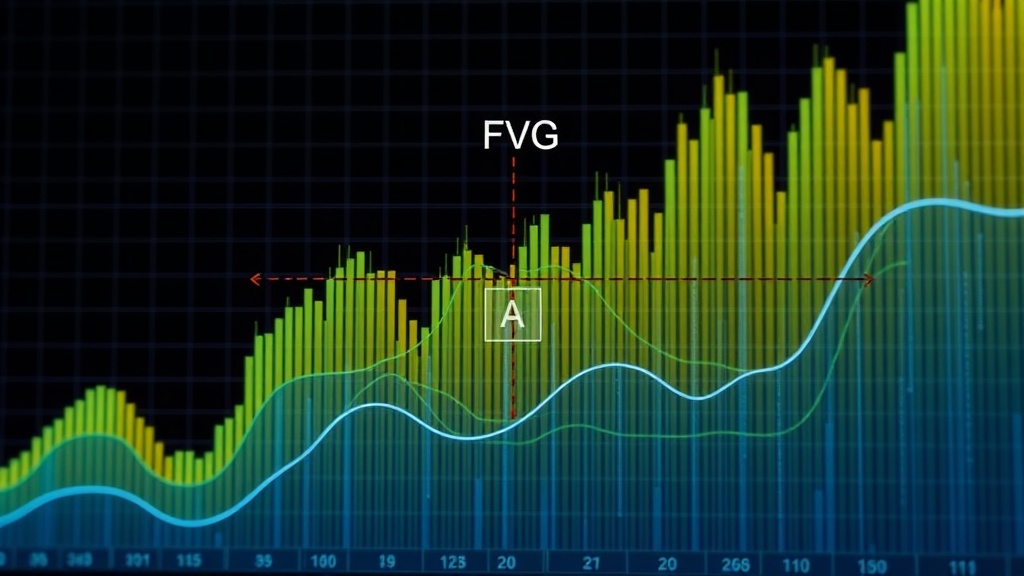
FVG anchoring is a sophisticated risk management technique employed by the AI Rook Trading Engine. Fair Value Gaps, a concept derived from price action theory, represent areas where price has moved rapidly in one direction, leaving an imbalance. These gaps often act as zones of support or resistance. In a long trade, when the price moves favorably, the engine identifies an FVG above the entry price. The stop-loss is then adjusted from a tight breakeven to a position just beyond this FVG. This strategy aims to provide a wider, more resilient stop-loss that respects market structure, preventing premature exits due to minor price fluctuations, while still safeguarding against significant losses.
The benefit is twofold: it gives the trade space to develop and avoids being stopped out by noise. The stop-loss is not just a static price level but a dynamic one, tethered to observable market structure. This approach is particularly valuable in volatile markets where price can whipsaw around tight stops.
The Debugging Process and Root Cause
The discovery of these bugs was not immediate. The AI Rook Trading Engine manages trade exits in distinct phases. Phase 1 typically involves an initial breakeven guard, moving the stop-loss to the entry price once a certain profit threshold is met. Phase 2 is where the FVG anchoring comes into play, attempting to secure a more robust stop-loss.
The problem arose specifically within Phase 2's logic when processing short trades. The developer, BDubs, noted that the FVG anchoring logic was implemented using a conditional structure that essentially duplicated the long-trade code. For a long trade, the stop-loss needs to be placed below the entry and FVG. For a short trade, the stop-loss must be placed above the entry and FVG.
The mistake occurred because the developer did not correctly invert the price level calculations for short trades. Instead of calculating a price point above the FVG and entry for a short stop-loss, the code calculated a price point below it, mirroring the long-trade calculation. This single logical oversight, replicated across the short-trade execution path, led to the systematic placement of stop-losses in disadvantageous positions.
The three distinct bugs were manifestations of this core issue: one might have been a small loss, another a larger loss, and the third potentially a series of rapid losses on multiple short trades. Each time the FVG anchoring was supposed to activate on a short trade, it failed to correctly position the stop-loss, turning a protective measure into a vulnerability.
Implications for Algorithmic Trading
This incident highlights a common pitfall in algorithmic trading development: the danger of assuming symmetry between long and short trade logic. While many concepts, like FVG identification, can be applied similarly, the execution of trade management – particularly stop-loss and take-profit placement – requires careful inversion for opposing market directions. A stop-loss below entry for a short trade is not just suboptimal; it's a fundamental error that negates the purpose of a stop-loss, which is to limit potential losses.
The developer’s transparent sharing of this experience serves as a valuable lesson. It underscores the necessity of rigorous testing, especially for edge cases and directional inversions. Automated trading systems, while powerful, are only as robust as the logic programmed into them. A single flaw, especially one that appears logically sound due to code duplication, can have significant financial consequences.
For developers building similar systems, this serves as a stark reminder to meticulously review and test the directional logic for both long and short positions independently. Relying on mirrored code without explicit validation can lead to unexpected and costly bugs, as demonstrated by the AI Rook Trading Engine's experience.