From Silos to Synergy: Why 5,776 Skills Matter
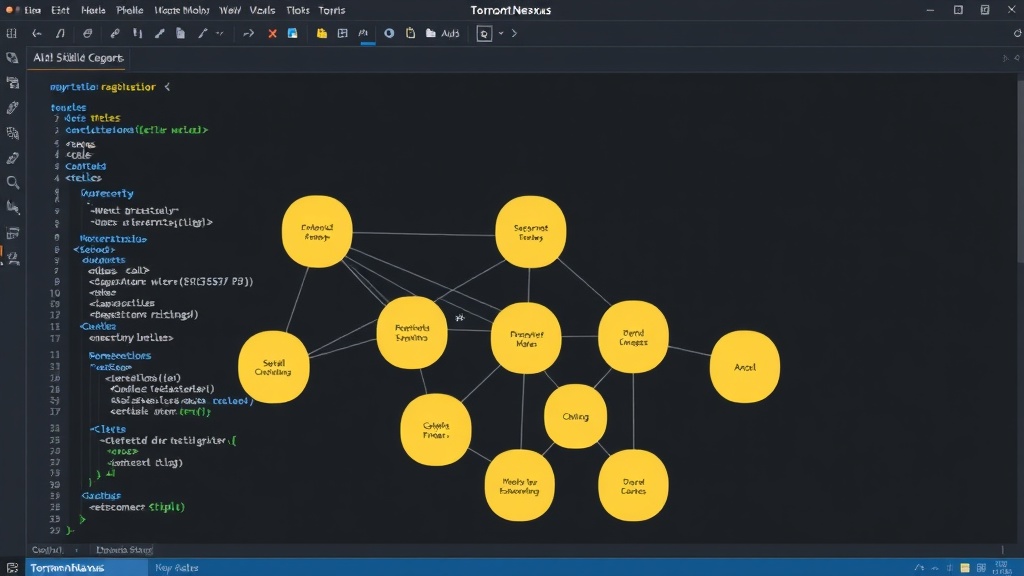
TormentNexus' AI Skill Registry has surpassed a significant milestone, reaching 5,776 verified and runnable AI skills. This registry is not merely a collection of disparate tools; it functions as a sophisticated dependency graph where individual skills, defined by the `SKILL.md` standard, chain together to accomplish more complex tasks. This modular architecture allows for skills to call upon others internally. For instance, a `terraform-generate` skill might first invoke a `code-review` skill to validate the generated HCL (HashiCorp Configuration Language) before finalizing the output. This approach significantly accelerates development pipelines by promoting reusability and reducing redundant effort.
The registry's design emphasizes interoperability. Each skill encapsulates a specific task, complete with its required parameters and a defined output schema. This standardization ensures that skills can be reliably integrated into broader workflows. The sheer volume of skills available means developers can find pre-built solutions for a vast array of common engineering challenges, from infrastructure as code to data management and code quality assurance.
Code Review: Enhancing Quality and Consistency
Within the registry, skills dedicated to code review play a crucial role in maintaining software quality and consistency across development teams. These modules go beyond simple syntax checking, offering sophisticated analysis for potential bugs, security vulnerabilities, and adherence to coding standards. A typical code review skill might be invoked with parameters specifying the language, the repository path, and specific linting rules to enforce. The output could be a structured report detailing issues, their severity, and suggested fixes.
For example, a skill might be configured to perform a static analysis pass using industry-standard linters like ESLint for JavaScript or Pylint for Python. The skill would execute these tools, parse their output, and then potentially use another AI skill to summarise the findings or even suggest automated refactoring steps. Performance metrics for these review skills often focus on the time taken to scan a given codebase size, aiming for results within minutes rather than hours. The architectural constraint here is the need for the skill to be language-agnostic or highly configurable to support multiple programming languages effectively.
Terraform Generation: Automating Infrastructure as Code
The Terraform generation skills represent a powerful application of AI in infrastructure management. These modules can automatically produce HCL code required to provision and manage cloud resources. Instead of manually writing Terraform configurations, developers can leverage AI skills that take high-level requirements as input. These requirements might be defined in natural language or a structured format, such as a JSON object describing the desired cloud environment (e.g., number of servers, database type, network configuration).
A prime example is a skill that takes a desired cloud architecture diagram or a list of services and generates the corresponding Terraform code for AWS, Azure, or GCP. This skill might internally query other registry modules to fetch best practices for security group configurations or optimal instance types based on workload descriptions. The performance metric here is the accuracy and completeness of the generated HCL, measured by how quickly and reliably it can be applied to create the intended infrastructure without errors. A key architectural constraint for these generation skills is ensuring idempotency and adherence to cloud provider best practices to avoid costly misconfigurations.
Database Migrations: Simplifying Data Transformation
Database migration skills address one of the most complex and error-prone aspects of software development: moving data between different database systems or schema versions. These AI modules can automate the process of schema conversion, data transformation, and the execution of migration scripts.
Consider a scenario where an application needs to migrate from a MySQL database to PostgreSQL. A dedicated AI skill could analyze the existing MySQL schema, infer the equivalent PostgreSQL data types and constraints, and generate the necessary SQL `CREATE TABLE` statements. Furthermore, it could generate scripts to transform existing data to fit the new schema, handling potential incompatibilities like differences in date formats or character encodings. The performance of such skills is often measured by the success rate of the migration with minimal data loss or corruption, and the reduction in manual scripting effort. The architectural challenge lies in the diversity of database systems and the subtle differences in SQL dialects and data handling that the AI must account for.
Leveraging the Registry for Accelerated Development
The TormentNexus AI Skill Registry, with its 5,776 modules, offers a substantial toolkit for modern development teams. By abstracting complex tasks into reusable, callable skills, the registry empowers developers to focus on core business logic rather than reinventing common engineering solutions. The dependency graph structure ensures that complex workflows can be built by composing these modular skills, creating a more robust and efficient development process. As the registry continues to grow, it promises to further democratize access to advanced AI-driven development capabilities.