
Toki AI: Simplifying Meeting Coordination
Toki AI has launched a new tool aimed at alleviating the common pain points associated with scheduling and managing meetings. The platform positions itself as a personal assistant, automating tasks that often consume significant time for professionals across various industries. Its core function is to simplify the often-tedious process of finding mutually agreeable times for calls and ensuring that subsequent actions are not forgotten.
The challenge Toki AI addresses is universal: coordinating schedules across multiple individuals, especially when time zones and availability differ, can be a complex puzzle. This is compounded by the need for diligent follow-up to ensure decisions are actioned and progress is made. Traditional methods, relying on email chains, calendar checks, and manual reminders, are prone to errors, delays, and missed opportunities. Toki AI seeks to replace this with a more automated and intelligent system.
The platform's approach involves acting as an intermediary. Users can delegate the task of scheduling a meeting to Toki AI, specifying the participants and the general purpose. The AI then interfaces with the calendars of those invited to find optimal time slots. This process aims to reduce the back-and-forth communication typically required, which can often involve dozens of emails.
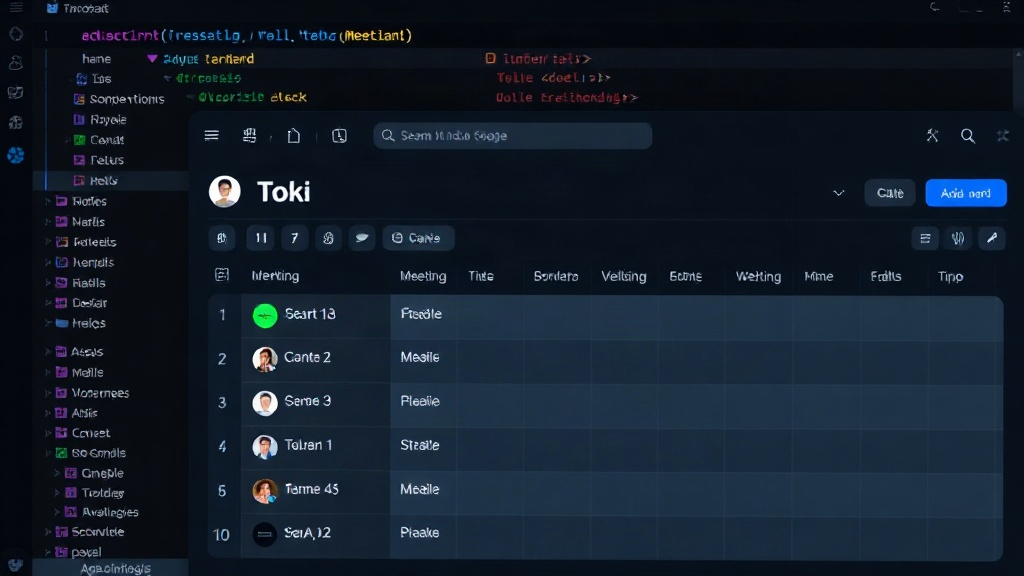
Automated Scheduling and Follow-up Features
At its heart, Toki AI offers automated meeting scheduling. Users can input meeting requirements, such as attendees, duration, and preferred days or times. The AI then analyzes the availability of all participants, taking into account their existing calendar commitments. It identifies potential slots and presents them, or in some cases, directly proposes a time to the attendees for confirmation. This feature is particularly valuable for teams spread across different geographical locations, where time zone differences add another layer of complexity.
Beyond just finding a time, Toki AI’s value proposition extends to the crucial post-meeting phase. The assistant is designed to track action items and facilitate follow-ups. After a meeting concludes, users can designate tasks to specific individuals with deadlines. Toki AI can then send automated reminders to the assigned individuals as the deadlines approach. This ensures accountability and helps to keep projects moving forward without the need for manual tracking by the meeting organizer or a project manager.
The platform also aims to improve the efficiency of meeting preparation. By integrating with existing calendar systems, Toki AI can provide a consolidated view of upcoming meetings and associated tasks. This helps users stay organized and prepared, reducing the likelihood of being caught off guard or missing important details. The goal is to transform meeting coordination from a logistical burden into a seamless part of the workflow.
User Experience and Integration
Toki AI is presented as a user-friendly tool, designed to be intuitive even for those who are not technically inclined. The interface is intended to be clean and straightforward, allowing users to quickly set up meeting requests and delegate follow-up tasks. The emphasis is on reducing cognitive load and saving time. By automating these administrative functions, professionals can focus more on the substance of their meetings and less on the mechanics of organizing them.
While specific integration details are limited, the nature of such a tool implies a need for robust calendar integration. It is expected that Toki AI will connect with popular calendar services like Google Calendar, Outlook Calendar, and potentially others. This seamless integration is critical for the AI to accurately assess availability and schedule events without manual intervention. The ability to sync with existing work tools is a key determinant of adoption for productivity applications.
The follow-up mechanism is another area where user experience is paramount. The reminders need to be timely, clear, and actionable. They should inform the recipient of the task, the deadline, and who assigned it, without being overly intrusive. The aim is to nudge participants towards completion rather than to create an annoying nag. The effectiveness of this feature will largely depend on its configurability and the intelligence with which it sends reminders.
The Market for AI-Powered Assistants
Toki AI enters a market that is increasingly populated by AI-powered tools designed to enhance productivity. Virtual assistants for scheduling have been around for some time, but the integration of more sophisticated AI is enabling new levels of automation and intelligence. Tools like Clockwise, Calendly, and x.ai (acquired by Zoom) have paved the way, demonstrating the demand for solutions that simplify scheduling.
What sets Toki AI apart, or aims to, is its dual focus on both proactive scheduling and diligent post-meeting follow-up. Many existing tools excel at one or the other. Calendly, for example, is excellent for self-service booking, while other tools might focus more on internal meeting management. Toki AI’s ambition to handle the entire lifecycle – from initial outreach and scheduling to task assignment and reminder management – positions it as a comprehensive solution for meeting overhead.
The broader trend is towards AI agents that can perform complex tasks autonomously. For businesses, this translates into potential cost savings through increased efficiency and reduced administrative burden. For individuals, it means more time freed up for strategic work and less time spent on mundane organizational tasks. The success of Toki AI will hinge on its ability to deliver on this promise reliably and effectively, proving its value beyond the existing alternatives.
The question remains whether Toki AI can truly capture the nuances of human scheduling preferences and the importance of context in follow-ups, or if it will remain a tool for simpler coordination tasks. As AI assistants become more integrated into daily workflows, their ability to understand and adapt to user-specific needs will be the key differentiator.