Java 27 landed this week, and it's a release that demands attention, especially from developers who might have drifted towards Node.js or Go. The Java Virtual Machine (JVM) ecosystem has transformed dramatically. Gone are the days of sluggish performance and long garbage collection pauses. Java now boasts a rapid six-month release cycle, experimental features that push boundaries, and a garbage collector that rivals any in the industry. This is not the Java of 2015; it's a modern, competitive runtime for cloud-native development.
This release is particularly relevant for those managing polyglot infrastructures. If your backend relies on a mix of Node.js, Go, and Java services, understanding Java 27's advancements is crucial for optimizing your stack. This deep dive dissects the key changes, their implications for developers, and how Java fits into today's Docker-first, cloud-native landscape.
Performance and JVM Enhancements
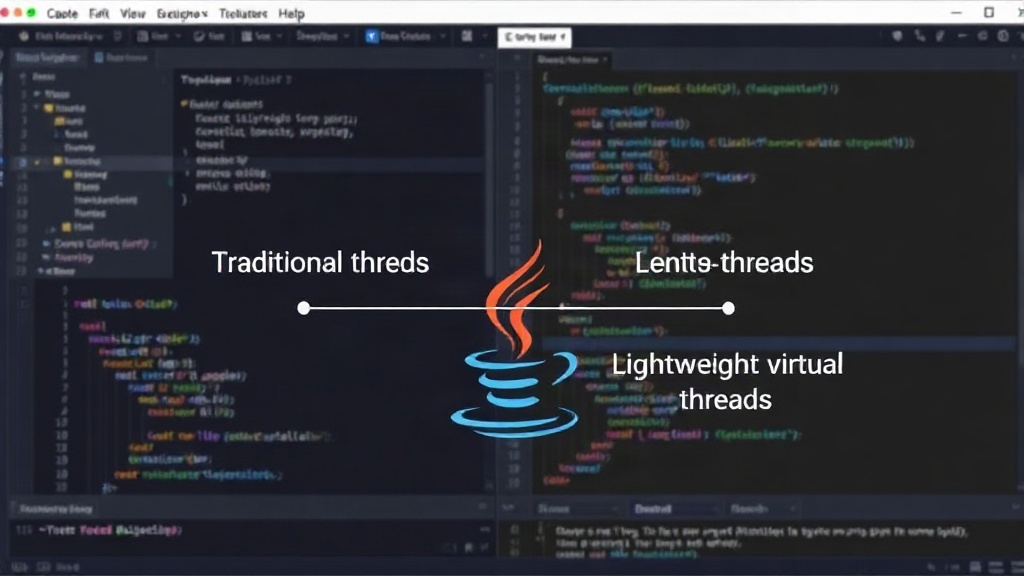
The most striking improvements in Java 27 are under the hood, focusing on the JVM's core performance. Project Loom, introduced in earlier versions, continues to mature, offering lightweight virtual threads that promise to dramatically improve concurrency handling. Instead of relying on a limited pool of OS threads, virtual threads allow for millions of concurrent tasks to be managed efficiently. This is a paradigm shift for I/O-bound applications, making Java competitive with the asynchronous models found in Node.js without the callback hell or complex async/await patterns.
Garbage collection has also seen significant advancements. The G1 (Garbage-First) collector, long the default, continues to receive optimizations. More importantly, ZGC (Z Garbage Collector) and Shenandoah GC are now stable and production-ready. These collectors are designed for ultra-low pause times, often in the millisecond range, regardless of heap size. For applications requiring high availability and predictable latency, this is a massive win. Imagine a busy e-commerce site that experiences virtually no stuttering during peak load due to GC pauses – that's the promise these collectors deliver.
The JVM itself has undergone extensive tuning. JIT (Just-In-Time) compilation has been refined, leading to faster startup times and improved peak performance for long-running applications. Class data sharing (CDS) has been enhanced, allowing pre-processed class data to be shared between JVM instances, further reducing startup overhead, which is critical in containerized environments where applications spin up and down frequently.
Key Language Features in Java 27
While performance is a major focus, Java 27 also introduces several language-level features that enhance developer productivity and code clarity. The focus continues to be on simplifying common programming tasks and improving the developer experience.
Pattern Matching for Switch
Building on previous iterations, Java 27 offers enhanced pattern matching for switch statements and expressions. This allows developers to concisely destructure objects and match them against various patterns, including type patterns and guarded patterns. This feature significantly reduces boilerplate code, making code that handles complex data structures more readable and less error-prone. For instance, processing polymorphic data structures becomes far more elegant.
Record Patterns
Closely related to pattern matching, record patterns provide a structured way to destructure record instances. Records, introduced in Java 14, are immutable data carriers. Record patterns allow you to extract components from a record directly within a pattern match, simplifying data extraction and validation logic. This is particularly useful in scenarios where you need to inspect the contents of nested data structures, such as JSON payloads or configuration objects.
Unnamed Classes and Instance Main Methods (Preview)
Java 27 includes a preview of unnamed classes and instance main methods. This feature aims to simplify the entry point for simple programs, reducing the ceremony required to write and run a basic Java application. Instead of requiring a `public static void main(String[] args)` method within a public class, developers can now write code directly in a source file, and the compiler and runtime will infer the necessary structure. This is a welcome change for scripting, small utility programs, and educational purposes, lowering the barrier to entry for newcomers.
Vector API (Second Incubator)
The Vector API, designed to provide high-performance vectorized computations, reaches its second incubator stage. This API allows Java programs to leverage SIMD (Single Instruction, Multiple Data) instructions on supported CPU architectures. For computationally intensive tasks like machine learning, scientific simulations, and data processing, this can yield significant performance gains over traditional scalar operations. While still in incubation, its progress signals Java's ambition to compete in high-performance computing domains.
What This Means for Backend Developers
Java 27 presents a compelling case for Java's continued relevance in modern backend development. The combination of mature virtual threads, low-pause garbage collectors, and enhanced language features addresses many of the historical criticisms leveled against the platform. If you're building microservices, APIs, or event-driven systems, Java is now a more attractive option than ever.
The performance improvements, particularly with virtual threads, mean that Java applications can now handle high concurrency with far fewer resources. This translates directly to lower infrastructure costs and better scalability. For teams already invested in the JVM ecosystem (Kotlin, Scala, etc.), these upgrades further solidify the platform's strengths. Developers can write more expressive, concise code thanks to features like pattern matching, reducing cognitive load and development time.
The shift towards simpler entry points with unnamed classes also makes Java more accessible for rapid prototyping and internal tooling, areas often dominated by scripting languages. For those running polyglot environments, Java 27 offers a robust, high-performance alternative that can seamlessly integrate with existing systems. The JVM's evolution is no longer slow and ponderous; it's agile and forward-looking.
The Unanswered Question: Migration and Tooling Inertia
While Java 27 offers substantial advancements, a significant challenge remains the inertia of existing tooling and development practices. Many organizations are still running older LTS (Long-Term Support) versions of Java and have extensive codebases built around those paradigms. The question for many teams isn't *if* these new features are good, but *how* and *when* they can realistically adopt them. Migrating large enterprise applications to leverage features like virtual threads or advanced pattern matching can be a non-trivial undertaking, requiring careful planning, testing, and developer training. The ecosystem's readiness—from IDE support to build tools and CI/CD pipelines—will be critical in determining the speed of adoption for these powerful new capabilities.