
The Unseen Gatekeepers of AI Models
In the rapidly evolving world of artificial intelligence, a new class of intermediary is emerging: the token broker. These entities, often operating behind the scenes, are becoming crucial players in how developers, businesses, and researchers access and utilize cutting-edge AI models. They act as a bridge between the creators of large language models (LLMs) and the end-users, managing the consumption of AI power through a system of tokens. This role is not merely logistical; it has profound implications for the accessibility, cost, and control of some of the most advanced AI technologies available today.
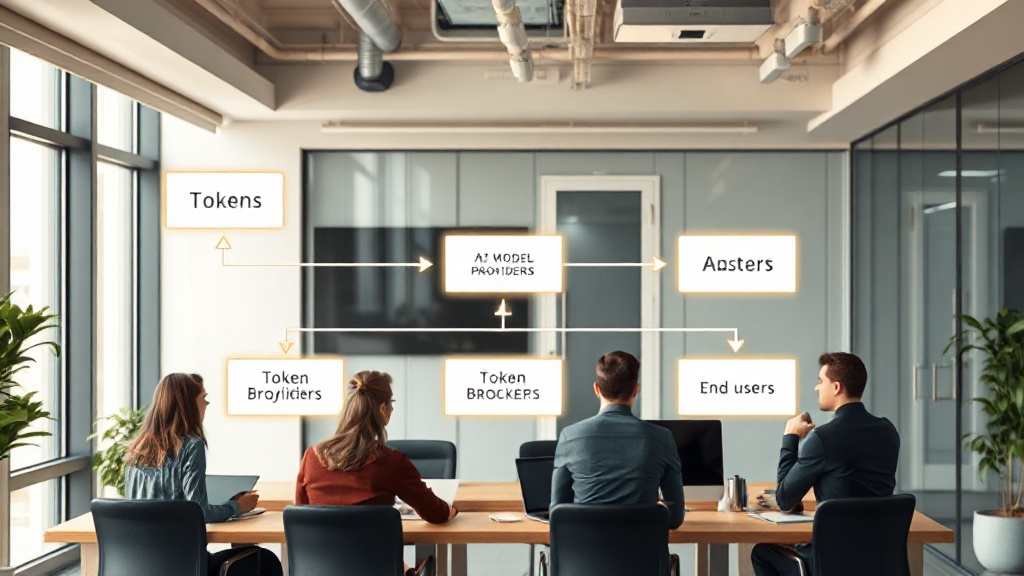
The concept of tokens in AI refers to the units of data that a model processes. For instance, when you send a prompt to a service like ChatGPT, you are using tokens. The cost of using these models is often directly tied to the number of tokens processed, both for input (prompt) and output (response). Token brokers essentially buy these tokens in bulk from AI model providers and then resell them to their clients, often packaging them into more manageable plans or offering them at different price points. This model is not fundamentally different from how cloud computing resources are provisioned, but the specific application to AI model inference gives it a unique character.
Consider a startup that needs to integrate advanced natural language processing into its application. Instead of negotiating directly with a major AI lab, which might involve complex contracts, minimum usage commitments, and potentially high upfront costs, they can turn to a token broker. The broker has already secured access, potentially with favorable terms due to volume, and can offer the startup a simpler, pay-as-you-go solution. This lowers the barrier to entry for many smaller players, democratizing access to powerful AI capabilities.
Why Do Token Brokers Exist?
The rise of token brokers is a direct response to several market dynamics. Firstly, the operational costs of running large AI models are substantial. Companies like OpenAI, Google, and Anthropic invest billions in research, development, and the immense computational power required to train and serve these models. Offering direct API access is a revenue stream, but managing a vast number of individual, small-scale clients can be inefficient. Token brokers consolidate this demand, acting as a single, large customer for the model provider. This allows model creators to focus on core R&D and infrastructure, offloading a portion of customer management and billing to these specialized intermediaries.
Secondly, token brokers provide valuable abstraction and customization. They can offer tailored pricing tiers, performance optimizations, and even specialized services layered on top of the base models. For example, a broker might offer a service that caches common queries, reducing token consumption for frequently asked questions, or provide enhanced security and compliance features that individual developers might struggle to implement. They can also aggregate access to multiple different models, allowing clients to switch between them or use a mix for different tasks without managing multiple API keys and billing relationships.
Furthermore, the market for AI model access is becoming increasingly competitive. By offering a unified platform, brokers can simplify the complex ecosystem for users. Developers no longer need to become experts in the pricing structures and API nuances of every major AI provider. Instead, they can rely on the broker to abstract away much of this complexity, focusing instead on building their applications. This consolidation of services is akin to how app stores simplified mobile application distribution or how cloud marketplaces streamline access to software and infrastructure.
The Players and the Market
While the term "token broker" is relatively new, the underlying business model has precedents. Companies that aggregate cloud services, manage software licenses, or provide managed IT solutions share similarities. In the AI space, early players are emerging from various backgrounds. Some are startups focused exclusively on AI model access management, while others are established cloud service providers or AI consulting firms looking to expand their offerings. Vectoral, for instance, positions itself as a platform that helps businesses manage and optimize their AI spend, acting as a de facto token broker by providing a centralized dashboard for API access and cost control.
The market for these services is expected to grow as AI adoption accelerates across industries. As more businesses integrate LLMs into their workflows, the need for efficient, cost-effective, and manageable access will only increase. This creates an opportunity for brokers to build significant market share by offering compelling value propositions, such as cost savings through bulk purchasing, simplified billing, and enhanced technical support. The ability to provide insights into token usage and suggest optimizations will also be a key differentiator.
However, the landscape is still nascent. The specific services offered, pricing models, and the degree of abstraction can vary widely. Some brokers might simply act as resellers, passing on costs with a small markup, while others might add significant value through proprietary technology, expert consultation, or specialized integrations. The long-term viability of these businesses will depend on their ability to secure favorable terms with model providers, deliver demonstrable value to their clients, and adapt to the rapidly changing AI market.
Questions for the Future
The rise of token brokers, while offering practical benefits, also raises critical questions about the future of AI access and control. What happens when a significant portion of AI model consumption is routed through a few key intermediaries? Does this create new points of centralization and potential bottlenecks? If a broker experiences technical issues or financial instability, how does that impact its many clients who depend on it for AI functionality?
Furthermore, the transparency of these operations is a concern. While brokers can simplify things for users, they also add a layer of opacity between the end-user and the AI model provider. Understanding exactly which models are being accessed, under what terms, and what data might be shared or cached by the broker becomes more complex. The surprising detail here is not the emergence of brokers, but the speed at which they are becoming essential infrastructure for AI adoption, potentially without widespread understanding of their role.
As AI continues to permeate every facet of technology and business, the role of the token broker will only become more significant. Developers and businesses must understand these intermediaries, their value propositions, and the potential risks involved. The decisions made by token brokers today, and the relationships they forge with AI model creators, will quietly shape the accessibility and direction of AI innovation for years to come.