Beyond Basic Fungibility: Token-2022's Composable Power
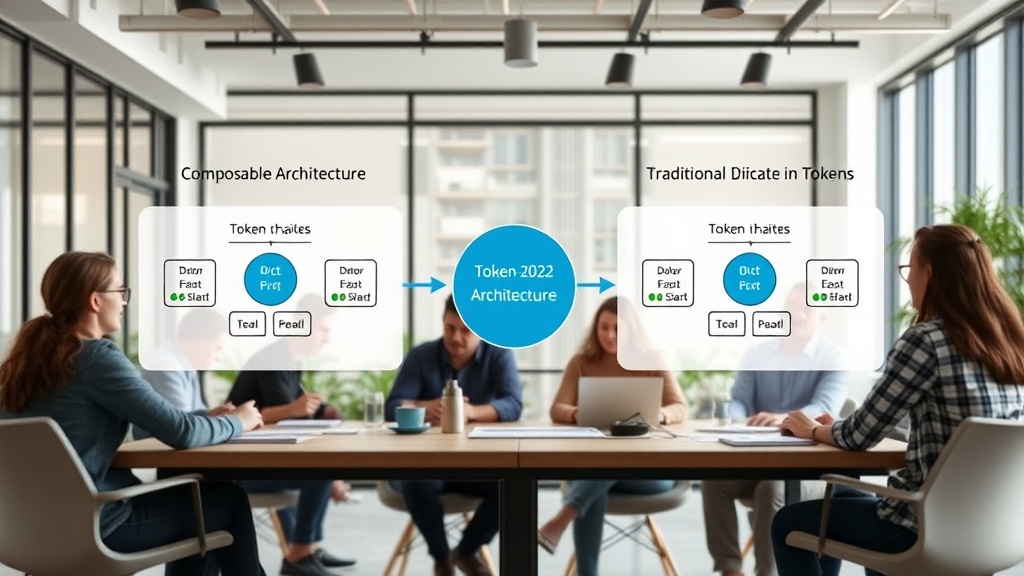
The recent explosion of custom token development on blockchains has often relied on complex middleware or external smart contracts to imbue tokens with specific functionalities. This approach, while effective, introduces overhead, potential points of failure, and a disconnect between the token's core definition and its behavior. My recent experience building three distinct token types using Solana's Token-2022 standard on Devnet—a fee-bearing token, an interest-bearing token, and a non-transferable (soulbound) token—revealed a fundamental shift in how we can think about token design. The core realization is that Token-2022 allows for the direct composition of these behaviors into the token mint itself, rather than requiring separate smart contract logic.
Consider a traditional transfer fee. On many older standards, implementing this would involve listening for transfer events and executing a separate contract to route a percentage of the transferred amount to a designated address. This is middleware, an external process managing the token's economics. With Token-2022, the transfer fee is not middleware; it's an intrinsic property of the token mint. Similarly, interest-bearing tokens, which might typically require a background cron job to calculate and distribute yields, can now have their interest-bearing logic defined as part of the token's core attributes. The same applies to non-transferable tokens, often referred to as soulbound tokens (SBTs). Enforcing non-transferability previously meant relying on a backend system to manage ownership and prevent unauthorized transfers. Token-2022 integrates this restriction directly into the token's definition.
Experiment 1: The Fee-Bearing Token
My first experiment involved creating a token with a built-in transfer fee. This is a common requirement for many tokenomics models, aiming to incentivize holding, fund treasury operations, or disincentivize frequent trading. Traditionally, this would be implemented through a separate smart contract that intercepts token transfers. When a transfer is initiated, this contract would deduct a specified percentage of the amount before sending the remainder to the recipient and routing the deducted portion to a designated fee address. This requires careful management of contract interactions and can add gas costs and complexity.
With Token-2022, the `TransferHook` program enables developers to attach custom logic that executes automatically upon any transfer of the token. By deploying a simple program that calculates and transfers the fee to a specified address, and then associating this program with the token mint via the `TransferHook` extension, the fee mechanism becomes an integrated part of the token's lifecycle. The token itself now 'knows' how to apply a fee. This significantly simplifies the overall architecture, reduces the attack surface associated with managing separate fee contracts, and makes the token's economic properties more transparent and self-contained. The fee isn't an add-on; it's a fundamental characteristic.
Experiment 2: The Interest-Bearing Token
Implementing interest-bearing tokens presents another challenge often solved with external systems. For a token to accrue interest, there needs to be a mechanism for earning yield (e.g., through staking, lending, or other financial activities) and a process for distributing that yield to token holders. This typically involves a smart contract that manages the yield-generating activities and a separate process, often a scheduled task or a keeper bot, that periodically calculates and distributes the earned interest to holders based on their balance. This can lead to issues with timing, gas costs for distribution, and complexity in managing the keeper bot.
Token-2022 introduces extensions that can facilitate such functionalities more natively. While not a fully automated 'yield farming' extension in the simplest sense, the ability to programmatically interact with token state and transfers allows for more integrated yield distribution. For instance, a custom program can be designed to automatically mint new tokens (representing interest) and distribute them to holders based on predefined rules, triggered by specific on-chain events or time intervals. The key difference here is that the *logic* for how interest is calculated and distributed can be more tightly coupled with the token's existence, potentially managed by a dedicated program that the token mint references. This moves away from a detached cron job to a more structured, on-chain governance or management system tied directly to the token's contract. The token's balance can reflect not just the principal but also accrued interest, managed by associated programs that are part of the token's ecosystem.
Experiment 3: The Non-Transferable (Soulbound) Token
The concept of soulbound tokens, which are non-transferable and bound to a specific wallet address, has gained traction for use cases like digital identity, certifications, loyalty programs, and reputation systems. The challenge in implementing true soulbound tokens lies in ensuring immutability of ownership. If a token is transferable, even with restrictions, there's always a risk of it being moved, intentionally or unintentionally, to another address. Previous methods often involved smart contracts that would immediately transfer any received tokens back to the original owner or use complex access control lists.
Token-2022 offers a more elegant solution. By leveraging specific extensions or configurations within the Token-2022 standard, a token can be designated as non-transferable at the protocol level. This means that any attempt to transfer such a token would be rejected by the underlying system, regardless of the wallet or program attempting the transfer. This is a far more robust enforcement mechanism than backend logic. The non-transferability is an inherent property of the token, enforced by the Solana runtime itself. This provides a strong guarantee for applications that rely on the permanence of token ownership, such as academic degrees or verifiable credentials, ensuring that these digital assets remain tied to their intended recipient without the need for constant external validation.
A Paradigm Shift in Token Design
The most profound takeaway from these experiments is the shift from a 'token plus middleware' mindset to a 'token as a programmable entity' mindset. Token-2022, with its extension-based architecture, allows developers to embed complex behaviors directly into the token mint itself. This is akin to moving from building a car with separate aftermarket parts for every feature to buying a car where the engine, transmission, safety systems, and infotainment are all integrated from the factory, designed to work seamlessly together.
This composability has significant implications. It simplifies smart contract development by reducing the need for numerous auxiliary contracts. It enhances security by centralizing logic and reducing the attack surface. It improves transparency, as the token's properties and behaviors are more readily apparent from its definition. For developers coming from Web2, this might feel more like object-oriented programming, where a 'token' object has various 'properties' and 'methods' (extensions and hooks) that define its behavior. The token is no longer just a unit of value but a sophisticated digital asset capable of embodying complex economic and social rules directly within its structure.
The implications for future token design are immense. We can anticipate more sophisticated financial instruments, verifiable credentials, and governance mechanisms being built directly into token standards, leading to more robust, secure, and user-friendly decentralized applications. The future of tokens is not just about fungibility or non-fungibility, but about the richness of their programmable properties.