AI Takes the Editor's Seat
The Tiptap AI Toolkit introduces a novel approach to content generation and manipulation, enabling artificial intelligence models to directly interact with and edit documents in real-time. This moves beyond AI merely suggesting changes or generating text in a separate interface. Instead, it allows AI to function as an active participant in the document editing process, akin to a human editor but with the speed and scale of AI.
Traditionally, AI assistance in document editing has been limited to generating drafts, suggesting rephrasing, or flagging errors. Users would then manually implement these suggestions. Tiptap’s toolkit fundamentally alters this workflow. It provides a framework that allows AI to understand the document's structure, context, and intended meaning, and then apply edits directly. This could range from minor grammatical corrections to substantial content restructuring, all executed programmatically through the AI model.
The implications for content creation workflows are significant. Imagine an AI assistant that can not only draft an article but also revise it based on new data inputs, adjust its tone for different audiences, or even expand sections with relevant information, all without requiring manual copy-pasting or re-entry of text. This direct editing capability promises to accelerate content production cycles and enhance the dynamic nature of digital content.
Bridging the AI-Human Content Divide
The core innovation of the Tiptap AI Toolkit lies in its ability to create a seamless pipeline between AI language models and rich text editing environments. This is not simply about API integrations; it's about providing the necessary primitives for an AI to understand and execute edits within the complex, often hierarchical structure of a document. For developers building applications that involve content creation, modification, or management, this toolkit offers a new paradigm.
Consider the challenge of AI-generated content. While models can produce fluent text, ensuring consistency, adhering to specific formatting, and maintaining narrative flow over extended documents has been difficult. Tiptap's toolkit aims to solve this by giving AI the control to modify the document directly. This means an AI could, for example, be tasked with summarizing a lengthy report. Instead of outputting a separate summary, it could directly edit the original document, replacing the long-form content with a concise summary, or appending it as a new section, all while respecting the document’s existing formatting and structure.
This capability is particularly relevant for applications such as:
- Automated Report Generation: AI could ingest raw data and directly populate and format a pre-defined report template.
- Dynamic Content Updates: Websites or applications could use AI to update content in real-time based on changing information, such as product descriptions or news articles.
- Personalized Document Assembly: AI could assemble personalized documents (e.g., legal contracts, marketing materials) by selecting and editing pre-written blocks of text based on user profiles or specific requirements.
- Collaborative Writing Tools: AI could act as a co-author, making edits and revisions directly within a shared document environment, responding to human collaborators' prompts instantly.
Technical Underpinnings and Developer Focus
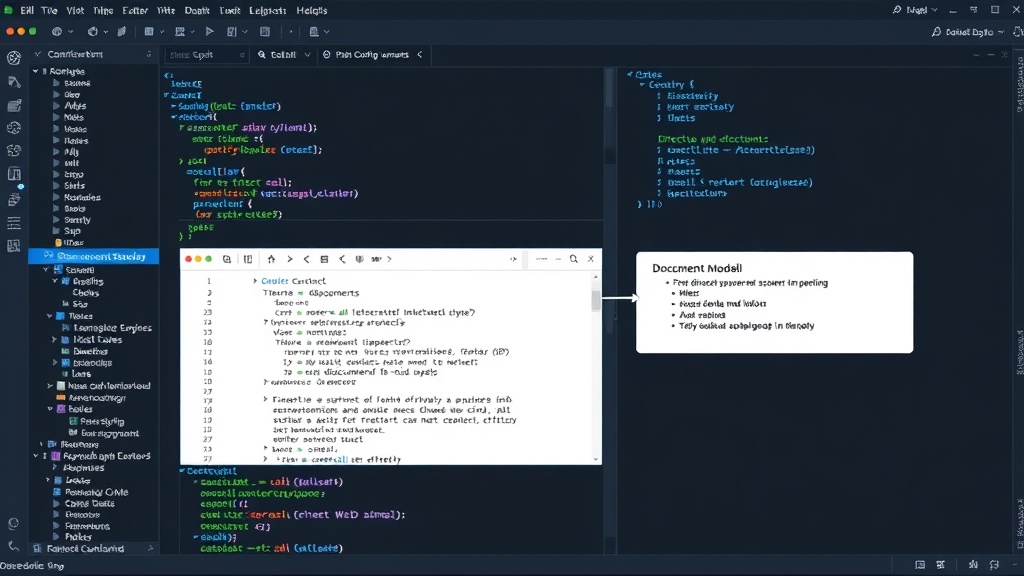
While the Product Hunt listing provides a high-level overview, the true power of the Tiptap AI Toolkit for developers lies in its potential to abstract away the complexities of direct document manipulation by AI. Standard rich text editors often use complex data structures (like a DOM or an abstract syntax tree) to represent content. For an AI to edit this content effectively, it needs to interact with these structures in a way that is both semantically meaningful and technically precise. Tiptap likely provides an API or a set of tools that translate AI commands into specific editor actions.
This could involve AI models outputting structured commands (e.g., JSON) that the Tiptap toolkit then interprets and applies to the document. Alternatively, it might involve fine-tuning AI models to understand the editor’s internal representation or to generate diffs that can be applied directly. The key benefit is that developers don't need to build this complex bridging layer themselves. They can focus on integrating their AI models and defining the desired editing outcomes.
The success of such a toolkit hinges on its flexibility and the robustness of its API. Developers will need to consider how to handle potential conflicts between AI edits and human edits, how to manage version control, and how to ensure the AI's edits are always predictable and aligned with the application's goals. The ability for AI to directly edit documents in real-time opens up a powerful new frontier in human-computer interaction and automated content management.
The surprise here is not just that AI can edit documents, but that the focus is on *direct*, *real-time* manipulation within the editor itself. This bypasses the common pattern of AI generating text in a separate window, requiring manual transfer. It suggests a future where AI is not just a generator but an active, integrated participant in the content lifecycle.