The Problem: Disconnected Tools for Small Landlords
Managing a small portfolio of rental properties – say, 1 to 10 units – often involves a chaotic mix of spreadsheets, WhatsApp messages, scattered documents, and various disconnected digital tools. This fragmented approach is inefficient and prone to errors, leaving landlords struggling to keep track of essential information. Large, enterprise-grade property management platforms can be overkill, introducing unnecessary complexity and cost for those with simpler needs. This gap in the market is precisely what TinyRent aims to fill.
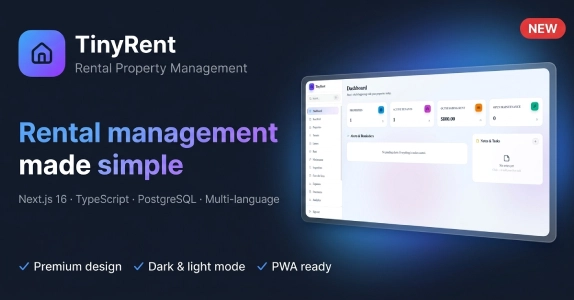
TinyRent is a new Software-as-a-Service (SaaS) application designed from the ground up to address the specific pain points of small landlords and independent property managers. The core philosophy behind TinyRent is to provide a focused, streamlined solution that directly answers the fundamental questions every small landlord faces daily:
- Which tenant occupies which property?
- When is the current lease set to expire?
- Has this month's rent payment been successfully recorded?
- Which outstanding maintenance requests require attention?
- When was the last property inspection conducted?
- What are the ongoing operational costs for each property?
- Where can I find critical property-related documents?
By centering its design around these critical workflows, TinyRent offers a more intuitive and efficient management experience compared to generic solutions or manual processes.
Technology Stack: Next.js 16 and PostgreSQL
The choice of technology for TinyRent is deliberate, leveraging modern frameworks and robust databases to ensure scalability, performance, and developer productivity. The application is built using Next.js 16, a leading React framework that provides a powerful foundation for building performant web applications. Next.js offers features like server-side rendering (SSR), static site generation (SSG), and API routes, enabling the creation of dynamic, SEO-friendly applications with a great user experience. The framework's component-based architecture and strong community support facilitate rapid development and maintainability.
For the backend and data persistence layer, TinyRent utilizes PostgreSQL. This open-source relational database system is renowned for its reliability, feature robustness, and extensibility. PostgreSQL is capable of handling complex queries and large datasets, making it an ideal choice for a growing SaaS application that needs to manage detailed property, tenant, lease, and financial information. Its ACID compliance ensures data integrity, a critical factor for any financial or property management system. The combination of Next.js 16 for the frontend and API layer, with PostgreSQL for the database, provides a solid and modern tech stack.
Core Features and Workflow Simplification
TinyRent's feature set is curated to directly address the needs of its target audience, eschewing the feature bloat common in larger platforms. The application focuses on providing clear visibility and simple management for key aspects of property ownership.
Tenant and Property Management
At its heart, TinyRent allows landlords to maintain a clear overview of their properties and the tenants residing in them. Each property can be documented with its address, type, and any unique characteristics. Tenant profiles can be created, linking them to specific properties and lease agreements. This centralizes crucial contact information and tenancy status, eliminating the need to hunt through disparate notes or messages.
Lease Tracking and Expiry Alerts
Managing lease agreements is a critical function. TinyRent provides a dedicated module for lease management, allowing landlords to record lease terms, rent amounts, payment schedules, and renewal dates. The system is designed to proactively alert landlords about upcoming lease expirations, giving them ample time to communicate with tenants, prepare for renewals, or begin the process of finding new occupants. This proactive approach helps prevent vacancies and ensures a consistent income stream.
Rent Recording and Financial Overview
One of the most frequent landlord tasks is tracking rent payments. TinyRent simplifies this by allowing for easy recording of rent payments against specific leases and properties. The system can track whether rent has been paid, is overdue, or is upcoming. Beyond simple recording, it aims to provide a basic financial overview, helping landlords understand income generated by each property and potentially track basic expenses. This transparency is vital for understanding a property's profitability and making informed investment decisions.
Maintenance Request Tracking
Property maintenance is inevitable. TinyRent offers a way to log and track maintenance requests submitted by tenants or identified by the landlord. Each request can be categorized, assigned a status (e.g., open, in progress, resolved), and potentially linked to specific properties and tenants. This ensures that issues are not forgotten and that landlords can monitor the progress of repairs, maintaining property condition and tenant satisfaction.
Document Management
Centralizing important documents is a key benefit. TinyRent provides a space to upload and associate documents with specific properties, tenants, or leases. This could include lease agreements, inspection reports, repair invoices, or tenant screening documents. Having a single, searchable repository for these critical files saves time and reduces the risk of losing important paperwork.
The TinyRent Advantage
The primary advantage of TinyRent lies in its focused approach. It is not trying to be a full-service, enterprise-level property management suite. Instead, it offers a curated set of tools specifically designed for the common needs of small-scale landlords. This results in a user interface that is cleaner, more intuitive, and easier to navigate. For a landlord who spends only a few hours a week managing their properties, a complex system with features they will never use is a hindrance, not a help. TinyRent provides the essential functionality without the cognitive overhead.
The platform's architecture, built on Next.js 16 and PostgreSQL, suggests a commitment to modern development practices and a scalable infrastructure. This allows for potential future expansion of features based on user feedback while ensuring the core experience remains streamlined and performant. The choice to target a specific niche – small landlords – allows for a depth of understanding and feature refinement that broader platforms often miss.
Future Considerations
While TinyRent addresses a clear need, the path forward will involve gathering user feedback and iterating on its feature set. Potential areas for future development could include more robust financial reporting, integration with payment gateways for easier rent collection, or tools for managing property inspections more effectively. The success of TinyRent will hinge on its ability to consistently deliver value to its target users by simplifying their daily operations and providing clear, actionable insights into their rental property investments.