The Problem with Traditional Fraud Detection
Financial fraud in the digital age is characterized by its complexity, speed, and intricate network of connections. Traditional relational databases, while robust for many applications, falter when tasked with analyzing multi-hop relationships. Scenarios involving shared IP addresses, linked device IDs, or rapid money transfers across multiple accounts demand deep, multi-layered analysis. The problem with SQL databases is that deeply nested JOIN operations, necessary for such analysis, introduce significant latency. This delay is unacceptable in real-time fraud detection where milliseconds can mean the difference between a blocked transaction and a successful fraudulent one.
The inherent limitations of relational models mean that identifying sophisticated fraud rings, which often operate by subtly linking seemingly disparate entities, becomes a slow and inefficient process. As fraud tactics evolve to exploit these very network effects, the need for a more agile and powerful analytical tool becomes paramount.
Introducing the Agentic Fraud Sentinel
To address these challenges, a new system called the Agentic Fraud Sentinel has been developed. This system is designed as an autonomous, real-time fraud detection engine. Its core strength lies in its ability to analyze transaction streams and traverse deep graph networks with exceptional speed, enabling it to provide actionable decisions. Crucially, it offers explainable Chain-of-Thought (CoT) reasoning, meaning users can understand not just *that* a transaction is flagged, but *why*.
The Sentinel is powered by TigerGraph’s GraphRAG engine, a specialized component designed for real-time graph analytics, and a FastAPI backend. This combination allows for rapid data ingestion and processing, essential for a real-time system. The architecture is built for low latency and high scalability, following a decoupled full-stack approach.
System Architecture and Technology Stack
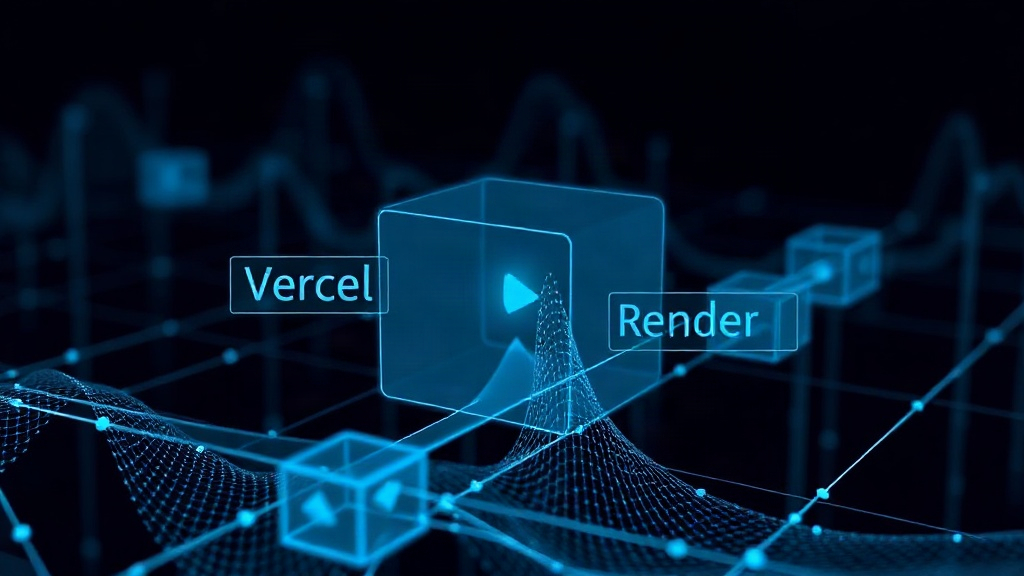
The Agentic Fraud Sentinel employs a decoupled full-stack architecture. The frontend is hosted on Vercel, providing a single-page dashboard for users to monitor and interact with the system. This dashboard serves as the primary interface for visualizing detected threats and understanding the reasoning behind alerts.
Communication between the frontend and backend is facilitated via HTTP requests. The backend, hosted on Render, is the operational heart of the system. It comprises several key components:
- FastAPI Backend: This Python-based web framework provides a high-performance API for handling incoming transaction data, orchestrating fraud detection logic, and returning results. FastAPI's asynchronous capabilities are crucial for managing high volumes of real-time data streams efficiently.
- TigerGraph Database: As the central data store and analytical engine, TigerGraph provides the graph database capabilities. Its native parallel graph processing engine allows for complex queries and deep traversals of interconnected data in milliseconds. This is where the multi-hop analysis of fraud networks truly takes place.
- GraphRAG Engine: Integrated with TigerGraph, the GraphRAG (Retrieval Augmented Generation) engine is key to the system's intelligence. It leverages the graph structure to retrieve relevant contextual information for transactions and uses this information to power AI agents.
- AI Agents: These agents are responsible for analyzing the data retrieved from TigerGraph. They perform tasks such as identifying suspicious patterns, assessing risk scores, and generating Chain-of-Thought explanations for their decisions. This agentic approach allows the system to adapt and respond to new fraud patterns dynamically.
The deployment on Render ensures that the backend services are managed, scalable, and reliable, further contributing to the system's low-latency, high-availability design.
How it Works: Real-Time Fraud Detection in Action
The workflow of the Agentic Fraud Sentinel begins when a new transaction occurs. This transaction data is immediately ingested by the FastAPI backend.
The backend then queries TigerGraph. This isn't a simple lookup; it's a deep traversal of the graph. The query seeks to identify any connections this transaction or the involved entities (e.g., users, devices, IP addresses, payment methods) have to known fraudulent activities or suspicious patterns. This could involve looking for links through shared devices used in previous fraud cases, accounts that have rapidly transferred funds to newly created entities, or IP addresses associated with known fraud rings.
TigerGraph's ability to perform these multi-hop traversals in milliseconds is critical. Traditional databases would struggle to return results for such complex queries within the required time frame.
Once relevant graph data is retrieved, it's passed to the AI agents. These agents utilize the retrieved context and advanced reasoning capabilities to analyze the transaction. They apply a form of Chain-of-Thought (CoT) reasoning, meticulously documenting the steps and evidence that lead to their conclusion. For example, an agent might explain: "Transaction flagged because sender account X, recently linked to device Y, has previously transferred funds to account Z, which is known to be part of a synthetic identity fraud ring identified on [date]."
This detailed explanation is invaluable for fraud analysts. It moves beyond a simple binary alert (fraud/not fraud) to provide a clear, auditable trail of why a decision was made. This transparency helps analysts to validate alerts, refine detection rules, and understand emerging fraud typologies.
Finally, the decision, along with the CoT explanation, is sent back through the FastAPI backend to the Vercel dashboard. This presents the fraud analyst with real-time, understandable insights, enabling swift intervention.
Benefits and Future Implications
The Agentic Fraud Sentinel offers several significant advantages over traditional fraud detection systems. Its real-time processing capability minimizes the window of opportunity for fraudsters. The deep graph traversal allows for the detection of complex, multi-hop fraud patterns that would be invisible to relational databases. The explainable AI component enhances transparency and efficiency for human analysts, reducing false positives and improving the accuracy of fraud investigations.
The use of a modern, decoupled architecture with Vercel and Render ensures scalability and maintainability. This system is not just a reactive tool; its agentic nature and ability to learn from graph data suggest it can adapt to new fraud techniques proactively. The success of this architecture points towards a broader trend in cybersecurity and financial services: the increasing reliance on graph databases and AI-driven agents for detecting sophisticated, network-based threats.
What remains to be fully explored is the long-term adaptability of these agentic systems against adversarial attacks specifically designed to confuse or overload graph traversal algorithms. As these systems become more prevalent, the arms race between fraud detection and fraud creation will inevitably escalate.