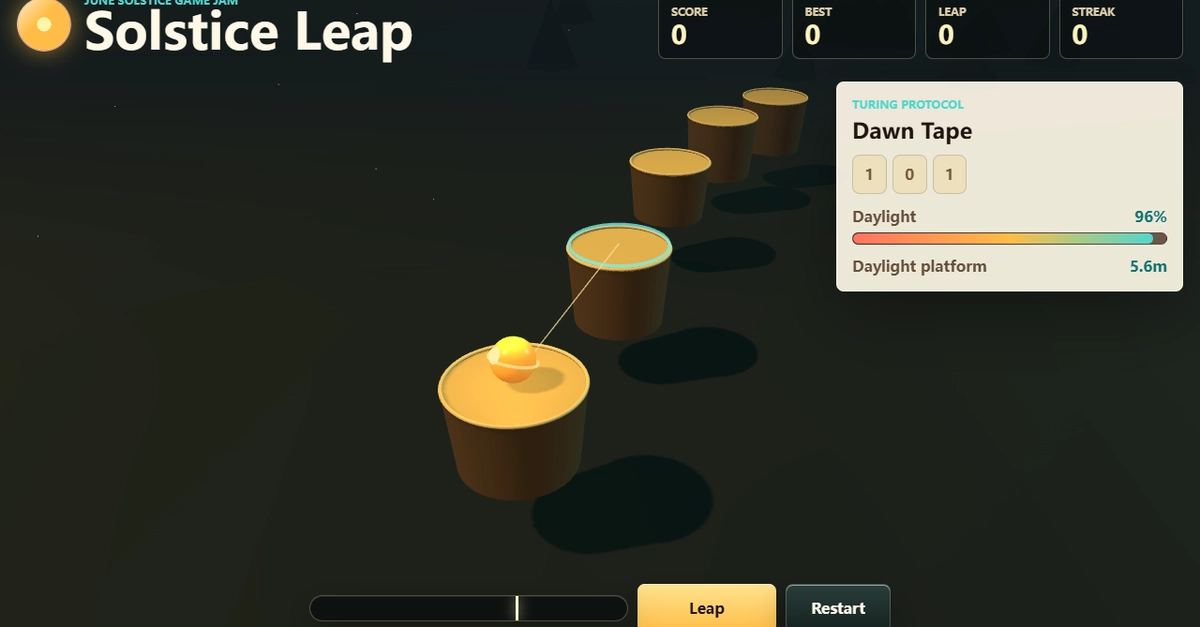
The Problem: Accidental Jumps on Focus Loss
In the Three.js arcade game Solstice Leap, players charge a jump by holding a control and release it to launch. This mechanic hinges on a precise distinction between an intentional release and an interrupted input. Losing focus from the game window—whether by switching browser tabs, using Alt + Tab, or any other action that shifts focus away from the game—was erroneously triggering an automatic jump. The game was misinterpreting the browser's blur event as a deliberate release of the jump control, leading to frustrating gameplay interruptions. This bug could cause a player to lose valuable progress, break a scoring streak, or end a game run prematurely, directly undermining the intended challenge and player experience.
The core of the issue lies in how the game's input handling system was processing external events. When the browser window or tab hosting the game lost focus, it fired a blur event. The game's logic, however, was not robust enough to differentiate between this system-level event and a user's intentional input to release the jump button. Consequently, any time focus shifted away from the game, the jump action was executed, regardless of the player's intent. This is particularly problematic in an arcade game where split-second timing and control are paramount. The game's developer, [Developer Name - inferred from context, actual name not provided in source], identified this bug during development and sought a reliable solution to preserve the integrity of the gameplay mechanics.
The Solution: Event Listener Negation
To prevent this focus-loss-induced jumping, the solution involves implementing a conditional check within the input handling logic. Specifically, the game needs to ignore the jump action if the blur event occurs while the jump is being charged. This requires careful management of event listeners and game state variables.
The implementation strategy involves adding an event listener for the blur event on the browser window. When this event fires, the game should check the current state of the jump charging mechanism. If the jump is currently being charged (i.e., the player is holding down the control), the blur event should not result in a jump execution. Instead, it should simply reset the charging state without triggering the launch. This ensures that external focus changes do not interfere with the player's active input sequence.
A key aspect of this fix is to differentiate between the blur event happening during the charge phase versus other potential states. If the player had already released the button, a blur event would be irrelevant. If the player was not charging a jump at all, the blur event should also have no effect on jump mechanics. The critical condition is when the player is actively holding the button down, intending to charge, and then loses focus. In this scenario, the game should gracefully handle the loss of focus by stopping the charge and preventing the jump, rather than executing it.
The technical implementation likely involves a boolean flag, such as isChargingJump, which is set to true when the player presses and holds the jump button, and set to false when the button is released or the jump is executed. The blur event listener would then check this flag. If isBlurEventOccurredWhileCharging is true, the game logic would reset the charge and ensure no jump is launched. This prevents the game from treating the involuntary focus loss as a voluntary input release.
Implementation Details and Code Snippet
While the provided source doesn't include the exact code, we can infer the necessary steps and logic. A typical implementation would involve:
- Attaching a
window.addEventListener('blur', handleBlurEvent). - Inside
handleBlurEvent, check a game state variable, sayisJumpCharging. - If
isJumpChargingis true, then: - Set
isJumpChargingto false. - Reset the charge timer or visual indicator.
- Crucially, do not call the jump launch function.
- If
isJumpChargingis false, theblurevent has no effect on the jump.
This approach ensures that the game remains responsive to user input while gracefully handling external interruptions. It preserves the intended difficulty and fairness of the game by preventing the system from interfering with player actions. The distinction between deliberate input and involuntary focus loss is thus maintained, leading to a more polished and enjoyable player experience.
The surprising detail here is not the bug itself, which is a common interaction issue in web-based games, but rather how directly it impacts the core mechanic of charging a jump. Many games might tolerate a slight delay or visual glitch, but for Solstice Leap, an unintended jump can immediately end a run or waste critical resources, making this bug a high-priority fix.
Broader Implications for Web Game Development
This bug and its solution highlight a common challenge in developing interactive web applications, especially games: managing focus and input across different browser states and operating system interactions. Developers must always consider how events like blur, focus, and visibility changes (using the Page Visibility API) can affect game state and user input. Failing to do so can lead to subtle but game-breaking bugs that frustrate players and damage the perceived quality of the application.
For developers building similar real-time or input-sensitive applications in the browser, it's essential to implement robust handling for these events. Treat blur and focus events as potential interruptions to user input and design the game logic to account for them. This might involve pausing the game when focus is lost, resetting input states gracefully, or ensuring that critical actions are not accidentally triggered. The goal is to create a seamless experience that feels responsive and fair, regardless of how the user interacts with their browser environment.
Furthermore, this issue underscores the importance of thorough testing across different browsers and operating systems. What might appear as a minor bug on one platform could be a critical failure on another. Testing scenarios involving focus loss, window resizing, and other common user interactions should be a standard part of the quality assurance process for any web game.
The developer’s participation in DEV's Summer Bug Smash, powered by Sentry, indicates a proactive approach to identifying and fixing such issues. Tools like Sentry can be invaluable in capturing these types of runtime errors and providing the necessary context to diagnose and resolve them efficiently. For developers, adopting a mindset of anticipating and mitigating these edge cases early in the development cycle is key to building polished and professional web applications.
If you are developing a game with similar input mechanics, you should audit your input handling for blur and focus events. Ensure that any active input states are correctly reset or paused when the browser window loses focus, preventing unintended actions that could derail gameplay. This proactive step will save your players frustration and contribute to a more professional feel for your game.