The Production Leap: Scaling Agent Workflows Globally on thingd.cloud
The journey from local agent scripts to a global, production-ready autonomous agent infrastructure is a significant one. Developers often hit a "production wall" when attempting to scale local-first agent data engines to support thousands of concurrent agents, maintain near-zero latency, and ensure robust tenant isolation. thingd.cloud emerges as the solution, providing a managed hosting layer specifically designed for agent-native infrastructure. This platform addresses the complex architectural shifts required to move beyond the developer's MacBook to a globally distributed, high-performance system.
The core challenge lies in multi-tenancy for machines. Unlike human users who might tolerate a few seconds of latency on a dashboard load, autonomous agents operating in real-time require immediate, consistent responses. A cold start or a busy database connection pool can break an agent's workflow, leading to cascading failures. thingd.cloud's architecture is built to eliminate these points of failure, offering predictable performance at scale.
Architectural Pillars for Global Agent Deployment
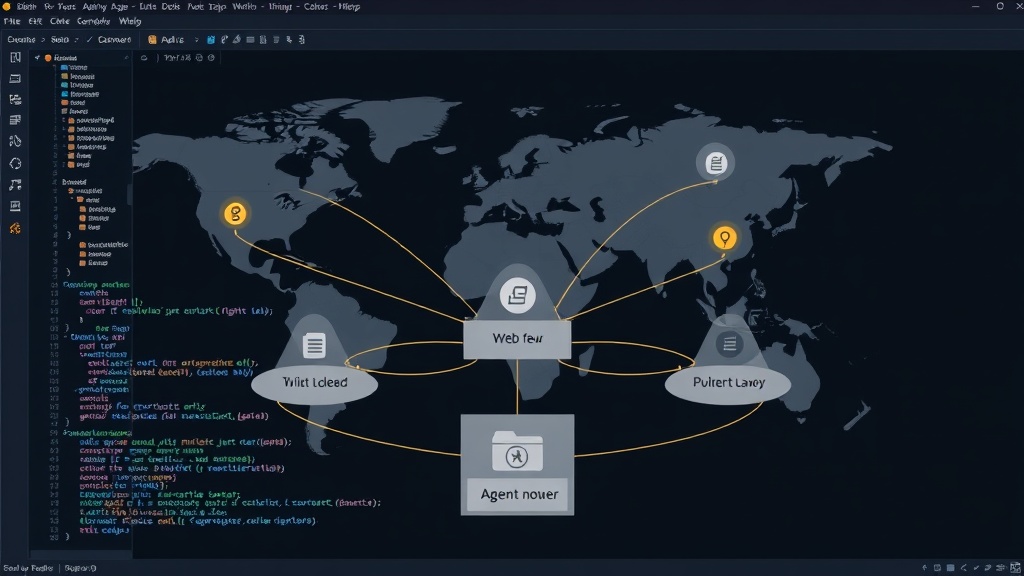
thingd.cloud's managed layer is constructed on several key architectural pillars designed to handle the demands of global, high-concurrency agent deployments. The first is a global distribution network. This ensures that agents can operate from geographically proximate data centers, minimizing network latency. This is not just about speed; it's about the responsiveness required for agents to interact with real-world systems or other agents in near real-time.
Secondly, the platform emphasizes extreme fault tolerance. Autonomous agents, by definition, are expected to operate with minimal human intervention. This necessitates an infrastructure that can withstand component failures, network disruptions, and other unexpected events without impacting agent operations. thingd.cloud employs sophisticated redundancy and failover mechanisms to ensure continuous availability.
Tenant isolation is another critical component. Each agent or agent group, representing a distinct tenant, must operate within its own secure and isolated environment. This prevents data leakage, interference, and ensures that the performance of one tenant does not negatively impact another. The platform implements strong logical and physical separation techniques to guarantee this isolation, even under heavy load.
Zero-UI and Performance Under Load
The concept of "Zero-UI" software, explored in previous posts, is central to thingd.cloud's design. This approach prioritizes programmatic interaction and automation, reducing the reliance on traditional graphical user interfaces. For agent-native infrastructure, this means that the underlying platform is built for machine-to-machine communication, optimized for speed, efficiency, and reliability. The high-performance Rust core engine, previously discussed, forms the bedrock of this efficient execution environment.
Scaling the Rust core engine to handle thousands of concurrent autonomous agents requires careful management of resources, efficient scheduling, and optimized inter-process communication. thingd.cloud provides this managed environment, abstracting away the complexities of raw infrastructure management. Developers can focus on defining agent logic and workflows, trusting that the underlying platform can execute them reliably at scale. The system is designed to prevent resource contention and ensure that each agent has the necessary resources to perform its tasks without delay. This is crucial for applications where agents might be making critical decisions or interacting with time-sensitive systems.
Developer Experience and Production Readiness
While the previous posts covered local agent scripting with the TypeScript SDK, the transition to thingd.cloud significantly enhances the developer experience for production deployments. The managed layer abstracts away the complexities of infrastructure provisioning, scaling, security patching, and monitoring. Developers can deploy their agent logic to the cloud and have it managed by thingd.cloud, ensuring it meets production-grade requirements.
The platform provides tools and APIs for deploying, managing, and monitoring agents in the cloud. This includes features for version control, rollbacks, and performance analytics. The goal is to provide a seamless transition from local development to global production, empowering developers to build and deploy sophisticated autonomous agent systems without becoming infrastructure experts. This focus on developer productivity, combined with robust operational capabilities, is what distinguishes thingd.cloud as a platform for scaling agent workflows.
The Future of Autonomous Agent Infrastructure
thingd.cloud represents a significant step forward in the operationalization of autonomous agents. By providing a managed, scalable, and resilient infrastructure layer, it lowers the barrier to entry for deploying complex agent systems globally. The platform's design directly addresses the production challenges that have historically limited the widespread adoption of advanced agent technologies. As more sophisticated agent-based applications emerge across industries, managed platforms like thingd.cloud will become indispensable for their successful deployment and operation. The question that remains is how quickly other platforms will adapt to provide similar managed solutions for the burgeoning agent economy.