
The Problem: AI's Contextual Blind Spot
Artificial intelligence systems, particularly large language models (LLMs), are only as good as the context they are given. This context can range from specific datasets and prompt engineering techniques to fine-tuning parameters and retrieval-augmented generation (RAG) configurations. Yet, unlike the software development world, which has GitHub and similar platforms to manage code, dependencies, and versions, the AI development landscape suffers from a critical absence: a dedicated, robust platform for managing and versioning this essential context. This void creates significant friction in reproducibility, collaboration, and the overall advancement of AI capabilities.
The current state of managing AI context is fragmented and often ad-hoc. Teams might store datasets in disparate cloud storage buckets, prompt templates in shared documents, and fine-tuning scripts in individual developer repositories. This creates a chaotic environment where tracking changes, understanding the lineage of a model's performance, or replicating previous results becomes a Herculean task. Imagine trying to debug a software application where every dependency, configuration file, and build script is scattered across dozens of unmanaged locations. That's the daily reality for many AI teams.
Why Current Tools Fall Short
While Git is excellent for code, it's not designed for the sheer volume and complexity of AI context. Git repositories can become bloated and unwieldy when attempting to store large datasets or model checkpoints. Furthermore, Git's diffing capabilities are ill-suited for understanding changes in complex data structures or the subtle nuances of prompt engineering. The core issue is that AI context is not just code; it's a combination of data, configuration, and instructions that must be managed holistically.
Existing MLOps (Machine Learning Operations) platforms offer some solutions. Tools like MLflow, Weights & Biases, and Comet provide experiment tracking, model registry, and data versioning capabilities. However, these platforms often focus on specific aspects of the ML lifecycle, such as experiment logging or model deployment, rather than serving as a universal, version-controlled hub for all forms of AI context. They can track hyperparameters and metrics associated with a particular run, but they don't typically offer a unified, immutable record of the *entire* context that led to those results. Think of them as specialized toolkits rather than a comprehensive operating system for AI context.
The Vision: A GitHub for AI Context
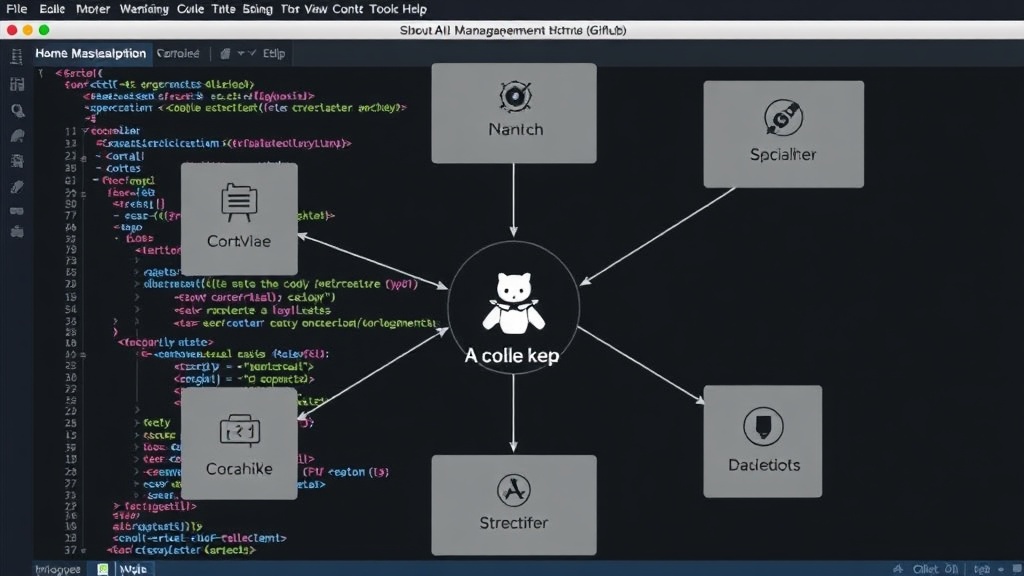
What's needed is a platform akin to GitHub, but purpose-built for AI context. Such a platform would offer:
- Immutable Versioning: Every piece of context—datasets, prompts, configurations, RAG sources, fine-tuning scripts—would be immutably versioned, creating a verifiable audit trail. This is crucial for regulatory compliance and debugging.
- Granular Access Control: Teams could manage permissions at a fine-grained level, controlling who can view, modify, or deploy specific context artifacts.
- Dependency Management: Like `package.json` or `requirements.txt`, the platform would manage dependencies between different context components, ensuring that a model trained with a specific dataset version and prompt template can be reliably reproduced.
- Rich Diffing and Auditing: Beyond simple text diffs, the platform would need sophisticated mechanisms to compare versions of datasets, prompts, and configurations, highlighting semantic changes and potential impacts.
- Integration with Existing Workflows: Seamless integration with popular AI frameworks (PyTorch, TensorFlow, LangChain, LlamaIndex), cloud storage, and CI/CD pipelines would be essential.
- Collaboration Features: Features like pull requests (or their AI equivalent), code reviews for prompts, and shared workspaces would foster better teamwork.
Implications and the Path Forward
The absence of such a platform is not merely an inconvenience; it's a bottleneck for the entire AI industry. Without a standardized way to manage context, achieving true reproducibility becomes nearly impossible. This hinders scientific progress, makes it difficult to debug AI failures, and complicates the deployment of AI systems in regulated industries where auditability is paramount.
Developing a "GitHub for Context" is a significant engineering challenge. It requires handling petabytes of data, building sophisticated versioning and diffing tools for complex data types, and integrating deeply into the AI development workflow. However, the potential benefits are immense. Such a platform could accelerate AI research, improve the reliability and safety of AI systems, and democratize access to best practices in AI development. It would move AI development from a craft practiced in isolated silos to a more collaborative, transparent, and engineering-driven discipline.
The current landscape suggests that specialized MLOps tools are evolving, and some may eventually converge to offer broader context management. However, a dedicated, open-standard platform focused solely on the versioning and management of AI context remains a significant unmet need. Until it emerges, AI teams will continue to grapple with the inefficiencies and risks inherent in their current, fragmented approaches to managing the very essence of their intelligent systems.