From Bits to the Bigger Picture
Software engineers often operate at a high level, crafting applications with intricate logic and user interfaces. Yet, the foundational layers upon which all this complexity is built – the very essence of how a computer functions – can become a black box. A new series, initiated by Wesley Bertipaglia, aims to pull back that curtain, offering a ground-up exploration of computing. This initiative promises to revisit core concepts, starting with the most fundamental building blocks: bits and binary representation, and progressing through hardware, memory, CPUs, and operating systems.
The series is structured as a deliberate journey, designed to build understanding incrementally. It eschews the typical focus on programming languages and frameworks to delve into the hardware and system architecture that enable software execution. The goal is to equip developers with a deeper, more intuitive grasp of the machines they work with daily, fostering a more robust understanding of performance, resource management, and system design.
The initial installment, accessible at wesleybertipaglia.com, lays the groundwork by defining what a computer truly is at its most basic level. It tackles the concept of information representation, explaining how everything from text and numbers to images and sounds is ultimately translated into binary code. This involves understanding bits as the smallest unit of data, capable of holding one of two values (0 or 1), and how these bits are grouped into bytes and larger structures to represent more complex information.
This foundational step is crucial. Without a solid grasp of binary, concepts like data types, memory addresses, and even network protocols become abstract without a tangible anchor. The series emphasizes that while high-level abstractions are powerful tools, understanding their underlying mechanisms provides invaluable insight. For instance, comprehending how data is stored and accessed at the bit level can directly inform decisions about data structures, algorithm efficiency, and memory optimization.
Hardware: The Physical Realm of Computation
Following the exploration of bits and binary, the series is set to navigate the physical components that execute these operations. This includes a detailed look at the Central Processing Unit (CPU), the brain of the computer responsible for executing instructions. Understanding the CPU’s architecture, including its various components like the Arithmetic Logic Unit (ALU) and control unit, and how it fetches, decodes, and executes instructions, is key to appreciating the computational process.
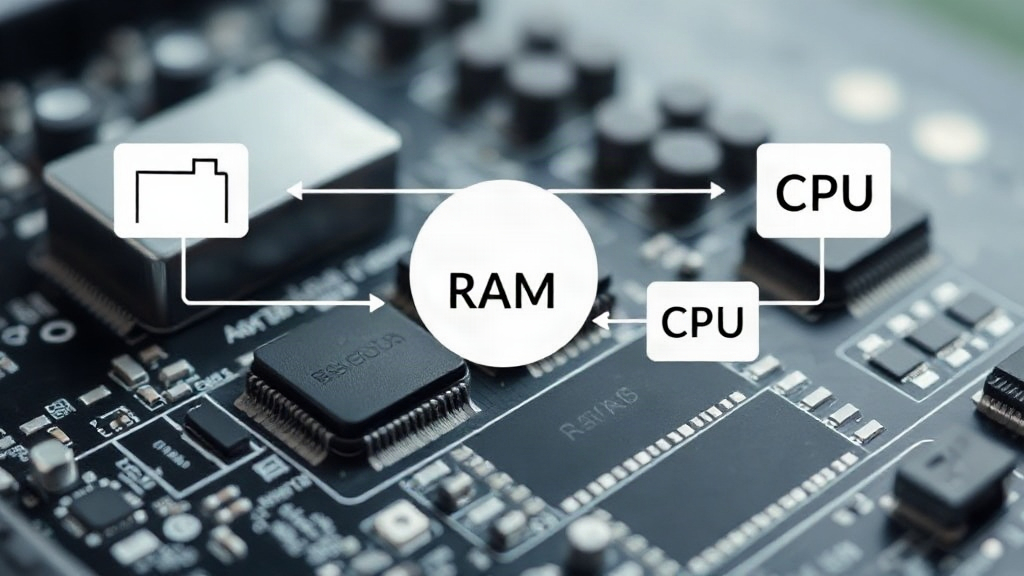
Memory, both volatile (RAM) and non-volatile (storage), will also be a significant focus. The distinction between RAM’s speed and volatility and storage’s persistence and capacity is fundamental. The series will likely explain how data and instructions move between storage, RAM, and the CPU, a process critical for understanding program loading times, multitasking, and overall system responsiveness. This journey from storage to RAM to CPU cache represents a hierarchy of speed and proximity to the processing core.
Other essential hardware components, such as the motherboard, input/output devices, and graphics processing units (GPUs), will also be covered. Each plays a role in the computer's ability to process information and interact with the user or other systems. The interconnectedness of these components, facilitated by buses and interfaces, forms the physical infrastructure that software relies upon.
Operating Systems: The Software Conductor
The series then pivots to the role of the operating system (OS). The OS acts as an intermediary between the hardware and the applications running on it. It manages the computer’s resources, including the CPU, memory, storage, and peripherals, providing a consistent interface for software developers and users. Key OS functions that will likely be explained include process management, memory management, file system management, and device management.
Understanding how an OS schedules tasks, allocates memory, and handles I/O operations is vital for building efficient and stable software. For developers, this knowledge can illuminate why certain programs consume more resources, how concurrency is managed, and the implications of different file system structures. The OS abstracts away much of the hardware complexity, allowing developers to focus on application logic, but a deeper understanding of this abstraction layer can prevent subtle bugs and performance bottlenecks.
The series aims to connect these disparate concepts into a cohesive whole. By starting with the most basic elements and progressively building up to more complex systems, it provides a comprehensive view of how computers operate. This approach is particularly valuable for software engineers who may have specialized in certain areas without a broad understanding of the entire computing stack. It bridges the gap between theoretical computer science and practical software development.
Why This Matters for Developers
The value proposition of such a series for developers is substantial. In an era where software systems are increasingly distributed and complex, a solid grasp of fundamental principles can lead to better design decisions, more efficient code, and more robust systems. When an application is slow, understanding whether the bottleneck lies in CPU cycles, memory access, disk I/O, or network latency requires knowledge of the underlying hardware and OS mechanisms.
Furthermore, as new hardware architectures emerge and operating systems evolve, developers who understand the fundamentals are better positioned to adapt and leverage these changes. The ability to reason about performance at a lower level, to understand the trade-offs involved in different data structures or algorithms, and to debug complex system-level issues are all skills honed by a deep understanding of how computers work.
This series offers a structured path to acquire that knowledge. By breaking down complex topics into digestible parts, it makes the study of computer science fundamentals accessible. It’s a reminder that beneath the elegant abstractions of modern programming lie fundamental principles of logic, electricity, and engineering that have been refined over decades. For any serious software engineer, revisiting these core concepts is not just an academic exercise but a practical necessity for building the future of technology.