
Massive GPU Expansion Underway
Elon Musk's artificial intelligence venture, SpaceXAI, is set to dramatically expand its AI computing capacity by adding another 660,000 GPUs this year. This aggressive procurement will bring the total operational AI GPUs to approximately 1.44 million by the end of 2024. This significant ramp-up positions SpaceXAI as a major player in the AI hardware landscape, rivaling the infrastructure of established cloud providers and dedicated AI research labs. The sheer scale of this deployment underscores the insatiable demand for computational power required to train and run increasingly sophisticated large language models and other AI applications.
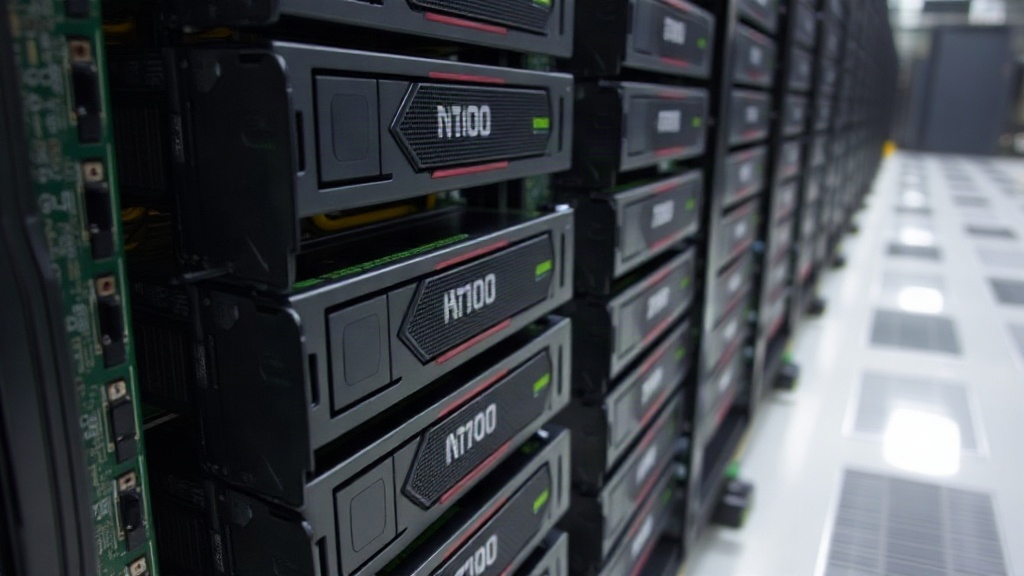
The first tranche of these new GPUs, specifically 220,000 GB300 units from Nvidia, is expected to arrive at SpaceXAI's Colossus 2 facility as early as next week. Two more shipments of the same size are scheduled to follow later in the year. Once fully integrated, the Colossus 2 site alone will house over a million AI GPUs. This milestone fulfills a goal Musk initially set approximately two years ago, signaling a relentless pursuit of cutting-edge AI development capabilities. The rapid deployment of such a vast GPU cluster is unprecedented and speaks to the urgency with which Musk aims to advance AI research and development.
Powering the AI Engine
The substantial increase in GPU count necessitates a corresponding surge in power infrastructure. To support this massive compute cluster, SpaceXAI is concurrently building a 1.2 gigawatt power plant. This dedicated power generation facility is crucial for bringing the new systems fully online and ensuring stable, continuous operation. Without such a robust power supply, the immense energy demands of hundreds of thousands of high-performance GPUs would be unmanageable, leading to performance bottlenecks and potential hardware failures. The construction of a dedicated power plant highlights the long-term, large-scale vision Musk has for SpaceXAI, treating AI compute not just as a leased service but as a fundamental, in-house resource.
This move towards self-sufficiency in power generation is a strategic decision. It allows SpaceXAI to bypass the limitations and potential cost fluctuations associated with relying on external power grids, especially for a facility of this magnitude. It also suggests a level of planning that anticipates future expansions and sustained high-volume usage. The 1.2 GW capacity is substantial, comparable to that of a small city's power grid, underscoring the immense energy requirements of cutting-edge AI training. The integration of this power plant with the GPU deployment will be a complex engineering feat, requiring meticulous coordination between hardware installation, network configuration, and power management systems.
Strategic Implications in the AI Race
The aggressive expansion of SpaceXAI's GPU infrastructure carries significant implications for the broader AI industry. By securing such a colossal amount of compute, Musk's venture is making a clear statement about its ambitions in the AI race. This level of hardware allows for the training of larger, more complex models than previously feasible for many organizations, potentially accelerating breakthroughs in areas like natural language understanding, computer vision, and autonomous systems. The scale of operations suggests a focus on developing foundational AI models, akin to those powering OpenAI's GPT series or Google's Gemini, but with the unique advantage of integrated hardware and power infrastructure.
The timing of this announcement is also noteworthy. The demand for AI GPUs, particularly high-end models like Nvidia's H100 and its successors, has outstripped supply for months, leading to long lead times and intense competition among tech giants, startups, and research institutions. SpaceXAI's ability to secure such a large order, with significant deliveries imminent, indicates a powerful position in supply chain negotiations, likely leveraging Musk's existing relationships and the sheer scale of his other ventures. This strategic procurement could give SpaceXAI a significant advantage in model development and deployment, allowing it to iterate faster and experiment more freely than competitors who might be constrained by limited access to compute resources. The question remains how this immense compute power will be leveraged in practice and what specific AI advancements will emerge from this substantial investment.