
The Rise of Conversational AI Agents
The landscape of artificial intelligence is rapidly evolving, with a growing emphasis on making AI tools more accessible and user-friendly. Traditional interfaces often require dedicated apps, complex web dashboards, or specialized knowledge. However, a new venture, Text Agent Store, is charting a different course by creating a marketplace for AI agents that can be controlled and interacted with through the most ubiquitous communication tool: SMS. This innovative approach bypasses the need for app installations or web logins, positioning AI as a readily available utility.
Text Agent Store functions as a central hub where developers can list their AI agents, and users can discover and subscribe to them. The core value proposition lies in the simplicity of interaction. Instead of navigating a graphical user interface, users can send a text message to a specific number or shortcode associated with an agent, and the AI responds. This could range from agents that summarize articles, draft emails, provide weather updates, or even perform more complex tasks, all initiated with a simple SMS.
The platform aims to lower the barrier to entry for both AI developers and end-users. For developers, it offers a distribution channel to reach a broad audience without the overhead of building custom front-end applications for each agent. They can focus on the AI's core functionality and business logic, leaving the communication layer to Text Agent Store. For users, it means accessing a diverse array of AI capabilities directly from their phone, a device they already carry and use constantly. This could be particularly impactful for individuals who are less tech-savvy or those who prefer the immediacy and low-friction nature of text-based communication.
How Text Agent Store Works
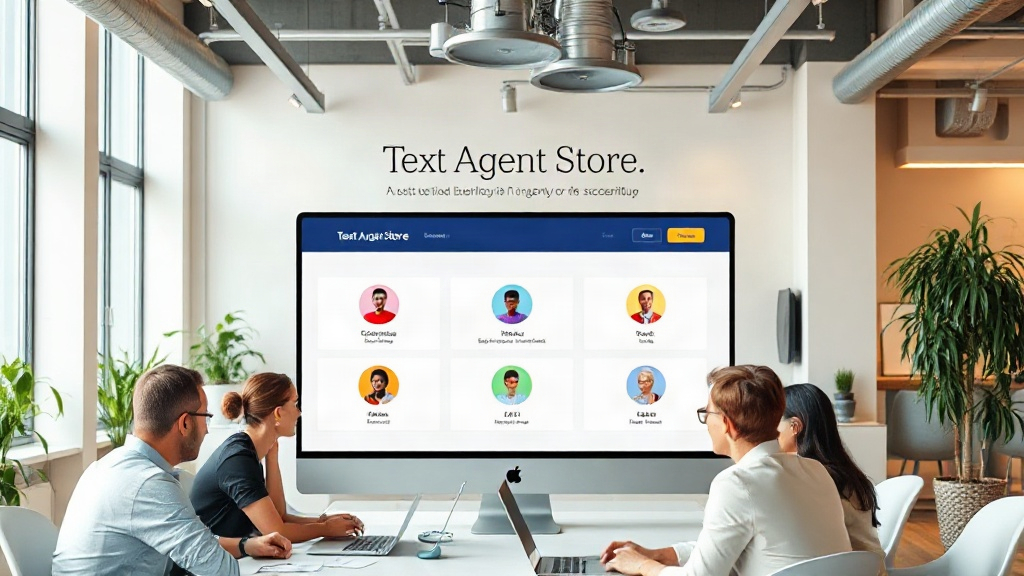
The operational model of Text Agent Store is designed for straightforward integration and use. Developers submit their AI agents to the platform. These agents are typically built using existing AI models and frameworks, but they are wrapped with an API that allows them to receive and send SMS messages. Once approved and listed, users can browse the available agents on the Text Agent Store website. Each agent has a profile detailing its capabilities, pricing, and how to subscribe.
Subscription models can vary. Some agents might be free for basic use, while others may operate on a pay-per-use basis or a monthly subscription fee. When a user subscribes to an agent, they are typically provided with a dedicated phone number or a specific keyword to use when texting. For instance, a user might text "SUMMARY" to a particular number, followed by the URL of an article they want summarized. The AI agent processes this request and sends the summary back as an SMS response.
The platform handles the underlying infrastructure for message routing, agent execution, and billing. This abstraction allows users to focus on the utility of the AI without worrying about the technical complexities of hosting or managing an AI model. The surprise here is the deliberate choice to leverage SMS, a technology often seen as antiquated in the age of rich mobile applications and instant messaging platforms like WhatsApp or Slack. Text Agent Store's bet is that the universality and simplicity of SMS still hold significant power for certain applications, especially those requiring quick, task-specific AI interactions.
Potential Use Cases and Target Audiences
The versatility of AI agents makes a wide range of applications possible through Text Agent Store. Imagine a student needing a quick definition for a term while studying; they could text an agent and receive an instant explanation. A busy professional could dictate a quick email to an AI agent that drafts it for them, ready for review and sending. Travelers could text an agent for real-time local recommendations or weather forecasts.
The platform targets several key audiences. For consumers, it offers a novel way to interact with AI without needing to download new apps or learn new interfaces. For small businesses, it could provide affordable access to AI-powered customer service tools or internal productivity aids that are easily integrated into existing workflows. Developers, as mentioned, gain a new avenue for monetization and distribution of their AI creations. The platform's focus on SMS also makes it potentially valuable in regions with limited smartphone penetration or where data costs are a significant barrier, as SMS typically requires less data than rich messaging apps.
This approach is less like a sophisticated AI chatbot interface and more like a digital vending machine for specialized AI services. You don't need to understand how the machine works; you just need to know what service you want and how to pay for it, all through a familiar text message. The key challenge will be ensuring reliable message delivery and agent response times, as SMS networks can sometimes have latency issues.
The Future of Conversational AI Access
Text Agent Store is entering a market that is increasingly crowded with AI-powered tools. However, its unique focus on SMS-based interaction sets it apart. The success of the platform will depend on its ability to attract a critical mass of both developers and users, curate a diverse and useful selection of agents, and maintain a smooth, reliable user experience. The question remains: will the simplicity of SMS be enough to overcome the richer functionalities offered by dedicated apps and web interfaces, or will it carve out a distinct niche for itself?
As AI continues to permeate various aspects of our lives, the methods through which we interact with it will undoubtedly diversify. Text Agent Store represents a compelling experiment in making AI interaction as simple as sending a text, potentially unlocking AI capabilities for a broader audience than ever before. If successful, it could redefine how we think about accessing and utilizing artificial intelligence in our daily lives, proving that sometimes, the oldest technologies can enable the newest innovations.