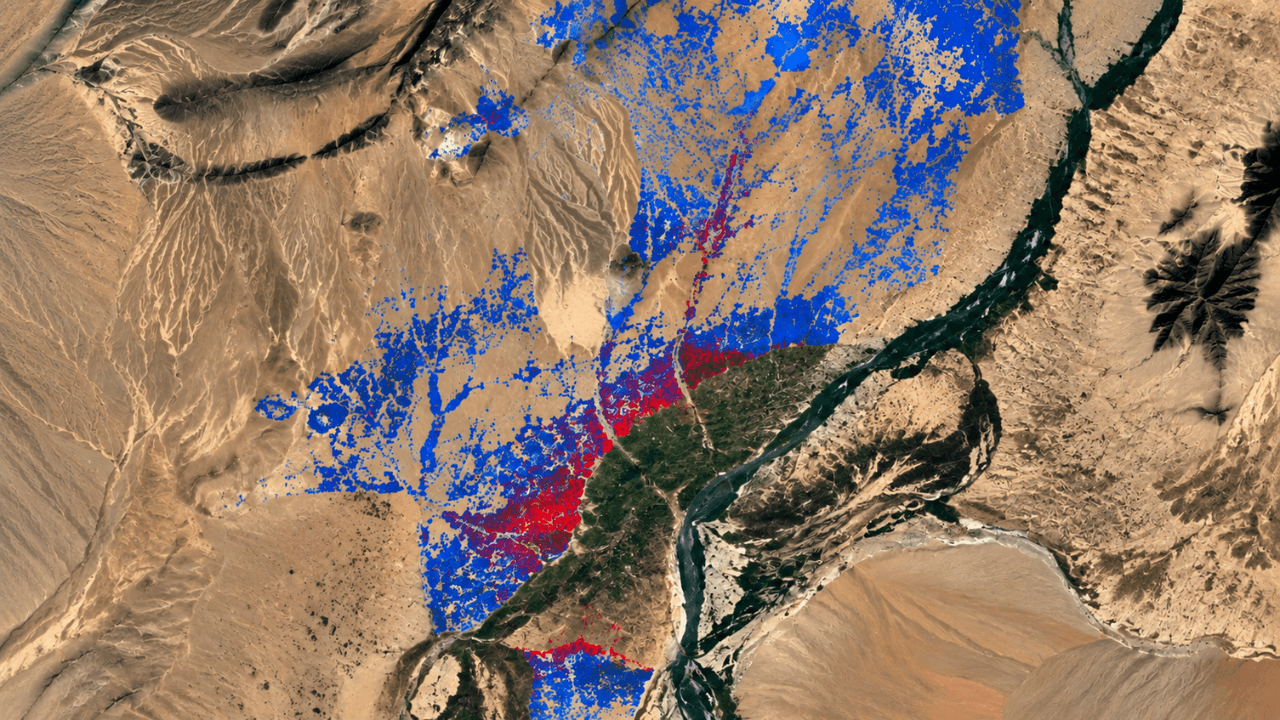
Kuva Space's Hyperspectral Advantage
Kuva Space, a Finnish company specializing in hyperspectral Earth observation satellites and AI-driven intelligence, has successfully completed a pilot program with a significant European security stakeholder. The initiative focused on leveraging Kuva Space's advanced technology to monitor and detect illicit crop cultivation. This move positions the company as a key player in using cutting-edge space and AI capabilities for critical security and agricultural oversight.
The core of Kuva Space's offering lies in its hyperspectral imaging technology. Unlike traditional multispectral satellites that capture data in a few broad spectral bands, hyperspectral sensors collect information across hundreds of narrow, contiguous spectral bands. This granular data allows for the precise identification of materials based on their unique spectral signatures. Think of it less like a few broad color swatches and more like a high-resolution fingerprint for every pixel on Earth. This ability is crucial for distinguishing between different types of vegetation, including crops that might be grown illegally and are often designed to blend in with their surroundings or with legitimate agricultural activities.
The pilot program's success underscores the growing demand for sophisticated remote sensing solutions in areas where ground-based monitoring is challenging, resource-intensive, or impossible due to security concerns. By combining hyperspectral data with artificial intelligence, Kuva Space can automate the analysis of vast amounts of imagery, identifying anomalies that might indicate the presence of illicit farming operations. AI algorithms are trained to recognize subtle spectral patterns associated with specific illegal crops, their growth stages, and their environmental footprints, even when they are intentionally camouflaged or intermingled with legal crops.
AI-Powered Detection and Analysis
The integration of AI is not merely an add-on; it's a fundamental component of Kuva Space's intelligence solution. Raw hyperspectral data, while rich in information, is voluminous and complex. AI algorithms, including machine learning and deep learning models, are essential for processing this data efficiently and extracting actionable insights. These models can be trained to identify specific spectral fingerprints of illicit substances, analyze soil conditions, detect irrigation patterns, and even assess the density and maturity of crops. This allows for a level of detail and accuracy previously unattainable with conventional satellite imagery.
For security stakeholders, this technology offers a proactive and non-intrusive method for monitoring vast territories. Traditional methods often rely on human intelligence, ground patrols, or less sophisticated aerial surveillance, which can be costly, dangerous, and prone to missing clandestine operations. Kuva Space's solution provides a persistent, objective, and wide-area surveillance capability. The AI can flag suspicious areas for further investigation, prioritizing resources and enabling a more targeted and effective response to illegal activities. This is particularly relevant in regions where agricultural land is extensive and often remote, making traditional oversight impractical.
The pilot's completion marks a significant step for Kuva Space, demonstrating the practical application and efficacy of their technology in a real-world security context. While the specifics of the European security stakeholder and the exact nature of the illicit crops monitored remain confidential, the success points to a broader market need for such advanced monitoring capabilities. The company's focus on hyperspectral imaging, coupled with sophisticated AI analysis, provides a unique value proposition in the burgeoning Earth observation market.
Broader Implications and Future Outlook
The implications of this technology extend beyond just illicit crop monitoring. Hyperspectral imaging, when analyzed by AI, can be applied to a wide array of challenges, including environmental monitoring, disaster response, resource management, and even urban planning. For instance, it can detect pollution sources, map deforestation, assess crop health for legitimate agriculture, or identify mineral deposits. Kuva Space's platform is designed to be versatile, adaptable to various data analysis needs.
What remains to be seen is the scalability of this solution across different geopolitical regions and the regulatory frameworks that will govern the use of such advanced surveillance technologies. As more nations and international bodies seek to enhance their oversight capabilities, companies like Kuva Space are poised to play a critical role. The company's ability to generate high-resolution spectral data from space and translate it into actionable intelligence through AI offers a powerful new tool for security and environmental agencies worldwide.
Kuva Space's successful pilot demonstrates a tangible pathway for hyperspectral satellite technology and AI to address complex, real-world security challenges. The ability to peer into the spectral fingerprint of the Earth offers unprecedented insight, and as the technology matures and becomes more accessible, its impact will undoubtedly grow.