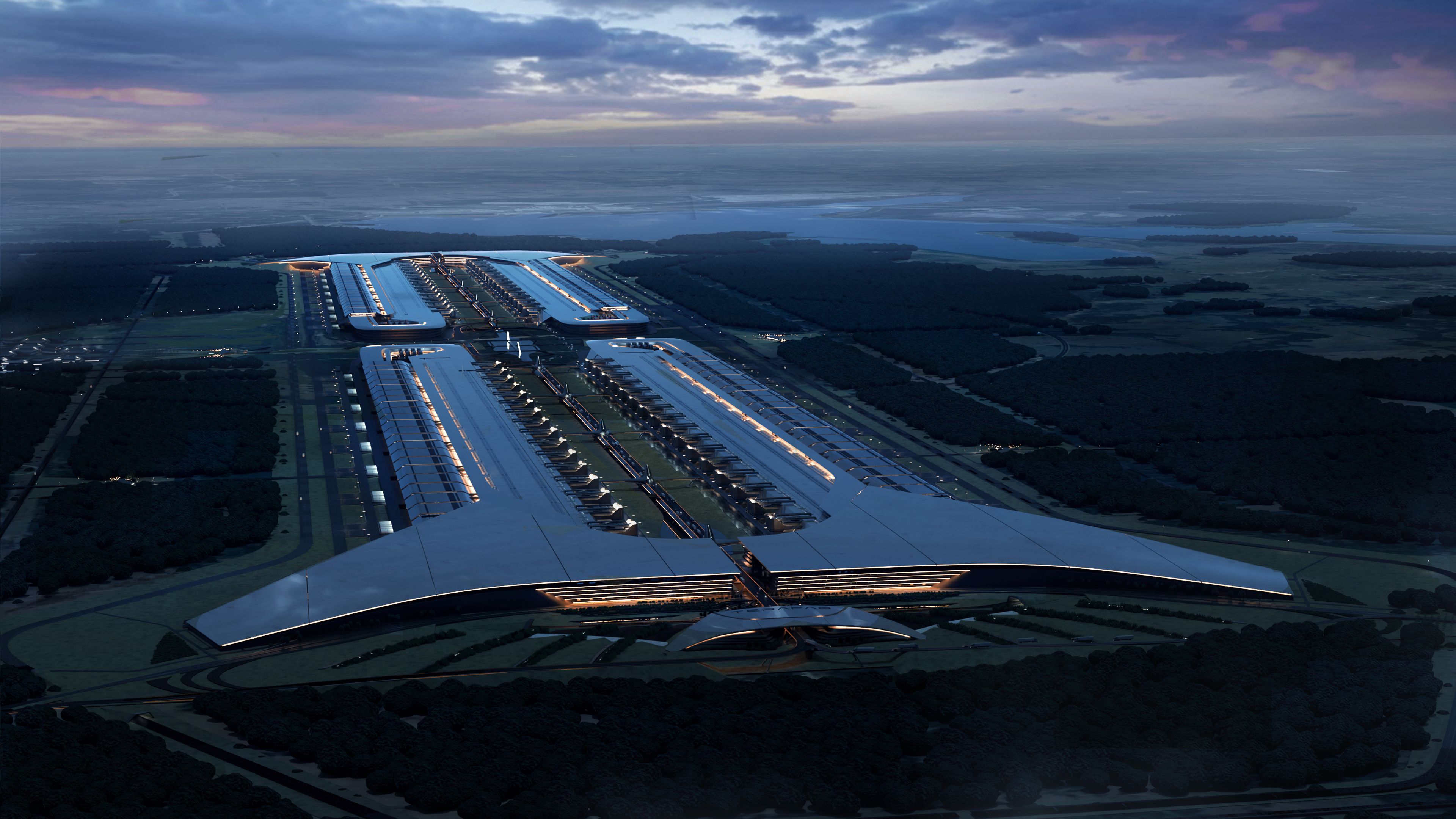
Massive Semiconductor Investment Signals Strategic Shift
Tesla and SpaceX are jointly investing a staggering $16.8 billion to construct a new, state-of-the-art semiconductor fabrication plant, codenamed 'Terafab,' in Texas. This colossal undertaking, situated just north of Houston, marks a significant escalation in the companies' pursuit of vertical integration and a direct response to the persistent global chip shortages that have hampered production across industries. The investment underscores a strategic pivot towards securing proprietary chip manufacturing capabilities, essential for powering Tesla's advanced autonomous driving systems and SpaceX's burgeoning AI and satellite network infrastructure.
The decision to build a dedicated chip factory is not merely about increasing supply; it's about controlling the design, production, and future evolution of the specialized silicon that underpins their most critical technologies. This move positions the companies to design chips tailored precisely to their unique hardware and software needs, potentially offering performance advantages and faster iteration cycles than off-the-shelf solutions. The sheer scale of the investment—nearly $17 billion—indicates a long-term commitment to semiconductor independence, a strategy that could redefine the competitive landscape for both automotive and aerospace sectors.
This initiative comes at a time when the geopolitical landscape and supply chain vulnerabilities have made reliance on external chip manufacturers increasingly precarious. By bringing chip production in-house, Tesla and SpaceX aim to mitigate risks associated with trade disputes, manufacturing disruptions, and the intense competition for advanced semiconductor capacity. The 'Terafab' plant is expected to focus on manufacturing advanced processors, AI accelerators, and other specialized integrated circuits vital for the companies' ambitious growth plans.
Strategic Imperatives: Why Now?
The timing of this announcement is critical. For years, both Tesla and SpaceX have faced challenges securing sufficient quantities of advanced semiconductors. Tesla, in particular, has highlighted how chip constraints have directly impacted its production volumes for vehicles equipped with its Full Self-Driving (FSD) hardware. Similarly, SpaceX's rapid expansion of its Starlink satellite constellation and its increasing reliance on sophisticated AI for mission control and data processing demand a consistent and high-volume supply of custom-designed chips.
Building a fabrication plant of this magnitude is a complex and capital-intensive endeavor, typically undertaken by established semiconductor giants like TSMC, Intel, or Samsung. The fact that Tesla and SpaceX, primarily known for their prowess in electric vehicles and space exploration, are venturing into this domain speaks volumes about the perceived strategic necessity. They are not just buying chips; they are aiming to become significant players in the semiconductor ecosystem, at least for their internal needs.
The 'Terafab' project is likely to benefit from recent government initiatives, such as the CHIPS and Science Act in the United States, which provides incentives for domestic semiconductor manufacturing. While the exact details of any government support for the Terafab project are not yet public, the strategic alignment with national goals for semiconductor resilience is undeniable. This move could also be seen as a response to the increasing complexity of AI hardware, where custom silicon offers significant advantages in power efficiency and performance compared to general-purpose processors.
The 'Terafab' Vision: Beyond Basic Production
The moniker 'Terafab' itself suggests an ambition that goes beyond standard chip manufacturing. While specific details about the types of chips to be produced are scarce, the name implies a focus on high-volume production of chips with immense processing power, potentially measured in teraflops. This could include advanced AI training and inference chips, specialized processors for real-time vehicle control, and high-speed communication chips for SpaceX's network.
The plant will likely incorporate cutting-edge manufacturing processes, possibly including nodes below 7nm, which are essential for achieving the performance and power efficiency required by modern AI and high-performance computing applications. The integration of AI directly into the chip design and manufacturing process itself could also be a key differentiator. Think of it less like a traditional factory floor and more like a highly automated, AI-driven organism that designs, fabricates, and tests its own silicon brain cells.
For Tesla, this means potentially accelerating the development of its FSD capabilities, enabling more complex AI models to run directly on in-vehicle hardware. For SpaceX, it could mean designing more powerful and efficient processors for its Starlink satellites, ground stations, and internal AI systems, further solidifying its technological lead in satellite internet and space operations. The synergy between the two companies is evident: Tesla's need for AI compute and SpaceX's expertise in advanced electronics and large-scale deployment create a powerful demand driver for proprietary silicon.
Implications for the Semiconductor Industry and Beyond
The entry of Tesla and SpaceX into large-scale chip manufacturing is a disruptive force. It challenges the established order and signals a growing trend of major technology companies pursuing greater control over their hardware supply chains. This could put pressure on existing foundries to innovate faster and potentially lead to increased competition for talent and resources in the semiconductor sector.
Competitors in the automotive and aerospace industries will undoubtedly be watching closely. The ability of Tesla and SpaceX to produce custom, high-performance chips could provide them with a significant competitive advantage, forcing others to consider similar strategic investments or forge deeper partnerships with semiconductor manufacturers. The question for these competitors is not if they need similar capabilities, but whether they can afford the massive upfront investment and the technical expertise required to operate a state-of-the-art fabrication plant.
What remains to be seen is the extent to which 'Terafab' will serve external customers. While the initial focus is clearly on internal needs, the sheer capacity implied by the investment could eventually open doors for contract manufacturing. However, given the proprietary nature of the technologies developed by Tesla and SpaceX, it is more probable that 'Terafab' will remain a tightly guarded strategic asset, reinforcing the companies' commitment to innovation and self-sufficiency in the critical domain of advanced semiconductors.