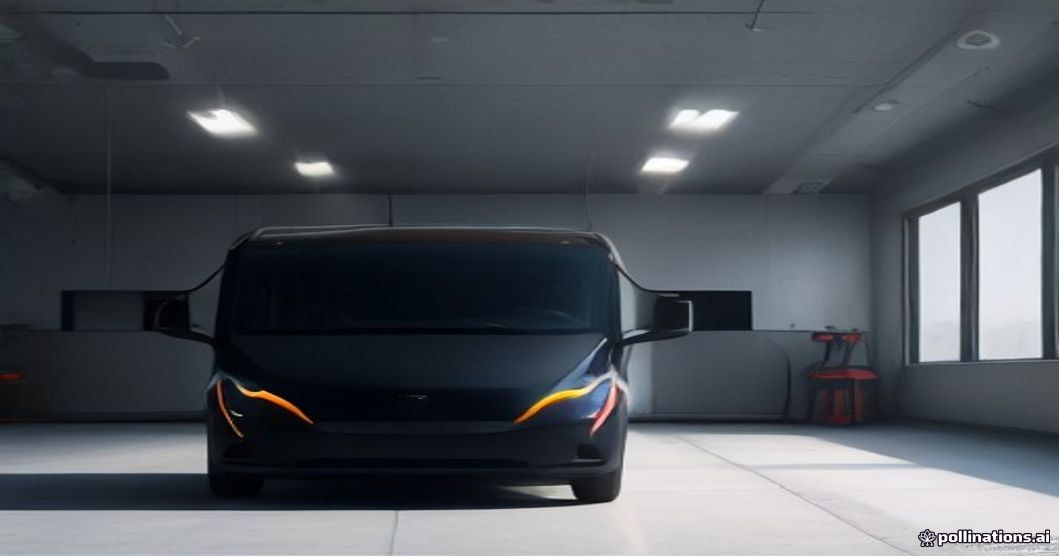
NHTSA Launches Probe into Tesla Cybercab Deployment

The National Highway Traffic Safety Administration (NHTSA) has initiated an investigation into Tesla's recently deployed Cybercab service. The probe centers on whether the autonomous vehicles used in the pilot program meet all federal motor vehicle safety standards. While Tesla has not officially announced the Cybercab's launch, reports and sightings of the vehicles operating as taxis in select locations, particularly in Austin, Texas, have surfaced. The investigation signifies a critical juncture for Tesla's ambitions in the autonomous ride-hailing market, as regulatory scrutiny intensifies. Sources indicate that the investigation is in its early stages. The NHTSA is gathering information to determine if Tesla's self-driving technology and the vehicle configurations themselves comply with existing safety mandates. This includes evaluating the operational design domain of the Cybercabs and the safety measures in place when the vehicles are operating without a human safety driver. The agency's mandate is to ensure that all vehicles on public roads, regardless of their level of autonomy, are safe for occupants and other road users.
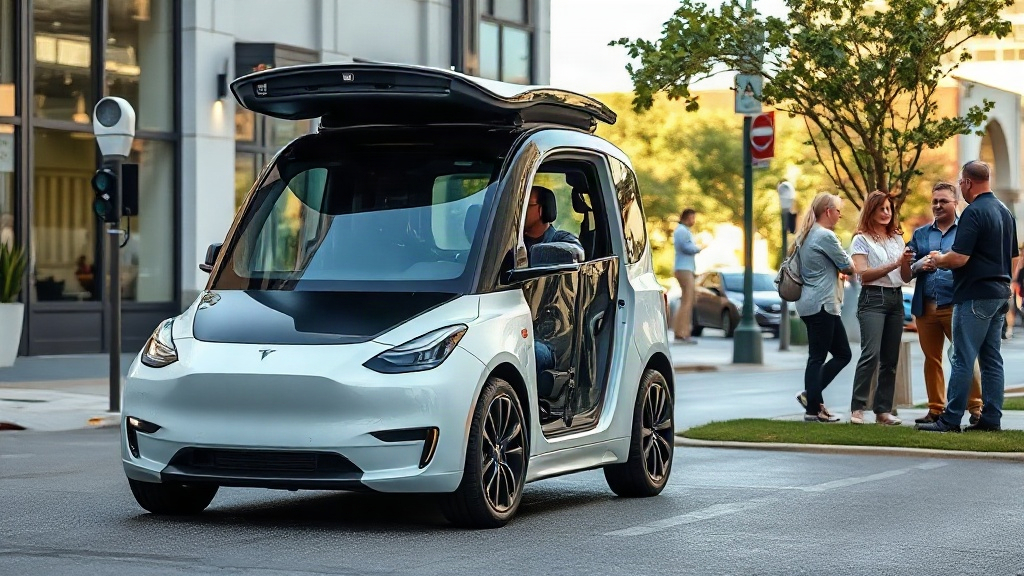
Tesla Cybercab vehicle operating on a public street in Austin, Texas
Tesla has been a vocal proponent of full self-driving (FSD) technology and has been testing its FSD Beta software, which is intended to enable autonomous driving, for several years. The Cybercab deployment appears to be an extension of this testing, moving towards a commercial service model. However, the transition from a beta testing phase to a public-facing service raises distinct regulatory questions. The NHTSA's focus will likely be on the robustness of the safety systems, the fallback mechanisms in case of system failure, and the overall risk profile of operating these vehicles without direct human supervision. ## Navigating the Regulatory Landscape for Autonomous Vehicles The deployment of autonomous vehicles, especially for ride-hailing services, presents a complex regulatory challenge. Unlike traditional vehicles, the safety of an autonomous system is not solely dependent on driver skill but on the sophisticated interplay of sensors, software, and hardware. The NHTSA's investigation will likely examine how Tesla's system handles various driving scenarios, including unpredictable events, adverse weather conditions, and interactions with human drivers, pedestrians, and cyclists. The agency will also be looking at the data Tesla collects and uses to validate the safety of its FSD system. This investigation is not unprecedented. The NHTSA has previously engaged with Tesla regarding its FSD Beta program, particularly after a series of crashes involving vehicles operating on the system. These past inquiries have focused on the system's ability to detect and respond to emergency vehicles and its limitations in certain driving environments. The current probe into the Cybercab suggests a broadening scope of concern, encompassing the specific operational context of a driverless taxi service. ## What Does This Mean for Tesla's Autonomous Future? The outcome of the NHTSA's investigation could have significant implications for Tesla's autonomous vehicle roadmap. If the agency finds that the Cybercab does not meet safety standards, Tesla could be required to make substantial modifications to its vehicles or its operational protocols. This might involve delaying or scaling back the deployment of the Cybercab service, potentially impacting Tesla's timeline for achieving widespread autonomous ride-hailing. Furthermore, any adverse findings could influence the broader regulatory framework for autonomous vehicles in the United States, setting precedents for other companies developing similar technologies. Tesla's approach to autonomous driving has always been characterized by rapid iteration and a willingness to push boundaries. While this has led to technological advancements, it has also placed the company at the center of regulatory debates. The Cybercab investigation underscores the critical need for a clear and robust regulatory pathway for autonomous vehicle services to ensure public trust and safety. The agency's findings will be closely watched by the entire automotive industry, as well as by consumers eager for the promise of safer, more efficient transportation. The investigation highlights a fundamental tension: the drive for innovation in autonomous technology versus the imperative of ensuring public safety through established regulatory frameworks. As Tesla pushes the envelope with its Cybercab, it faces the dual challenge of technological development and regulatory compliance. The coming months will reveal how these forces interact and what the future holds for driverless taxis on American roads.