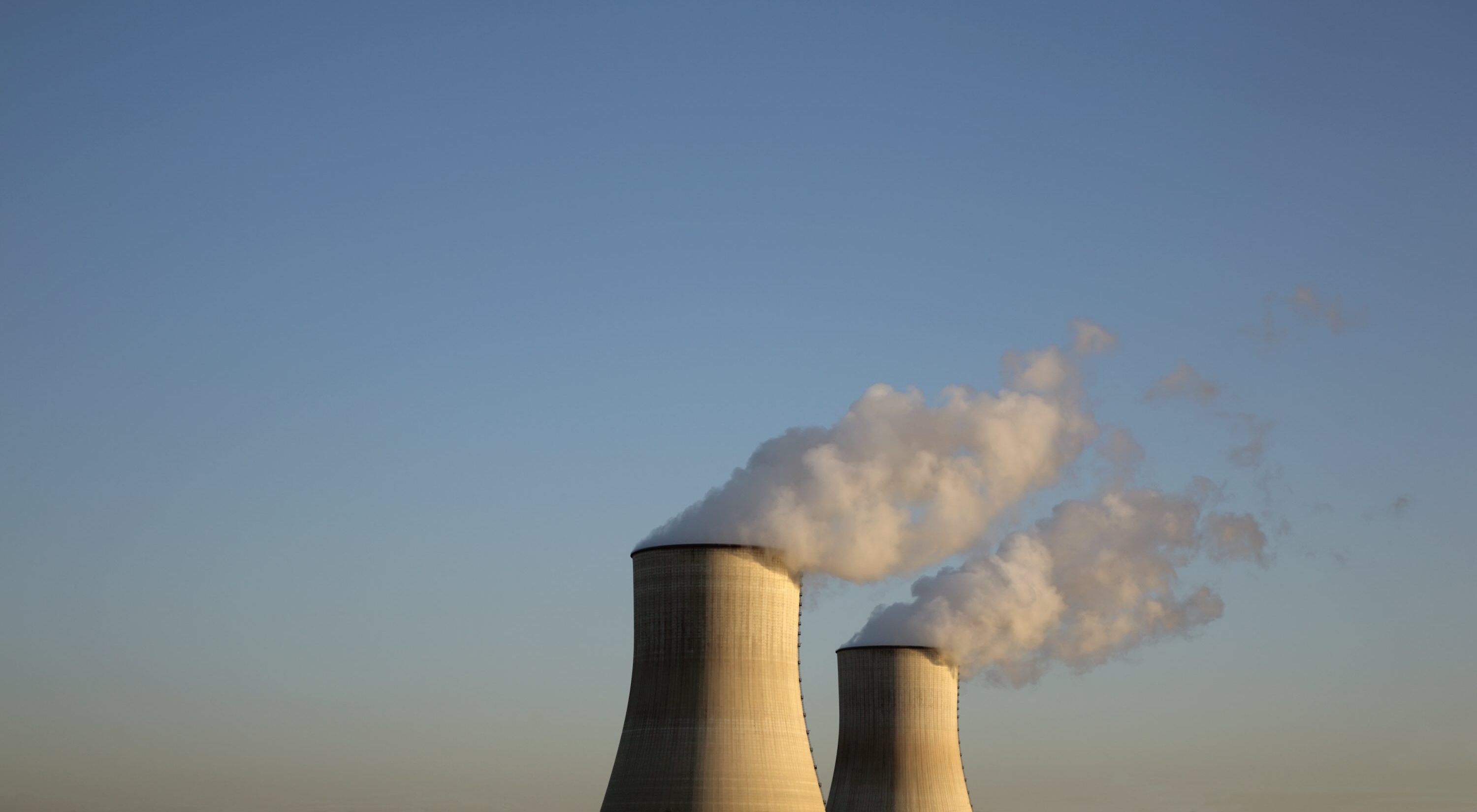
A New Era for Data Center Power
Kairos Power has inked a significant deal with Samsung C&T, a subsidiary of the Samsung Group, to secure up to $100 million in funding and construction services for its first 50-megawatt (MW) nuclear power plant. This facility is earmarked to provide clean, reliable power to Google's data centers, marking a pivotal moment for both the nuclear energy sector and the hyperscale computing industry. The agreement signals a growing commitment from major tech players to explore advanced energy solutions to meet their immense and ever-increasing power demands.
The collaboration between Kairos Power, a company focused on developing advanced nuclear energy technology, and Samsung C&T, a global engineering and construction powerhouse, is designed to accelerate the deployment of Kairos's innovative reactor design. While the exact financial structure of the up to $100 million commitment is not fully detailed, it is understood to encompass both investment and critical construction expertise. This partnership addresses a key challenge for advanced nuclear developers: scaling up from demonstration projects to commercial deployment. Samsung C&T's extensive experience in large-scale industrial and power plant construction will be instrumental in bringing Kairos's vision to fruition.
The Kairos Power Approach
Kairos Power is developing a fluoride salt-cooled, high-temperature reactor (FHR) technology. Unlike traditional light-water reactors, FHRs operate at higher temperatures, which can lead to greater thermal efficiency and potentially simpler, more cost-effective designs. The higher operating temperatures also allow for a wider range of heat applications, including industrial process heat and hydrogen production, though the immediate focus for this project is electricity generation for Google.
The company's approach emphasizes inherent safety features. The FHR design uses a stable, low-pressure fluoride salt coolant, which is less reactive and less prone to flashing into steam than water. This significantly reduces the risk of a meltdown. Additionally, the reactor core geometry and fuel form are designed to prevent power excursions. The fuel itself is a robust TRISO particle fuel, encapsulated in ceramic, which can withstand very high temperatures, further enhancing safety. This design philosophy aims to overcome some of the public perception and regulatory hurdles that have historically challenged nuclear power deployment.
This specific 50 MW plant represents a crucial step in Kairos's commercialization strategy. It's not just a prototype; it's intended to be a fully operational, grid-connected power source. The scale is significant enough to demonstrate commercial viability and provide a substantial amount of power, suitable for a large data center campus. The choice of Google as the anchor customer is also telling. Google has been vocal about its commitment to running on 24/7 carbon-free energy and has actively sought innovative solutions to achieve this goal, including exploring advanced nuclear technologies.
Samsung C&T's Role and Market Implications
Samsung C&T's involvement brings substantial construction and project management capabilities. The company has a global track record in building everything from skyscrapers to power plants and infrastructure projects. For Kairos, this means access to a proven supply chain, skilled labor, and established project execution methodologies. This is critical for managing the complexities and risks associated with constructing a nuclear facility, especially one using a novel design.
The deal also highlights a broader trend: established industrial conglomerates are increasingly looking to invest in and partner with advanced energy startups, particularly those in the clean energy and decarbonization space. Samsung C&T's investment can be seen as a strategic move to gain expertise and a foothold in the emerging advanced nuclear market. As data centers continue to expand and their energy footprints grow, the demand for reliable, carbon-free power sources like advanced nuclear will only intensify. This partnership positions Samsung C&T to be a key player in supplying the infrastructure for this transition.
For Google, securing a dedicated, carbon-free power source like this nuclear plant offers a path towards achieving its ambitious sustainability goals more effectively. While solar and wind are crucial, their intermittency requires significant battery storage or grid backup. A nuclear plant, on the other hand, provides baseload power, running continuously regardless of weather conditions. This reliability is paramount for data centers, where even brief power interruptions can have severe consequences.
The Road Ahead
The successful construction and operation of this 50 MW plant will be closely watched. It will serve as a proof point for Kairos Power's technology and its ability to deliver projects on time and budget. It will also set a precedent for how hyperscale cloud providers can leverage advanced nuclear energy. The challenges ahead include navigating the regulatory landscape for new reactor designs, securing long-term operational expertise, and managing public perception. However, with major partners like Samsung C&T and a key customer in Google, Kairos Power appears to have a strong foundation for its ambitious plans.
The ultimate success of this project could pave the way for larger deployments, not just for data centers but for other industrial applications requiring significant amounts of clean, reliable energy. The fusion of advanced nuclear technology with the demands of the digital economy is a powerful narrative, and this deal is a concrete manifestation of that convergence.