Automating AWS Network Infrastructure
Building and managing cloud infrastructure manually, especially within AWS, can be a tedious and error-prone process. The AWS console, while powerful, often leads to forgotten configurations, inconsistent deployments, and hours spent debugging simple connectivity issues. This is precisely the problem Joseph Davis set out to solve with a focused Terraform project that automates the creation of a complete AWS network. The goal was not exotic tooling, but a reproducible, infrastructure-as-code approach to the essential components of a functional cloud network.
The project consolidates the setup of a Virtual Private Cloud (VPC), two subnets, an internet gateway, a firewall, and a running server into a remarkably small footprint: just ninety lines of Terraform code. This approach offers significant advantages in consistency, speed, and maintainability. Instead of navigating multiple screens in the AWS console, users can deploy or destroy this entire environment with a couple of simple commands: terraform init, terraform apply, and terraform destroy. This drastically reduces the cognitive load and potential for human error.
Core Components and Their Terraform Representation
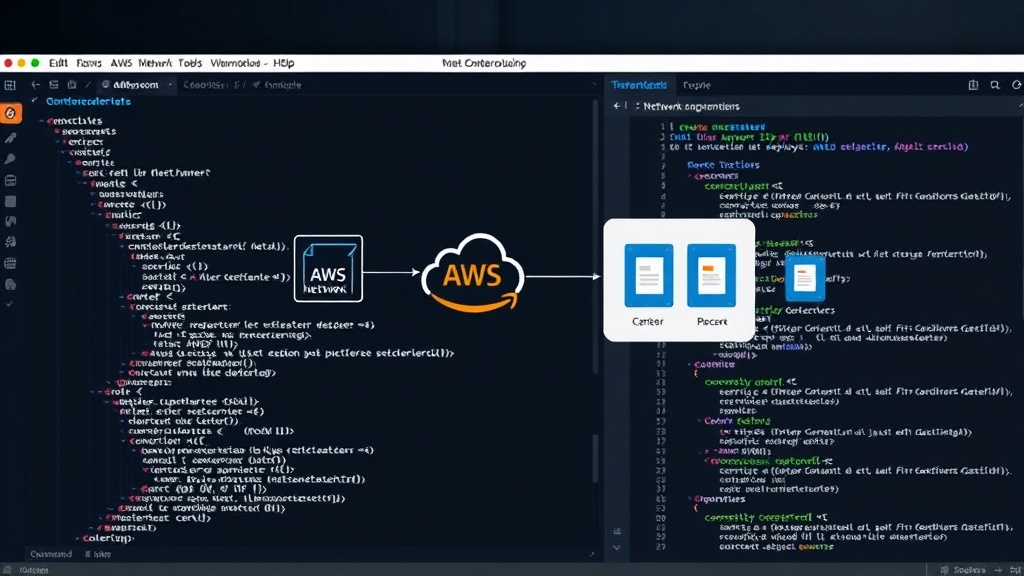
The ninety lines of Terraform code define the fundamental building blocks of a basic AWS network. At its heart is the VPC, the foundational virtual network within AWS. This provides a logically isolated section of the AWS Cloud where you can launch AWS resources in a virtual network that you define. Following the VPC, the configuration establishes two subnets. These subnets reside within the VPC and offer a way to segment the network, typically for high-availability or security purposes. One might be a public subnet, directly accessible from the internet (via the internet gateway), and the other a private subnet, offering a more secure environment for resources that do not require direct external access.
Connectivity to the outside world is managed through an internet gateway. This is a horizontally scaled, redundant, and fully managed AWS service that enables communication between an instance in a VPC and the internet. For security, a firewall is configured. In AWS, this typically translates to security groups and network access control lists (NACLs). These act as virtual firewalls for your EC2 instances to control inbound and outbound traffic. The configuration ensures that only necessary ports and protocols are allowed, enhancing the security posture of the deployed resources.
Finally, the project deploys a running server. This could be an EC2 instance, configured with the necessary network interfaces and security settings to operate within the defined network. The automation ensures that this server is correctly placed within one of the subnets and adheres to the firewall rules. The entire setup is designed for reproducibility, meaning that running the Terraform code again will result in an identical network environment, or destroying it will cleanly remove all created resources.
Challenges and Learnings
Despite the conciseness of the solution, the author encountered two minor but significant hurdles during development. These small issues, often overlooked in larger, more complex setups, highlight the importance of meticulous configuration even in automated environments. While the exact nature of these two tripping points isn't detailed in the excerpt, they serve as a reminder that even with infrastructure-as-code, understanding the underlying AWS services and their interactions is crucial. Debugging automated infrastructure can sometimes be more challenging than manual configuration if the error messages are cryptic or the logic is not fully grasped.
These kinds of unexpected issues, even when small, can be frustrating but are invaluable learning experiences. They often reveal subtle dependencies or edge cases within the cloud provider's services or the IaC tool itself. For instance, a common oversight might be a missing route table entry that prevents a server in a private subnet from initiating outbound connections for package updates, or a security group rule that is too restrictive, blocking essential ingress traffic. The author’s experience underscores the value of documenting these learning moments. For developers new to Terraform or AWS networking, these specific challenges can save significant debugging time.
The Power of Reproducible Infrastructure
The core value proposition of this approach lies in its reproducibility and efficiency. Manually configuring an AWS network is like building a house brick by brick without a blueprint – prone to errors and difficult to replicate. Terraform, in this context, acts as the blueprint and the automated construction crew. It codifies the desired state of the infrastructure, allowing for version control, peer review, and automated deployment. This is essential for development, testing, and production environments, ensuring consistency across all stages of the software lifecycle.
For developers, this means spending less time wrestling with the AWS console and more time building applications. For teams, it means onboarding new members faster and reducing the bus factor associated with tribal knowledge of manual configurations. The ability to tear down and rebuild the entire network with simple commands also facilitates experimentation and disaster recovery planning. If a configuration needs to be altered, it can be done safely in code, tested, and then applied. This shift from imperative (clicking buttons) to declarative (defining desired state) infrastructure management is a cornerstone of modern DevOps practices.