
Introducing Triton: A Leap Forward for QEMU Graphics
The virtualization landscape has long grappled with the challenge of delivering high-performance graphics within virtual machines. While CPU-based rendering has improved, it often falls short for graphically intensive applications, games, and professional design tools. Today, a significant advancement emerges with the introduction of Triton, a novel open-source DirectX 11 driver specifically designed for QEMU. This driver promises to bridge the gap between virtualized environments and the demanding graphical capabilities expected by modern software.
Triton is not merely an incremental update; it represents a fundamental shift in how QEMU handles graphical output. Historically, QEMU has relied on software rendering or basic OpenGL acceleration, which, while functional, cannot match the performance of native hardware rendering. The development of Triton addresses this bottleneck by implementing a DirectX 11 driver that can leverage the host machine's GPU for rendering. This means that applications running inside a QEMU virtual machine can now potentially achieve frame rates and visual fidelity previously thought impossible.
How Triton Works: Bridging the Virtualization Gap
At its core, Triton acts as a translation layer. When an application within the guest operating system makes DirectX 11 API calls, Triton intercepts these calls. Instead of processing them purely in software on the guest CPU, Triton translates them into commands that can be efficiently executed by the host system's GPU. This translation is complex, involving mapping DirectX 11 features to equivalent host GPU capabilities.
The driver's architecture is designed for efficiency. It minimizes the overhead associated with context switching and data transfer between the guest and host. This is crucial for maintaining high performance. The team behind Triton has focused on optimizing the pipeline for common DirectX 11 features, including shaders, textures, and rendering states. The goal is to provide a near-native graphics experience, allowing users to run demanding applications without the severe performance penalties often associated with virtualization.
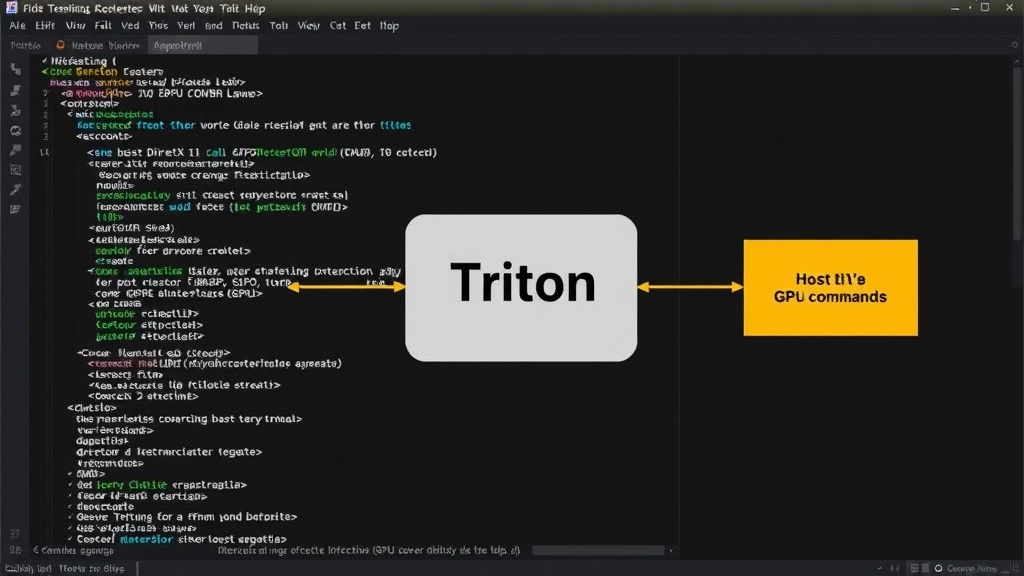
One of the key technical challenges was ensuring compatibility across a wide range of host GPUs and drivers. Triton aims to abstract away the underlying host API differences as much as possible, providing a consistent DirectX 11 interface to the guest. This approach is vital for broad adoption, as users will want to see their existing DirectX 11 compatible software run without extensive modification or specific hardware requirements.
Performance Implications and Use Cases
The impact of Triton is expected to be substantial across various user segments. For developers, it opens up new possibilities for testing applications in isolated virtual environments without sacrificing graphical performance. This is particularly relevant for game development, where iterative testing on different hardware configurations is common.
For users running legacy Windows applications on Linux or macOS hosts, Triton could unlock the ability to run graphically demanding software that was previously unusable. This includes older games, CAD software, and multimedia applications. The ability to run these applications at acceptable frame rates within QEMU could significantly reduce the need for dual-booting or maintaining separate physical machines.
The performance gains are not just theoretical. Early reports and benchmarks suggest significant improvements over software rendering. While precise figures will vary based on the host hardware, the guest OS, and the specific application, the architectural design of Triton points towards a substantial uplift in graphical throughput. This is akin to upgrading from a basic integrated graphics chip to a dedicated, high-performance GPU, but within the confines of a virtual machine.
The Road Ahead: Development and Community
Triton is an open-source project, and its development is being driven by a community of enthusiasts and developers. This collaborative approach is essential for its continued growth and improvement. Contributions in the form of bug fixes, performance optimizations, and expanded feature support are actively encouraged.
The immediate roadmap likely includes further optimization, broader API coverage, and enhanced stability. As DirectX 11 is a mature API, Triton has a solid foundation to build upon. However, the complexities of hardware acceleration within a virtualized context mean that ongoing development will be crucial. The surprising detail here is not the ambition of the project, but the fact that such a complex driver is being tackled as an open-source community effort, bypassing traditional commercial development routes for specialized virtualization hardware acceleration.
For users and developers invested in QEMU and virtualization, Triton represents a significant step forward. It addresses a long-standing limitation and offers a compelling path towards richer, more performant graphical experiences within virtual machines. The project's success will depend on continued community engagement and its ability to deliver on the promise of near-native DirectX 11 performance.
If you're running graphically demanding applications in QEMU, keeping an eye on Triton's development is highly recommended. Its integration could fundamentally change your virtual machine workflow, enabling applications that were previously out of reach.