The Fragility of Informal Telegram Monetization
Telegram hosts a vibrant ecosystem of communities that already monetize access informally. These range from private trading groups and language classes to paid newsletters, software access, private research, coaching, digital files, signals, courses, and creator communities. While many of these operations generate revenue, their current methods are often fragile and inefficient. The typical workflow involves a user sending money, an administrator manually verifying a screenshot, and then another person manually adding the user to a private channel. Renewal dates are tracked in spreadsheets, leading to expired users lingering in groups and paid users waiting hours for access. Support inquiries frequently pile up because administrators cannot quickly ascertain payment status—whether it was received, expired, underpaid, or still confirming.
This manual, fragmented approach creates significant friction for both creators and consumers. It’s a bottleneck that hampers scalability and professionalism. The opportunity lies not just in creating a simple Telegram bot or a standalone crypto payment link, but in building a comprehensive paid access system that integrates payment processing, membership management, and automated access control.
Introducing Vertical Crypto Checkout
Most developers approach payment processing as a generic feature. The standard flow is straightforward: a customer selects a product, the backend generates a payment request, the user pays, a webhook confirms the payment, and the order is marked as paid. While technically functional, this generic approach often lacks business differentiation. Merchants compare generic solutions against existing plugins, hosted payment pages, or one-off freelance integrations. This positions the developer as merely a payment installer, rather than a value-added partner.
A vertical checkout system, however, is fundamentally different. It is not merely a crypto payment button; it is a checkout system meticulously designed around the specific operational workflows and needs of a particular niche. Consider a web hosting company. It doesn’t just need to collect payment. It needs to provision a server, extend a renewal date, manage invoice expiry, update a billing panel, notify support staff, and maintain an accurate record of customer subscriptions and service status.
Applying this concept to Telegram paid access means building a system that understands the nuances of community management and digital subscription services. It’s about creating an automated pipeline that mirrors and enhances the manual processes currently in place, but with efficiency, reliability, and scalability.
Key Components of a Telegram Paid Access System
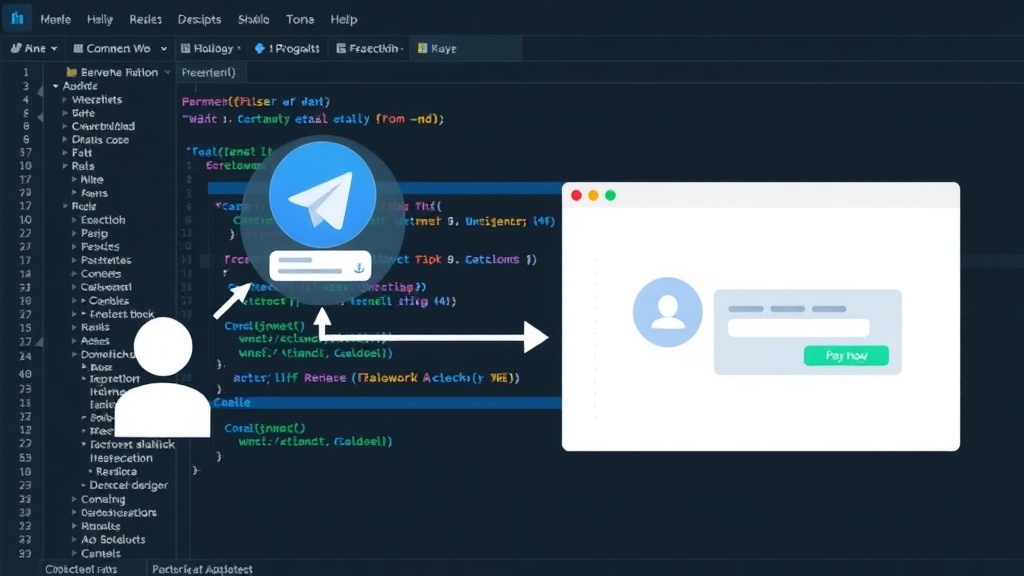
Building a robust paid access system for Telegram requires several interconnected components:
1. Payment Gateway Integration
This is the foundation. The system must seamlessly integrate with cryptocurrency payment gateways. Options include direct wallet integrations, third-party payment processors that support crypto, or platforms that abstract away some of the complexity. The key is to support popular cryptocurrencies and ensure fast, reliable transaction confirmations. The system should be able to handle various payment scenarios, including underpayments and pending confirmations, providing clear status updates to both the user and the administrator.
2. Membership Management Module
Once a payment is confirmed, the system needs to manage user membership. This involves associating a Telegram user ID with their subscription status, access level, and expiry date. This module should track subscription start dates, renewal dates, and expiration dates. It should also support different membership tiers or access levels, allowing creators to offer various subscription packages.
3. Automated Access Control
This is where the Telegram bot aspect becomes critical, but as part of a larger system. The bot, triggered by the membership management module, must automatically grant access to private channels or groups upon successful payment and membership creation. Crucially, it must also revoke access when a subscription expires or is cancelled. This automation eliminates the manual intervention previously required, drastically reducing wait times for new members and ensuring that expired users are promptly removed.
The system should manage Telegram user permissions dynamically. For instance, if a user upgrades their subscription, the bot should automatically grant them access to higher-tier channels. If they downgrade, access to certain channels could be revoked, with appropriate notifications.
4. User and Admin Dashboards
A user-friendly interface is essential for both administrators and subscribers. For administrators, a dashboard should provide an overview of all active subscriptions, pending payments, expired accounts, revenue generated, and user activity. It should offer tools for managing users, adjusting subscription plans, and viewing transaction history. For users, a simple interface could display their current subscription status, expiry date, and available access. This transparency improves user experience and reduces support load.
5. Support and Notification System
The system should automate common support queries related to payments and access. Automated notifications can inform users about successful payments, upcoming renewals, expired subscriptions, or any issues with their transactions. For administrators, alerts can be configured for suspicious activity, payment failures, or when manual intervention is required. This proactive communication reduces the burden on support staff.
Why a Vertical Approach Matters
Building a generic payment system for Telegram would be like selling a one-size-fits-all suit. It might fit some people passably, but it won't impress anyone. A vertical approach, however, is like a bespoke tailor. It understands the specific measurements, the preferred fabrics, and the desired cut for a particular client. In this case, the