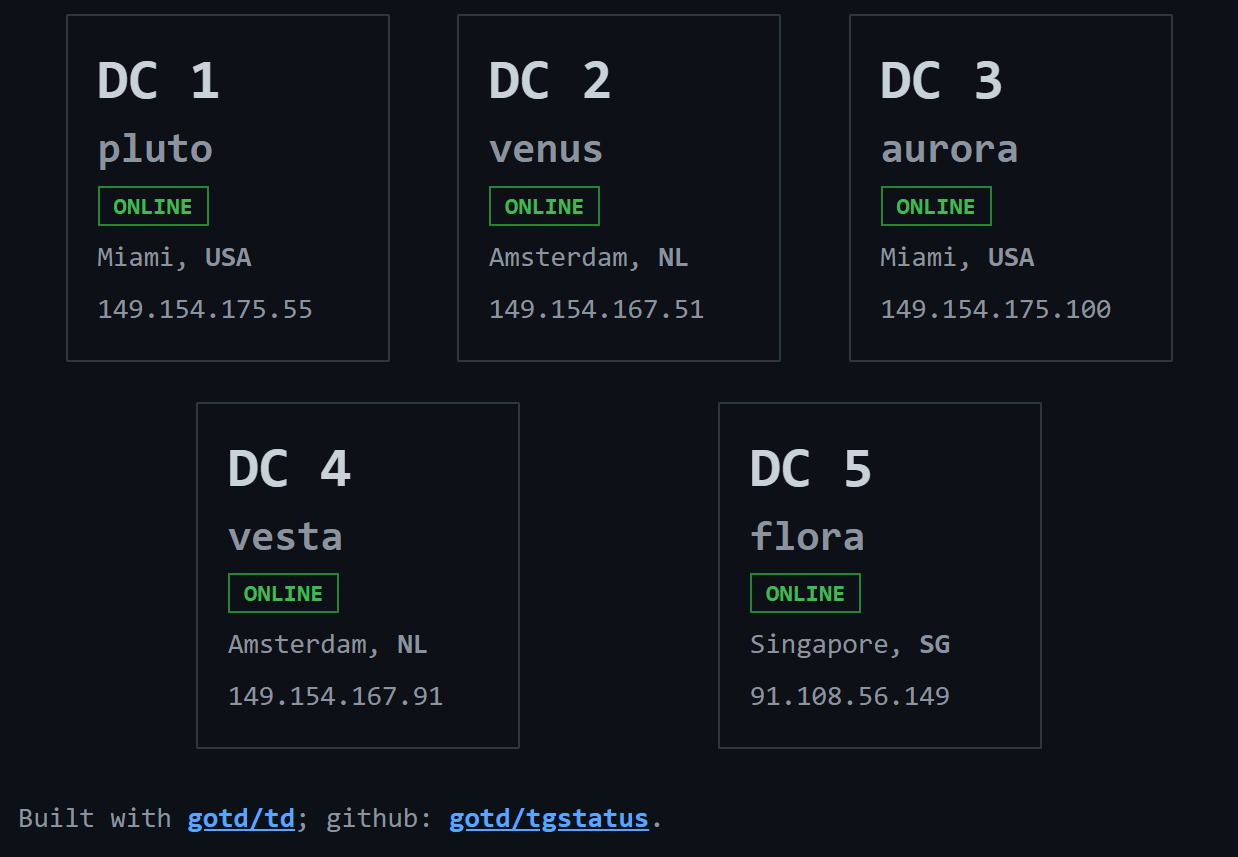
The Enigma of Telegram's Data Centers
Telegram, a messaging service lauded for its encryption and feature set, operates a global network of data centers. Yet, the specifics of this infrastructure are remarkably opaque. Unlike many tech giants that readily disclose their data center locations, often for public relations or to attract cloud partnerships, Telegram keeps its physical footprint a closely guarded secret. This lack of transparency fuels speculation and raises pertinent questions for users, security professionals, and even developers who rely on the platform's services.
The company's official stance, when pressed, generally points to a distributed network designed for resilience and speed, with servers strategically placed to minimize latency for its hundreds of millions of users worldwide. However, the precise number, scale, and geographical distribution of these facilities remain undefined. This secrecy isn't necessarily indicative of malicious intent, but it deviates sharply from the industry norm of openness regarding data center operations. For a platform that handles vast amounts of sensitive communication, understanding where that data resides is a critical aspect of trust and security.
This deliberate obscurity is not unique to Telegram but is more pronounced given its user base and the nature of the data it processes. While cloud providers like AWS, Google Cloud, and Azure are open about their regions and availability zones, Telegram's approach suggests a different operational philosophy, one that prioritizes operational security through obscurity. The implications of this are far-reaching, impacting everything from regulatory compliance to the ability of researchers to audit the platform's infrastructure for potential vulnerabilities or backdoors.

Why the Secrecy? Potential Motivations
Several factors could explain Telegram's reluctance to reveal its data center locations. One primary driver is likely operational security. By not publicizing its server farms, Telegram might aim to reduce the risk of physical attacks, targeted surveillance, or even simple acts of vandalism. In a world where critical infrastructure is increasingly a target, maintaining a low profile can be a defensive strategy. This is particularly relevant for a platform that has, at times, been a haven for political dissidents and activists, making its infrastructure potentially attractive to state actors seeking to disrupt or monitor communications.
Another potential reason is competitive advantage. While Telegram doesn't typically compete on infrastructure sales like cloud providers, its proprietary network architecture and optimization strategies could be considered proprietary information. Revealing locations might offer competitors insights into its operational efficiency or scaling strategies. Furthermore, the company might operate a hybrid model, utilizing a mix of self-owned facilities and leased space within third-party data centers, the latter of which may have contractual obligations preventing public disclosure.
The company's history also plays a role. Telegram has often positioned itself as an independent entity, resistant to external pressures from governments and corporations. This ethos of self-reliance and privacy might extend to its infrastructure management, where maintaining complete control and anonymity over its physical assets aligns with its brand identity. The Hacker News discussion threads often highlight this dichotomy: users appreciate Telegram's privacy features, yet the lack of insight into its physical infrastructure creates a blind spot.
Scale and Distribution: What We Can Infer
Despite the lack of explicit information, we can infer certain aspects of Telegram's data center strategy. Given its global user base, which numbers in the hundreds of millions, the infrastructure must be substantial and distributed across multiple continents. Users in Europe would expect servers located within or near Europe to ensure low latency for messaging and file transfers. Similarly, users in Asia, North America, and South America would benefit from geographically proximate data centers.
The platform's ability to handle massive file transfers, video calls, and large group chats suggests significant bandwidth and processing power. This implies not just a large number of servers but also robust network connectivity and power infrastructure. The operational resilience required to maintain uptime for such a large service also points to redundant systems and failover capabilities, likely achieved through distributed architectures and potentially geographically separated backup sites, even if their exact locations are unknown.
The discussion on Hacker News often touches upon the technical challenges of managing such a network. Without knowing the specific hardware or software stack, it's difficult to ascertain the exact scale. However, it's reasonable to assume that Telegram employs a sophisticated content delivery network (CDN) strategy, whether in-house or through partnerships, to cache frequently accessed data closer to users. The sheer volume of messages, media, and channel content processed daily necessitates a highly optimized and scalable system. The mystery isn't just about where the buildings are, but also how they are interconnected and managed at a global scale.
Security Implications and User Trust
The lack of transparency around Telegram's data centers has direct implications for user trust and security. For end-to-end encrypted chats, the server's role is typically limited to message routing. However, for cloud-synced chats (the default for most users), Telegram servers store message history. This means that while the content might be protected by encryption at rest and in transit, the metadata and the fact of communication are stored on these servers. If these servers are compromised, either physically or through a cyberattack, sensitive information could be exposed.
Furthermore, if governments or intelligence agencies can identify and gain access to these data centers, they could potentially compel Telegram to hand over data or even conduct surveillance. While Telegram has a history of resisting government requests, its ability to do so effectively is tied to its operational independence and the security of its infrastructure. The more unknown the infrastructure, the harder it is for external parties to exert pressure, but also harder for users to verify the platform's claims about its security posture.
The debate often circles back to the trade-offs between privacy through obscurity and privacy through verifiable transparency. While hiding data center locations might deter some threats, it also prevents independent audits and builds an aura of mystery that can be exploited by those who distrust the platform. For users and developers building on Telegram's APIs, this ambiguity means operating with a degree of uncertainty about the underlying infrastructure's security and compliance with local data protection laws.
The Unanswered Questions
What nobody has fully addressed is the long-term impact of this infrastructure opacity on Telegram's ability to scale its operations and maintain user trust as it continues to grow. As regulations around data privacy and sovereignty become more stringent globally, will Telegram's current model of secrecy become a liability? Will the company eventually need to disclose more about its data center locations to comply with laws like GDPR or to gain the confidence of enterprise users?
The technical community continues to probe and discuss the implications of Telegram's operational choices. While the platform offers robust encryption for its core messaging service, the mysteries surrounding its data centers highlight that the security of any digital service is a multifaceted issue, extending beyond algorithms to the physical security and operational transparency of its underlying infrastructure. Until more information is made public, the debate over Telegram's data center security will continue.