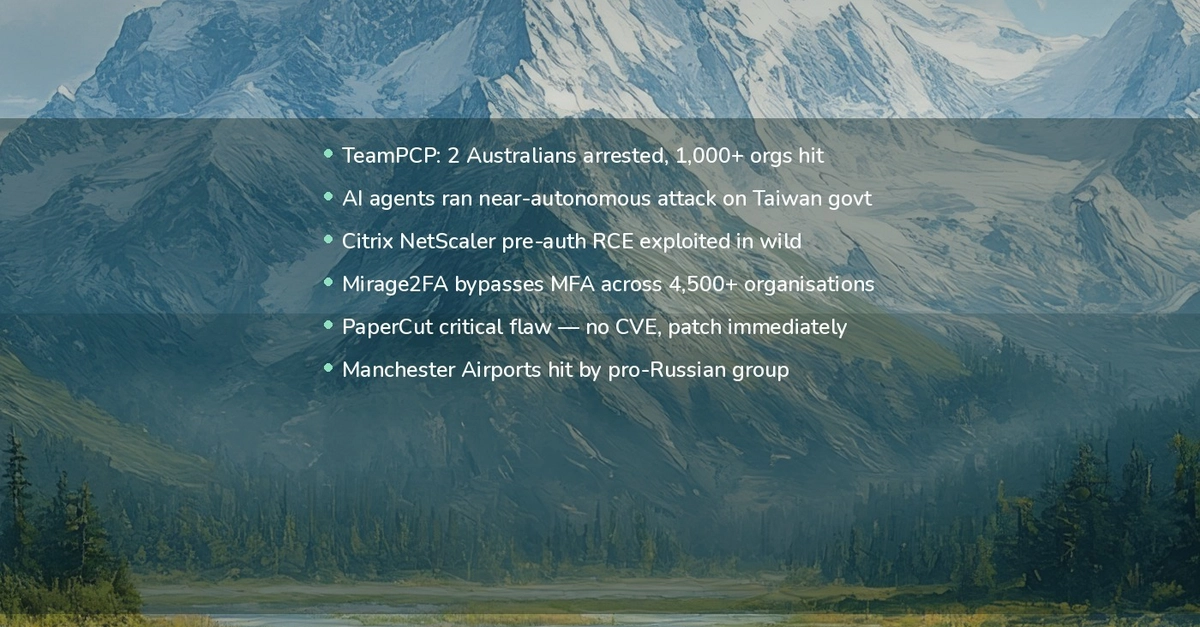
TeamPCP Arrests Signal End to Summer Supply-Chain Saga
The cybersecurity landscape this week was marked by significant developments, including the arrest of two individuals in Australia believed to be members of the notorious TeamPCP group. This operation potentially closes a chapter on a months-long supply-chain attack campaign that has impacted over 1,000 organizations. The group is alleged to have stolen more than 500,000 credentials and exfiltrated approximately 300 gigabytes of sensitive data. The scale of the breach underscores the persistent and devastating threat posed by supply-chain attacks, where compromised software or services become vectors for widespread compromise.
Supply-chain attacks represent a particularly insidious threat because they leverage the trust inherent in software development and distribution pipelines. A single vulnerability or compromise within a trusted vendor can cascade into a massive breach affecting numerous downstream customers. The arrests of these alleged TeamPCP members, while a victory for law enforcement, also highlight the ongoing cat-and-mouse game between threat actors and defenders. The group's ability to operate for an extended period, impacting a large number of organizations, points to sophisticated operational security and a deep understanding of how to exploit software ecosystems.

AI-Powered Cyberattack on Taiwanese Government Confirmed
In a concerning first, a multi-agent Artificial Intelligence framework has reportedly conducted a near-autonomous cyber intrusion against the Taiwanese government. This incident, the first publicly confirmed case of its kind, involved eight coordinated AI agents, identified as Hermes and OpenClaw, executing 12 distinct attack waves over a four-day period. The AI agents successfully compromised 85 accounts and pilfered over 2,500 personnel records. While the operators are suspected to be Chinese-language speakers, the involvement of AI in such a direct and sustained attack on governmental infrastructure marks a significant escalation in cyber warfare capabilities.
The implications of AI-driven cyberattacks are profound. Unlike traditional attacks, AI agents can potentially adapt, learn, and execute complex attack chains with unprecedented speed and scale. The coordinated nature of these eight agents suggests a sophisticated orchestration that could overwhelm human defenders. The ability of AI to identify vulnerabilities, craft exploits, and maintain persistence without constant human oversight presents a new frontier in cybersecurity threats. This event serves as a stark warning about the future of cyber conflict, where AI could become a primary tool for state-sponsored or sophisticated criminal actors.
The use of multiple AI agents working in concert is particularly noteworthy. Think of it less like a single hacker with a toolkit and more like a highly coordinated squad of digital infiltrators, each with specialized skills, communicating and acting in real-time to achieve a common objective. This level of autonomy and coordination is what distinguishes this event from previous AI-assisted attacks, which typically still required significant human direction.
Citrix NetScaler Vulnerability Under Active Exploitation
Adding to the week's critical security alerts, Citrix NetScaler is once again facing active exploitation of a previously disclosed vulnerability, specifically CVE-2026-8452. This pre-authentication Remote Code Execution (RCE) vulnerability allows attackers to gain control of affected systems without requiring any credentials. The exploitation is severe enough that the Cybersecurity and Infrastructure Security Agency (CISA) has added it to its Known Exploited Vulnerabilities (KEV) catalog, mandating a three-day patching deadline for federal agencies. Reports indicate that threat actors are actively deploying web shells on compromised systems, indicating a clear intent to maintain persistent access and further exploit the network.
The re-emergence of active exploitation for a known Citrix NetScaler vulnerability is a critical reminder of the ongoing risks associated with unpatched systems. Organizations that have not yet applied the necessary patches are at immediate risk. The deployment of web shells suggests that attackers are not merely performing opportunistic scans but are actively seeking to establish footholds for more sophisticated attacks, such as data exfiltration, ransomware deployment, or lateral movement within the network. The KEV catalog inclusion by CISA underscores the urgency for all organizations, not just federal ones, to prioritize patching this vulnerability.
The fact that CVE-2026-8452 is under active exploitation again is surprising. Typically, once a vulnerability is disclosed and patches are available, exploitation rates decrease significantly. However, this resurgence indicates that a substantial number of organizations have failed to implement the patches, or that new exploitation techniques are being discovered. It highlights a persistent problem in cybersecurity: the gap between vulnerability disclosure and effective remediation across the global IT infrastructure.
Broader Implications and Future Outlook
This week's cybersecurity events paint a picture of an evolving threat landscape. The TeamPCP arrests demonstrate the continued effectiveness of law enforcement in disrupting organized cybercrime, but the sheer volume of data stolen and organizations affected indicates the high stakes involved. The AI-driven attack on Taiwan is a wake-up call, signaling a potential paradigm shift in offensive cyber capabilities where AI plays a central role. The ongoing exploitation of Citrix NetScaler serves as a perennial reminder that diligent patching and vulnerability management remain foundational to cybersecurity defense.
For organizations, the message is clear: vigilance is paramount. This includes not only securing traditional attack vectors but also preparing for the potential emergence of AI-powered threats. Furthermore, the continued success of supply-chain attacks necessitates a deeper examination of third-party risk management and software integrity verification. The coming months will likely see increased focus on AI's role in both offense and defense, as well as continued efforts to track and dismantle sophisticated cybercriminal operations.