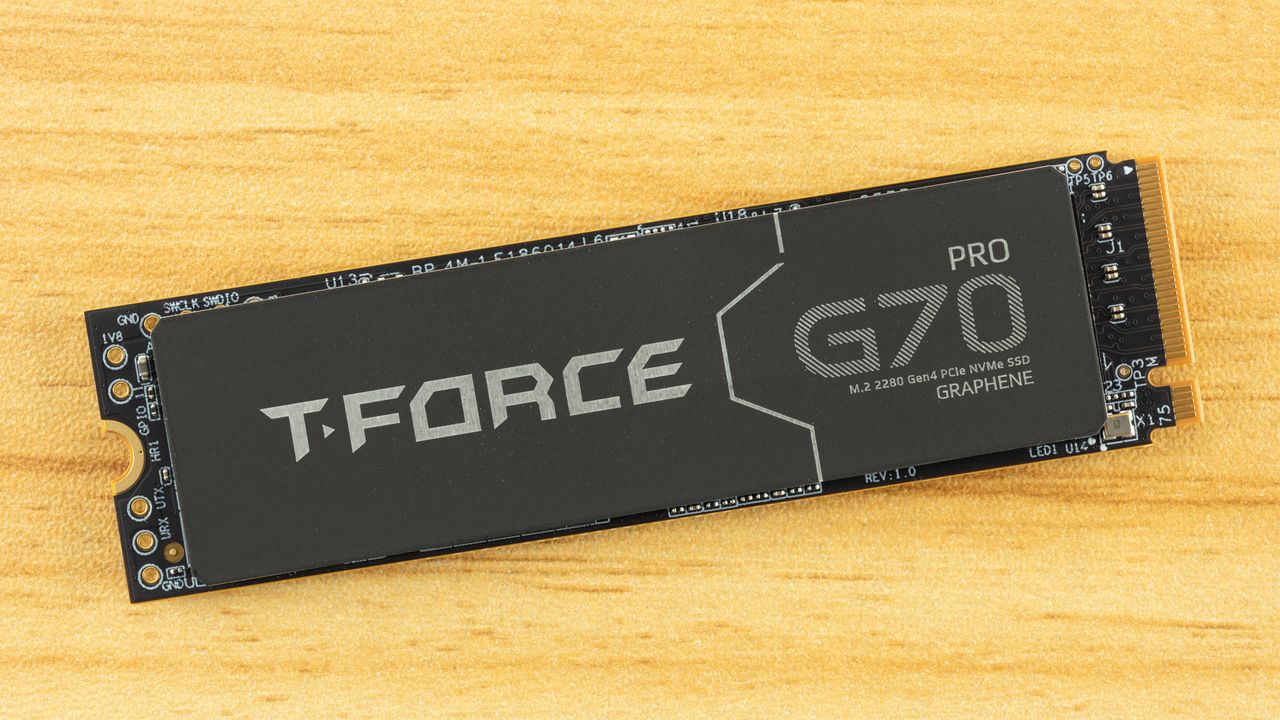
TeamGroup G70 Pro 2TB SSD: A Performance Contender on a Budget
TeamGroup's G70 Pro 2TB SSD enters the crowded NVMe market with a compelling proposition: high-end performance, including low latency, at a price point that significantly undercuts many direct competitors. This drive leverages DRAM cache, a feature often reserved for more expensive models, to deliver snappy responsiveness for demanding tasks. However, its aggressive pricing and performance come at a cost, primarily in the form of poor power efficiency, which could be a concern for certain use cases, particularly in laptops or power-sensitive systems.
At its core, the G70 Pro is built for speed. It utilizes a Phison E25 controller paired with TLC NAND flash. The inclusion of DRAM cache is a critical differentiator in this segment. Unlike DRAM-less SSDs, which rely on slower Host Memory Buffer (HMB) technology to access system RAM, dedicated DRAM cache offers a persistent, high-speed buffer for the SSD's mapping tables. This translates to consistently faster random read and write operations, reduced latency, and better sustained performance during heavy workloads. For users who frequently juggle large files, run virtual machines, or engage in intensive gaming, this low-latency design can make a noticeable difference in application load times and overall system responsiveness.
Performance Benchmarks: Speed and Responsiveness
In real-world testing, the G70 Pro 2TB shines. Sequential read and write speeds approach the theoretical limits of the PCIe 4.0 interface, with sequential reads often exceeding 7,000 MB/s and writes nearing 6,500 MB/s. This positions it firmly in the upper echelon of PCIe 4.0 drives. More importantly for everyday use, its random performance is equally impressive. The drive exhibits excellent IOPS (Input/Output Operations Per Second) for both random reads and writes, ensuring that launching applications, loading game levels, and multitasking feel exceptionally fluid. The DRAM cache plays a vital role here, allowing the drive to handle small, random data requests with remarkable speed and consistency, avoiding the performance dips sometimes seen in DRAM-less designs under duress.
Sustained write performance is also a strong point. Unlike some budget drives that rapidly throttle after filling their SLC cache, the G70 Pro maintains respectable write speeds even during extended transfers of large datasets. While there is a performance drop once the TLC NAND is pushed beyond its direct write capacity, the dedicated DRAM cache helps manage the mapping tables efficiently, smoothing out the transition and preventing the dramatic slowdowns that can plague less sophisticated drives. This makes it a viable option for content creators performing large video renders or data scientists working with significant datasets.
Power Consumption: The Achilles' Heel
Where the G70 Pro falters significantly is in its power efficiency. Under load, the drive exhibits considerably higher power draw compared to many of its competitors, especially other PCIe 4.0 NVMe SSDs. This isn't merely an academic concern; for users relying on laptops, this higher power draw can translate directly into reduced battery life. Even for desktop users, while less critical, it contributes to overall system heat, potentially requiring more aggressive cooling solutions in compact builds or high-performance workstations. The drive's idle power consumption is also higher than average. While the drive does feature power management features, the baseline draw appears to be elevated, likely a consequence of the high-performance controller and NAND combination working in tandem.
This power inefficiency is a stark trade-off for the performance delivered at its price. It suggests that TeamGroup prioritized raw speed and responsiveness over energy conservation. For gamers building a desktop rig where power draw is less of a constraint, or for users who value every bit of performance for workstation tasks and are willing to manage thermals, this might be an acceptable compromise. However, for ultraportable users or those building passively cooled systems, this aspect warrants careful consideration. It’s a clear indicator that not all fast SSDs are created equal when it comes to their operational footprint.
Value Proposition and Market Positioning
The TeamGroup G70 Pro 2TB SSD is undeniably positioned as a high-value product. It consistently appears on lists of budget-friendly, high-performance drives. The inclusion of DRAM cache at its price point is a significant value add, offering a taste of premium SSD performance without the premium price tag. Competitors in this price bracket often make compromises, typically by omitting DRAM or opting for less performant controllers and NAND. TeamGroup’s strategy here is to offer a drive that punches above its weight class in terms of raw speed and latency, making it an attractive upgrade for users coming from older SATA SSDs or DRAM-less NVMe drives. If your primary concern is maximizing performance per dollar, and you can overlook the power draw, the G70 Pro is a strong contender. Its closest rivals often come with a higher cost for similar performance metrics, or they offer lower performance at a comparable price. This makes the G70 Pro a compelling choice for budget-conscious enthusiasts and gamers who prioritize speed.
The question for consumers becomes: what is the true cost of this affordability? While the initial purchase price is low, the long-term implications of higher power consumption and heat generation could impact system longevity or necessitate additional cooling investments. For a desktop user, this is likely a non-issue. For a laptop user, it’s a direct hit to battery life. This makes the G70 Pro a drive that demands a specific user profile: one that prioritizes raw speed over energy efficiency and is building a system where power draw is not a primary concern.
Conclusion: A Performance Bargain with Caveats
The TeamGroup G70 Pro 2TB SSD successfully delivers on its promise of high-end performance, characterized by excellent speeds and low latency, all at an accessible price point thanks to its DRAM cache implementation. It’s a drive that offers a significant upgrade over many entry-level and mid-range NVMe SSDs, especially for tasks that benefit from quick access to mapping data. However, its Achilles' heel is its substantially higher power consumption compared to competitors. This makes it less suitable for power-sensitive environments like laptops or small form-factor builds where heat and battery life are paramount. For desktop users building gaming rigs or workstations where raw performance is king and power draw is a secondary concern, the G70 Pro represents a remarkable value. It’s a clear example of how manufacturers balance features and cost, offering a tempting package for those who understand and can accommodate its specific trade-offs.