
Understanding the Internet's Delivery Services
The internet relies on two fundamental protocols for sending data: Transmission Control Protocol (TCP) and User Datagram Protocol (UDP). Understanding their differences is crucial for developers and anyone building network applications. These protocols dictate how data packets travel from source to destination, and their distinct approaches serve very different needs.
Imagine you need to send a 500-page book to a friend. You have two delivery companies. The first company guarantees every page arrives in order. If page 187 gets lost, they will resend only that specific page. The second company, however, is incredibly fast. They throw pages onto trucks immediately, and if page 187 disappears, they simply keep driving. Which company you choose depends entirely on what you're sending, and this is precisely why the internet has both TCP and UDP.
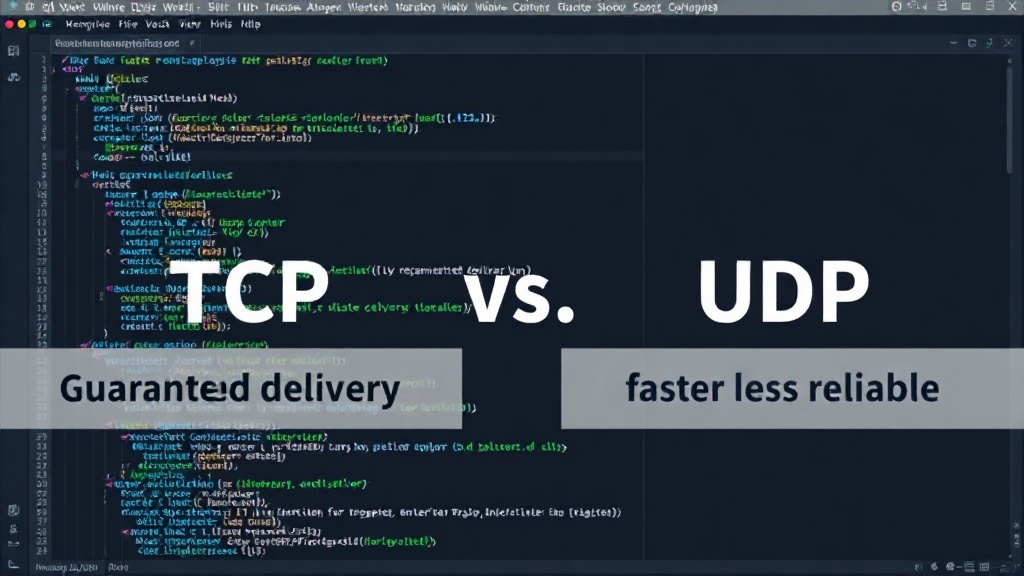
Different applications have vastly different priorities. Consider the requirements for downloading a large Ubuntu ISO file versus watching a live Netflix stream, making a video call, playing a fast-paced game like Valorant, or sending sensitive bank transactions. Should all these operations behave identically? Absolutely not. Their fundamental needs—whether prioritizing perfect accuracy or absolute speed—dictate the appropriate protocol.
TCP: The Reliable Workhorse
TCP prioritizes reliability and order. When you use TCP, you're engaging a service that ensures your data arrives intact and in the correct sequence. It achieves this through a robust mechanism involving:
- Connection Establishment: TCP uses a three-way handshake (SYN, SYN-ACK, ACK) to establish a reliable connection before any data is transferred. This ensures both sender and receiver are ready.
- Sequencing: Each packet is assigned a sequence number. The receiver uses these numbers to reassemble the data in the correct order, even if packets arrive out of sequence due to network conditions.
- Acknowledgments: The receiver sends acknowledgment (ACK) packets back to the sender to confirm receipt of data segments.
- Error Detection and Retransmission: If the sender doesn't receive an ACK for a segment within a certain timeout period, it assumes the segment was lost and retransmits it. This guarantees delivery of all data.
- Flow Control: TCP manages the rate at which data is sent to prevent overwhelming the receiver.
- Congestion Control: It also adjusts the sending rate based on network congestion, helping to avoid network collapse.
This meticulous approach makes TCP ideal for applications where data integrity is paramount. When you download a file, browse a website, or send an email, you want every bit of data to arrive exactly as it was sent, in the correct order. TCP ensures this, even if it means slightly slower performance due to the overhead of its reliability mechanisms.
UDP: The Speed Demon
UDP, on the other hand, is a connectionless protocol. It prioritizes speed and low latency over guaranteed delivery or order. When using UDP:
- No Connection Setup: UDP does not establish a connection. Data is simply sent out as datagrams.
- No Sequencing: Datagrams are not sequenced. They may arrive out of order, or not at all.
- No Acknowledgments: There is no confirmation of receipt. The sender has no way of knowing if the datagram made it.
- No Retransmission: Lost datagrams are not resent.
- Minimal Overhead: Because it skips all the reliability checks, UDP is significantly faster and consumes fewer resources than TCP.
UDP is the protocol of choice for real-time applications where speed is critical and minor data loss is acceptable. Examples include:
- Streaming Media: Services like Netflix and YouTube use UDP for live broadcasts or video streams. A dropped frame or a slightly garbled audio packet is often imperceptible to the user.
- Online Gaming: Games like Valorant, where split-second reactions matter, rely on UDP. A lost position update is less detrimental than the delay that TCP's retransmissions would introduce.
- VoIP and Video Conferencing: Real-time voice and video communication benefit from UDP's low latency. A momentary glitch is preferable to a long pause.
- DNS Queries: Domain Name System (DNS) lookups are typically done over UDP. The request is small, and if it fails, the client can simply retry.
When to Choose Which
The decision between TCP and UDP hinges on the application's core requirements:
- Choose TCP when:
- Data integrity is critical (e.g., file transfers, web browsing, email, financial transactions).
- Data must arrive in the correct order.
- You can tolerate slightly higher latency for guaranteed delivery.
- Choose UDP when:
- Speed and low latency are paramount (e.g., real-time gaming, live streaming, VoIP).
- Losing a small amount of data is acceptable.
- The application can handle reordering or retransmission itself if necessary.
It's also worth noting that some applications might use both protocols. For instance, a video conferencing application might use UDP for the audio and video streams but TCP for transferring files or chat messages within the same session.
The Trade-offs: Reliability vs. Speed
The core trade-off between TCP and UDP is reliability versus speed. TCP acts like a meticulous postal service that tracks every letter, confirms delivery, and resends anything lost, ensuring your package arrives complete but taking more time. UDP is more like a courier who throws packages onto a truck and hopes for the best—it's much faster, but some packages might get lost or arrive out of order. For a developer, understanding this fundamental difference allows for building more efficient and appropriate network services. Selecting the wrong protocol can lead to poor user experience, data corruption, or unnecessary performance bottlenecks.