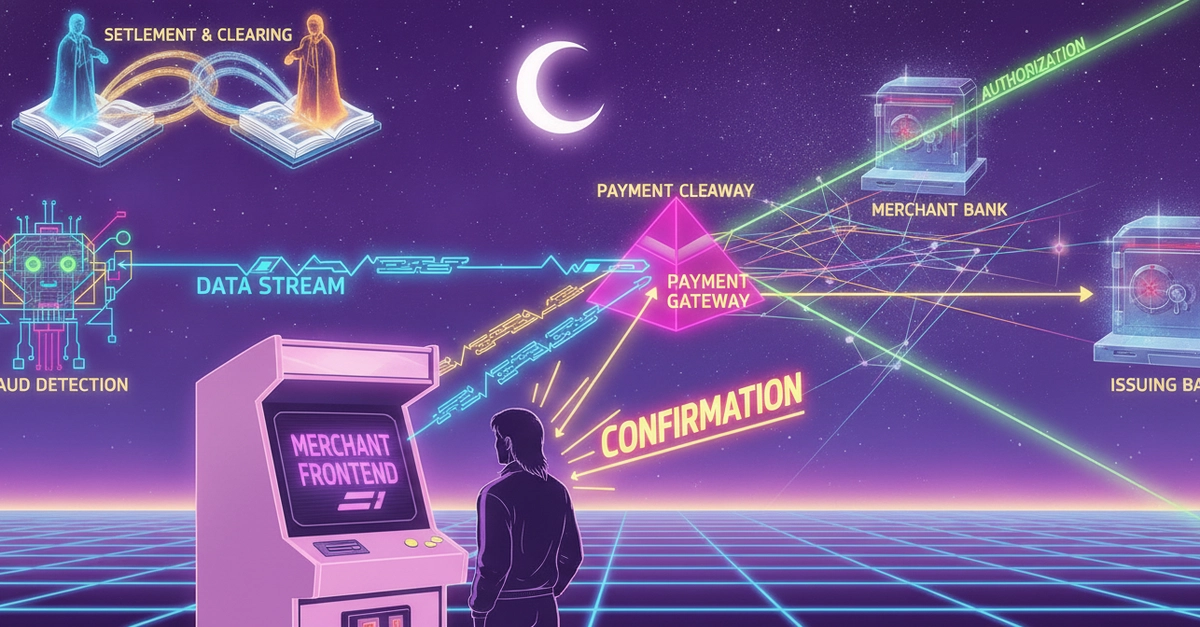
Introduction
Designing a payment processing system is a uniquely challenging endeavor. It demands extreme precision, unwavering reliability, and strict adherence to compliance and security standards. Unlike typical software systems, errors in payment processing can have immediate and severe financial consequences. This article explores the critical components and design considerations for building such a system from the ground up.
Why Payment Systems Are a Different Kind of Hard
Payment systems operate under unforgiving constraints. They must be correct to the cent, always. The stakes are incredibly high: financial loss, regulatory penalties, and irreparable damage to trust. This contrasts with many other systems where occasional data loss or slight inaccuracies might be tolerable or recoverable. Payments demand an 'exactly-once' effect for transactions, meaning each payment must be processed precisely one time, no more and no less. This single requirement dictates much of the system's architecture.
The Core Domain Model
At its heart, a payment system manages financial transactions. The core domain model must capture entities like Accounts, Transactions, Payments, and Settlements. An Account represents a financial holding, capable of holding a balance. A Transaction is a fundamental unit of financial movement, typically involving a debit and a credit. A Payment represents an instruction to move funds, potentially involving multiple transactions. Settlements are the actual movement of funds between accounts or institutions.
The Ledger: Double-Entry Bookkeeping as the Source of Truth
The ledger is the single source of truth for financial state. It must implement double-entry bookkeeping principles, ensuring that for every debit, there is a corresponding credit. This provides an inherent audit trail and maintains financial integrity. All financial operations must be recorded in the ledger. The ledger's design must prioritize immutability and atomicity. Each ledger entry represents a definitive financial event. Think of it less like a simple log and more like a meticulously audited, immutable financial journal where every entry is double-checked and balanced.

Idempotency: The Single Most Important Property
Idempotency is crucial for ensuring that repeated requests have the same effect as a single request. In payment systems, this prevents accidental double-charging or double-crediting. Each incoming request should have a unique identifier. The system checks if a request with this identifier has already been processed. If so, it returns the previous result; otherwise, it processes the request and stores the result. This is vital for handling network retries and ensuring the 'exactly-once' effect. Without robust idempotency, the system is fundamentally unreliable.
Integrating with Payment Gateways and Card Networks
Real-world payment systems rarely handle card processing directly. They integrate with external Payment Gateways (like Stripe, PayPal) and Card Networks (Visa, Mastercard). This involves complex API interactions, security protocols (e.g., PCI DSS), and handling diverse response formats. The system must manage the lifecycle of a payment request as it traverses these external services. This often involves asynchronous communication patterns.
The Payment State Machine
A payment goes through several states: initiated, pending, authorized, captured, failed, refunded. A well-defined state machine governs these transitions. Each transition must be atomic and trigger appropriate actions. For example, upon successful authorization from a gateway, the internal ledger might be updated, and a webhook notification prepared. The state machine ensures that payments are processed in a predictable and auditable manner, preventing inconsistent states.
Webhooks: Handling Asynchronous Gateway Callbacks
Payment gateways often notify the system of events (like payment success or failure) asynchronously via webhooks. These callbacks are critical for updating payment status. However, webhooks are inherently unreliable; they can be delayed, duplicated, or lost. The system must be designed to handle these challenges. This includes implementing idempotency for webhook processing, robust error handling, and mechanisms for verifying webhook authenticity (e.g., signature verification). Reconciliation processes are essential to catch any missed events.
The Saga: Coordinating Distributed Transactions
When a payment involves multiple services or steps that cannot be managed by a single atomic transaction (e.g., debiting an account, notifying a third-party service, and settling with a bank), distributed transaction patterns like the Saga pattern are employed. A Saga orchestrates a sequence of local transactions. If any local transaction fails, compensating transactions are executed to undo the preceding steps, maintaining system consistency. This is a complex pattern but essential for building resilient distributed payment systems.
Reconciliation
Regular reconciliation is non-negotiable. This process compares internal ledger records with statements from external payment gateways and banks to identify discrepancies. Discrepancies can arise from network errors, processing failures, or even fraud. Automated reconciliation tools are vital for detecting and resolving these differences promptly, ensuring financial accuracy and compliance.
Fraud and Risk Checks
Integrating fraud detection and risk management is paramount. This involves analyzing transaction patterns, user behavior, device information, and using machine learning models to identify potentially fraudulent activities in real-time or near-real-time. Risk checks might also include velocity limits and IP address monitoring. The system must balance robust fraud prevention with a smooth user experience.
Correctness and Compliance
The entire system design must be underpinned by a rigorous focus on correctness and compliance. This includes adherence to regulations like PCI DSS for card data security, GDPR for data privacy, and various financial reporting standards. Auditing capabilities must be built into the system from day one, allowing for easy verification of all financial activities. The system must be designed for resilience, fault tolerance, and disaster recovery.