The Database Dilemma for AI Agents
Connecting AI agents to production databases is a common requirement for automation and data analysis. However, the default approach of granting agents direct SQL execution capabilities via tools like execute_sql(sql) presents significant security and control risks. While read-only roles, SQL validation, and prompt engineering offer layers of defense, they ultimately provide the AI model with raw database authority, which is then constrained. This model is inherently prone to errors, unintended data modifications, or even security breaches if the constraints are bypassed.
The core problem lies in the paradigm: instead of granting broad authority and then trying to limit it, a more secure approach would be to never grant that authority in the first place. This requires a fundamental shift in how AI agents interact with sensitive production data, focusing on controlled, semantic operations rather than direct data manipulation.
Introducing Synapsor Runner
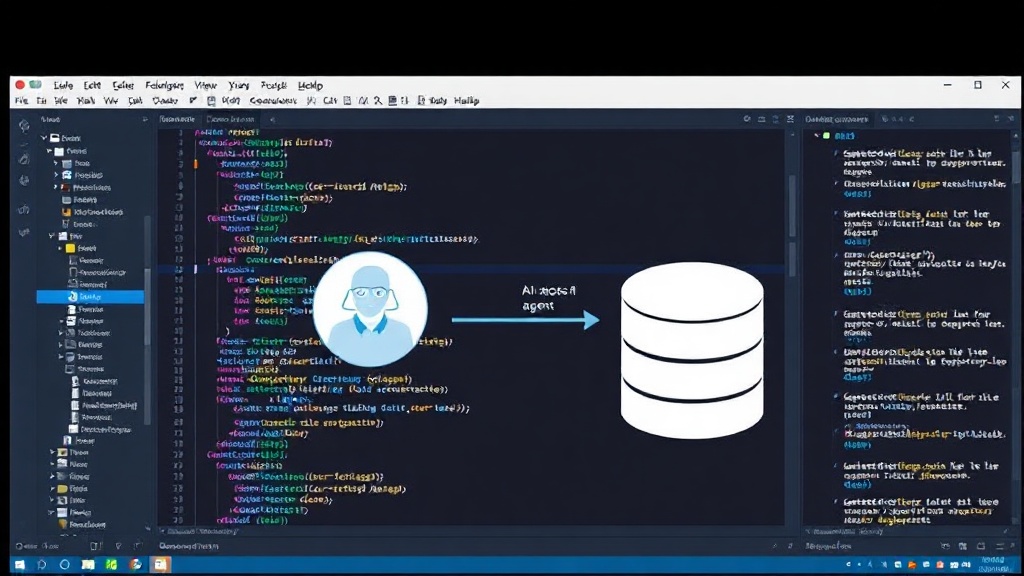
To address this security gap, Synapsor Runner has been developed as an open-source runtime solution. Released under the Apache-2.0 license, it acts as an intermediary layer between an MCP (Machine Communication Protocol) client and common relational databases like PostgreSQL and MySQL. The key innovation of Synapsor Runner is its refusal to expose raw SQL commands. Instead, it presents a curated set of semantic capabilities that the AI agent can invoke.
These capabilities are reviewed and defined operations that represent specific business functions. For example, instead of allowing an agent to write arbitrary SQL queries against a billing system, Synapsor Runner might expose functions such as:
billing.inspect_invoice
billing.propose_late_fee_waiver
support.propose_plan_credit
This approach ensures that the AI agent can only perform predefined, safe operations. The underlying database remains protected, as the agent never gains the ability to execute arbitrary SQL. The review process for these semantic capabilities can be integrated into development workflows, ensuring that only approved actions are exposed to AI agents. This significantly reduces the attack surface and the potential for accidental data corruption.
How It Works: The Semantic Layer
Synapsor Runner operates by abstracting the database interaction. When an MCP client, typically an AI agent, requests an action, it calls a specific semantic capability exposed by Synapsor Runner. Synapsor Runner then translates this semantic call into the necessary SQL queries to interact with the underlying PostgreSQL or MySQL database. This translation layer is where the control and safety are enforced.
The benefits of this semantic layer are manifold:
- Enhanced Security: The AI agent never directly interacts with the database schema or executes SQL. It operates within a strictly defined function set, preventing unauthorized access or modifications.
- Simplified AI Interaction: Developers can instruct AI agents using natural language or structured commands that map directly to these semantic functions, without needing to understand the complex SQL queries or database structure.
- Auditable Operations: Each call to a semantic capability is logged and auditable, providing a clear trail of actions taken by the AI agent. This is crucial for compliance and debugging.
- Database Agnosticism: While currently supporting PostgreSQL and MySQL, the architecture allows for easier extension to other database systems by implementing new translation layers.
- Reduced Complexity: Developers building AI-powered applications don't need to implement custom SQL sanitization or complex access control logic for each AI integration. Synapsor Runner handles this at the runtime level.
Rapid Deployment and Testing
A key design goal for Synapsor Runner is ease of adoption. The project emphasizes a quick setup process, allowing developers to experiment with the system in minimal time. The availability of a no-database, no-signup trial environment further lowers the barrier to entry. This allows teams to quickly prototype and validate the effectiveness of using semantic capabilities for their AI agent integrations before committing to a full production deployment.
The implication is that teams can move faster in leveraging AI for data-driven tasks without compromising the integrity and security of their production environments. The ability to try the system in a sandboxed environment means that potential issues or integration challenges can be identified and resolved early in the development lifecycle.
Broader Implications for AI Integration
Synapsor Runner represents a significant step towards more secure and manageable AI agent integrations with production systems. By shifting the control point from direct SQL execution to a semantic capability layer, it fundamentally changes the risk profile. This pattern is likely to become a standard for any application requiring AI agents to interact with sensitive data, whether it's financial records, customer information, or proprietary business logic.
The open-source nature of Synapsor Runner also fosters community development and transparency. As more organizations adopt this approach, the set of standardized semantic capabilities could grow, creating a richer ecosystem of pre-built, safe integrations for AI agents. This moves away from the current ad-hoc, high-risk methods toward a more robust and scalable framework for AI-driven automation.