%22%20%2F%3E%0A%20%20%3C%2Fsvg%3E)
Synapse: Bringing Local Code Knowledge to Claude Code
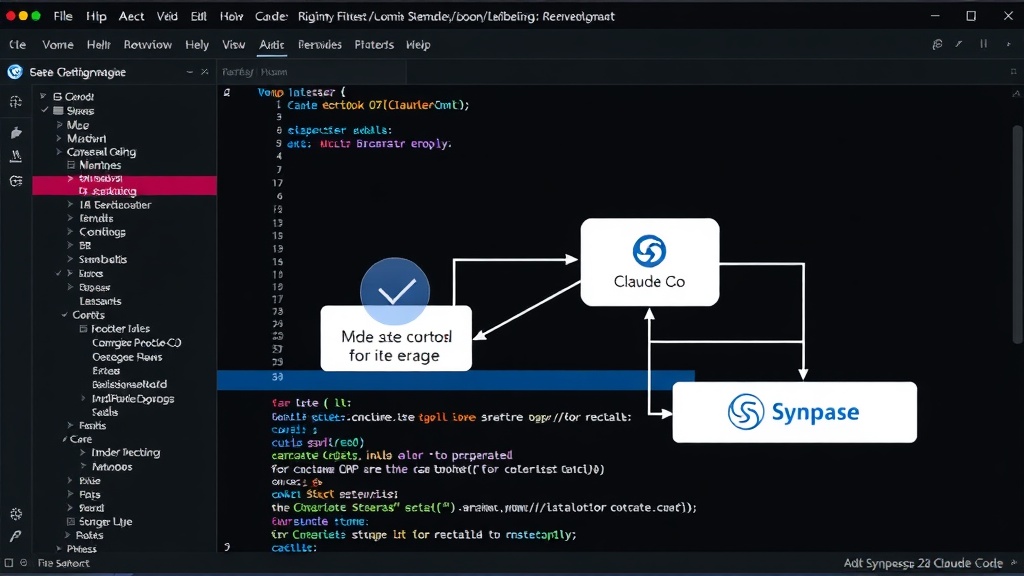
A new open-source project named Synapse aims to bridge the gap between large language models and private codebases. Developed by /u/koka786, Synapse functions as a local MCP (Multi-Purpose Connector) server. Its primary purpose is to index a developer's codebase and make that knowledge instantly accessible to Claude Code, Anthropic's AI assistant focused on coding tasks. This eliminates the need for developers to manually copy-paste large code snippets or rely on cloud-based solutions for context.
The core problem Synapse addresses is the LLM's inherent lack of awareness regarding a user's specific, proprietary code. Traditionally, interacting with an LLM about a codebase involved either pasting the relevant files directly into the chat interface or using less integrated methods. Synapse streamlines this by creating a local index that Claude Code can query using its MCP protocol. This means developers can ask natural language questions like "how does the payment flow work?" or "what is the purpose of this specific function?" and receive answers derived directly from their own code, rather than generic information or guesses.
Technical Underpinnings and Features
Synapse leverages a combination of modern embedding and vector database technologies to achieve its functionality. The system utilizes nomic-embed-text-v1.5 for generating vector embeddings of code segments. These embeddings are then stored and queried using LanceDB, an open-source vector database designed for efficiency and local operation. This stack ensures that the entire indexing and retrieval process can occur on the user's machine without requiring an internet connection or external API keys.
The MCP server exposes two primary tools for Claude Code to interact with:
- Recall (Semantic Search): This tool utilizes the vector embeddings to perform semantic searches. When a developer asks a question, Synapse converts the query into an embedding and searches the LanceDB index for the most semantically similar code chunks. This is ideal for finding code related to a specific concept or functionality.
- Context (Full File Retrieval): For more detailed queries, or when semantic search points to a specific file, this tool can retrieve the full content of a given file. This allows Claude Code to examine the exact implementation details, structure, and surrounding code within a file.
Installation is straightforward, requiring only a Python environment. Developers can install Synapse using pip with the command pip install synapse-mcp. The project is released under the MIT license, making it freely available for use, modification, and distribution by individuals and organizations. The accompanying GitHub repository provides the source code and further details on setup and usage.
Implications for Developers and Privacy
The most significant advantage of Synapse is its 100% local operation. In an era where data privacy and security are paramount, particularly for proprietary codebases, running an LLM-aware indexing tool entirely on-premises offers substantial benefits. Developers do not need to worry about sensitive code being uploaded to third-party servers or exposed through API calls. This is a critical distinction for companies with strict intellectual property policies or those working on highly confidential projects.
The open-source nature of Synapse further democratizes access to advanced AI-assisted coding tools. Developers can inspect the code, contribute to its development, or adapt it to their specific workflows. This contrasts with proprietary solutions that often involve recurring costs and less transparency.
The integration with Claude Code, specifically through the MCP protocol, suggests a growing trend towards standardized interfaces for LLMs to interact with external tools and data sources. As LLMs become more integrated into developer workflows, tools like Synapse that facilitate secure and efficient knowledge transfer will become increasingly valuable. The project's reliance on established embedding models and vector databases also indicates a mature and accessible ecosystem for building such specialized AI applications.
While Synapse currently focuses on Claude Code, the underlying architecture—a local MCP server indexing code—could potentially be adapted to work with other LLMs that support similar external tool integration protocols. This modular approach hints at future extensibility and broader applicability within the AI development landscape.
The Unanswered Question: Scalability and Performance
What remains to be seen is how Synapse scales with extremely large codebases. While nomic-embed-text-v1.5 and LanceDB are known for their efficiency, indexing and querying millions of lines of code across thousands of files could present performance challenges. The effectiveness of semantic search and full file retrieval will ultimately depend on the indexing strategy, the quality of embeddings for code, and the underlying hardware capabilities of the developer's machine. Further benchmarks and real-world testing on diverse projects will be crucial to understanding its practical limitations and optimal use cases.